Infrared proximity sensors are integral components in modern automation, robotics, and consumer electronics, enabling non-contact detection of objects. Their performance hinges on a set of critical technical parameters. A deep understanding of these specifications is essential for engineers to select the right sensor for an application and ensure reliable operation.
The core operating principle involves an infrared LED emitting light and a photodetector, typically a phototransistor or photodiode, receiving the reflected signal. The key parameters define the boundaries and quality of this interaction.
Detection Range is perhaps the most fundamental specification. It defines the minimum and maximum distances at which the sensor can reliably detect a standard target, often a white matte surface. This range is not a fixed number but is influenced by the target's reflectivity (albedo). A highly reflective white object will be detected at a longer range than a dark, absorptive one. Manufacturers usually specify the range for an 80-90% reflectance target. Understanding the actual reflectivity of your application's objects is crucial to avoid false negatives or reduced range.
Response Time refers to the speed at which the sensor can react to a change in the presence of an object. It is typically measured in milliseconds (ms) and includes both the rise time (from no detection to detection) and fall time (from detection to no detection). High-speed applications, such as object counting on fast conveyor belts or robotic arm obstacle avoidance, demand sensors with response times of 1ms or less. Slower processes can tolerate sensors with response times of 10-50ms.
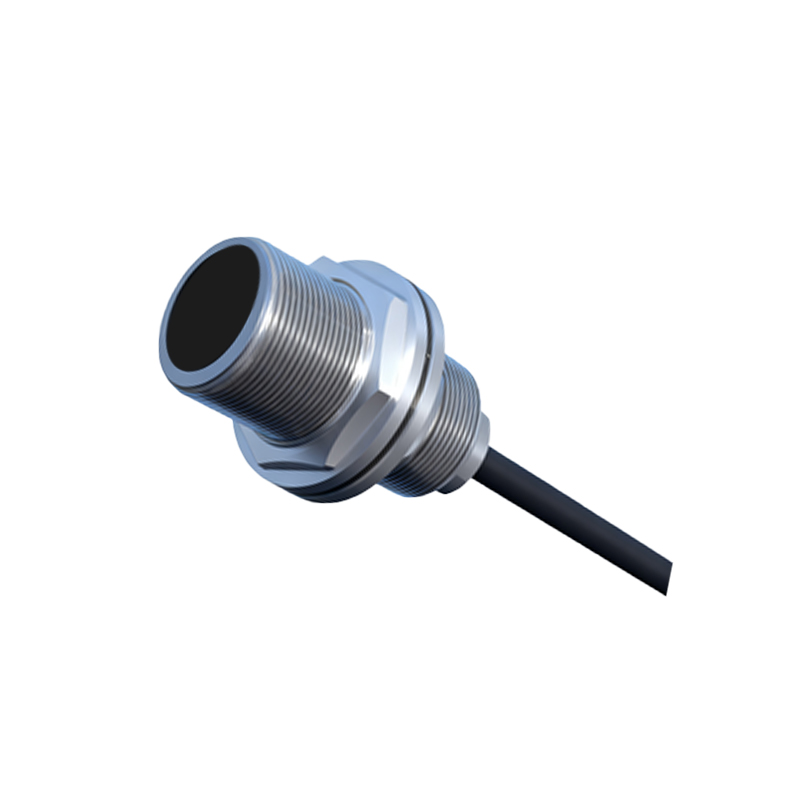
Output Type defines how the sensor communicates its detection state. The two primary types are Digital (Switch) Output and Analog Output. A digital output provides a simple high/low voltage signal, indicating the presence or absence of an object within a set threshold. This is straightforward for microcontroller integration. An analog output, however, provides a voltage or current proportional to the received infrared intensity, which correlates to distance or reflectivity. This allows for finer control, enabling applications like continuous distance estimation or material differentiation, though it requires an analog-to-digital converter (ADC).
Spectral Sensitivity of the receiver must be matched to the Peak Wavelength of the IR emitter. Common peak wavelengths are around 850nm or 940nm. The 940nm wavelength is less visible to the human eye and is less susceptible to interference from ambient light, making it preferable for many applications. The sensor's datasheet will provide a sensitivity curve; ensuring good overlap with the emitter's wavelength is vital for optimal signal strength.
Environmental Immunity parameters are critical for real-world deployment. Ambient Light Immunity specifies the sensor's ability to reject interference from sunlight or artificial lighting, often measured in lux (e.g., up to 10,000 lux). Sensors use modulation techniques (pulsing the IR LED at a specific frequency) and optical filters to achieve this. Operating Temperature Range ensures the sensor's electronics and components function within specified limits, typically from -25°C to +70°C for industrial grades.
Additional crucial parameters include Repeatability (the consistency of detection at the same distance), Hysteresis (a built-in difference between the switch-on and switch-off points to prevent output chatter), and the Beam Pattern (the shape and angle of the emitted and detected IR field, which affects sensing area and potential blind spots).
When integrating a sensor, consider the Supply Voltage (e.g., 3.3V, 5V, or 12-24V DC) and Current Consumption, especially for battery-powered devices. The Package Size and Mounting Style (e.g., threaded barrel, PCB mount) are also practical selection criteria.
In conclusion, selecting an infrared proximity sensor is not merely about finding one that "detects at 10cm." It requires a careful analysis of the application's requirements against the sensor's detailed parameters: the nature of the target, required speed, environmental conditions, and the type of data needed (simple on/off or analog information). By meticulously matching these specifications to the operational demands, engineers can build robust, efficient, and reliable sensing systems. Always consult and thoroughly understand the manufacturer's datasheet, as it contains the definitive specifications and test conditions for the component.