In the rapidly evolving landscape of industrial automation and precision measurement, digital CMOS laser sensors have emerged as a cornerstone technology. These sophisticated devices represent a significant leap from their analog predecessors and other optical sensing methods, offering unparalleled accuracy, speed, and integration capabilities. At their core, these sensors utilize a laser diode to project a focused beam onto a target. The reflected light is then captured by a Complementary Metal-Oxide-Semiconductor (CMOS) imaging array. The "digital" aspect is key: the analog light signal is converted into digital data directly at the sensor chip, enabling advanced on-board processing and noise immunity.
The operational principle hinges on precise triangulation or time-of-flight measurement, depending on the model. In a common triangulation-based configuration, the position where the laser spot appears on the CMOS array changes linearly with the target's distance. This positional data is processed by a dedicated digital signal processor (DSP) within the sensor housing. The DSP executes complex algorithms to filter environmental noise, compensate for surface color or texture variations, and calculate exact distance, height, or presence with micron-level resolution. This onboard intelligence eliminates the need for external controllers for basic functions, simplifying system architecture.
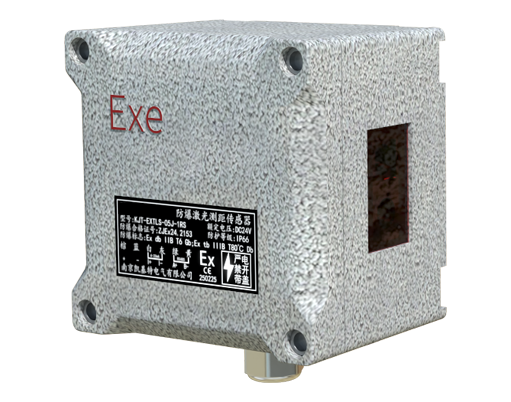
The advantages of digital CMOS laser sensors are manifold. First and foremost is their exceptional precision and stability. Digital processing minimizes drift caused by temperature fluctuations and component aging, a common challenge in analog systems. They offer remarkably high sampling speeds, often in the kilohertz range, making them ideal for high-speed production lines, robotics, and dynamic inspection tasks. Furthermore, their programmability is a game-changer. Engineers can configure multiple sensing modes—such as window, teach-in, or background suppression—directly via software or built-in interfaces. Features like digital output (IO-Link, Ethernet/IP, PROFINET) facilitate seamless integration into Industry 4.0 and Industrial Internet of Things (IIoT) networks, allowing for real-time data monitoring, predictive maintenance, and centralized parameter management.
Typical applications span a diverse range of sectors. In electronics manufacturing, they are indispensable for lead coplanarity inspection, component placement verification, and PCB warpage measurement. The automotive industry relies on them for gap and flush measurement on body panels, brake disc thickness monitoring, and robotic guidance. In packaging, they ensure fill level consistency, label positioning, and cap placement. Their robustness also allows deployment in harsh environments for tasks like lumber dimensioning, tire profile inspection, and continuous level sensing in silos.
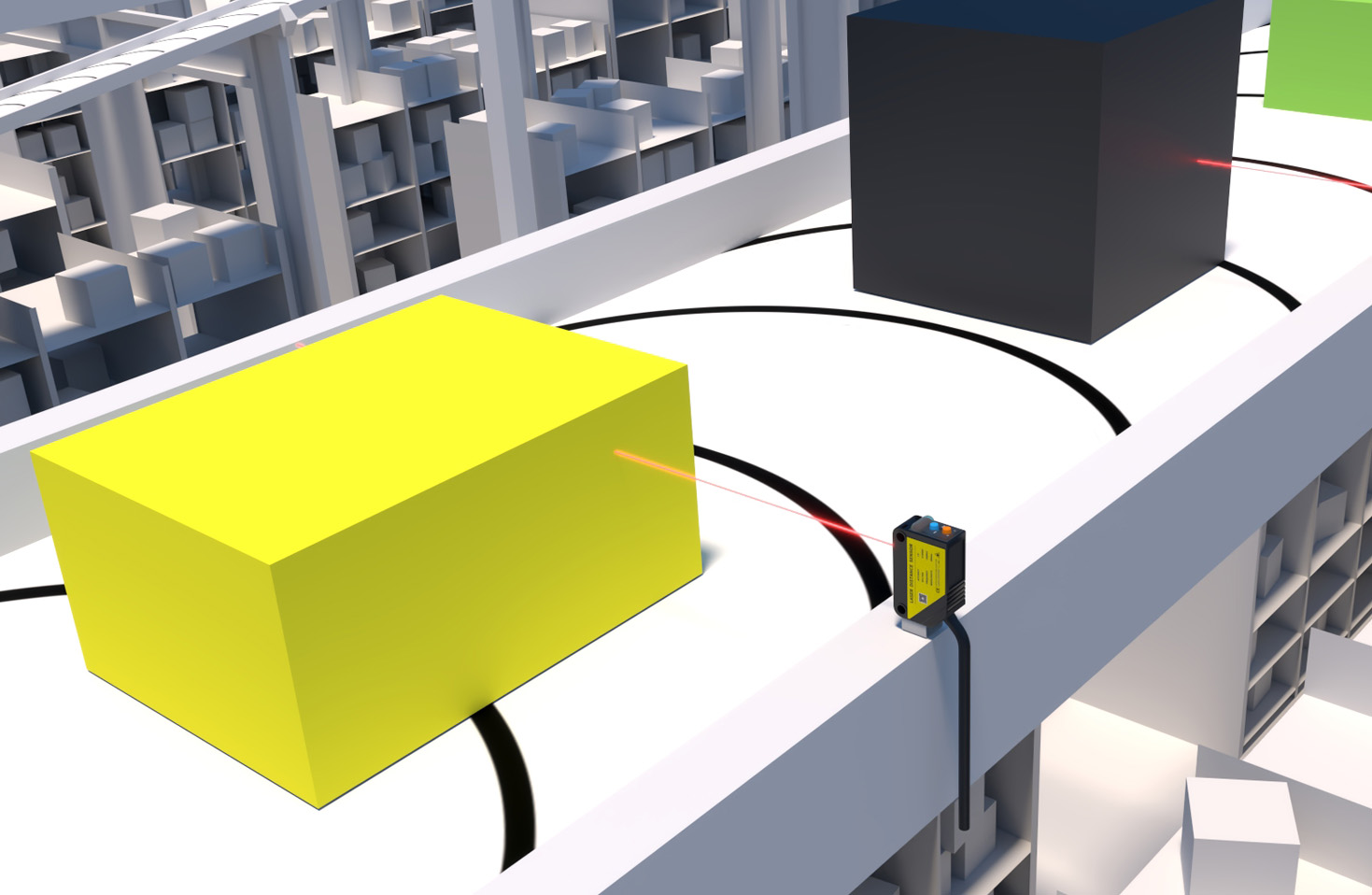
When selecting a digital CMOS laser sensor, several critical specifications must be evaluated. The measuring range, spot size, and resolution must align with the application's physical constraints and accuracy requirements. Repeatability, often specified in micrometers, is crucial for consistent performance. The response time must match the process speed. Environmental ratings (IP67, IP69K) are vital for resistance to dust, water, and washdowns. The choice of output interface—discrete I/O, IO-Link, or fieldbus—depends on the network infrastructure. Finally, advanced software tools for configuration and diagnostics significantly ease commissioning and troubleshooting.
Looking ahead, the future of digital CMOS laser sensors is intertwined with trends in miniaturization, intelligence, and connectivity. We are witnessing the integration of more powerful AI chips at the edge, enabling sensors to perform complex classification and anomaly detection locally. Multi-pixel CMOS arrays are enabling profile measurement and 3D contouring from a single sensor head. Furthermore, enhanced cybersecurity features are becoming standard to protect data integrity in connected factories. As machine vision and sensing converge, these sensors will evolve from simple measurement tools into intelligent perception nodes, driving the next wave of autonomous, flexible, and efficient manufacturing.
In conclusion, digital CMOS laser sensors are not merely incremental improvements but transformative components in modern industrial systems. Their combination of digital robustness, high precision, configurable intelligence, and network readiness makes them essential for achieving the quality, speed, and flexibility demanded by contemporary manufacturing and beyond. Their continued evolution will undoubtedly unlock new possibilities in automation and precision measurement.
