Laser Doppler Velocimetry (LDV), commonly referred to as a laser velocity sensor, represents a cornerstone technology in non-contact fluid flow measurement. Operating on the fundamental principle of the Doppler effect, this instrument offers unparalleled precision in quantifying velocity profiles across diverse industrial and research settings. The core mechanism involves directing a coherent laser beam onto moving particles within a fluid stream. As these particles intersect the measurement volume—the region where two laser beams converge—they scatter light. This scattered light undergoes a frequency shift proportional to the particle's velocity vector component along the bisector of the beams. Sophisticated photodetectors capture this signal, and subsequent signal processing via frequency analyzers or digital processors translates the Doppler shift frequency into accurate velocity data.
The advantages of LDV systems are manifold. Their non-intrusive nature eliminates flow disturbance, a critical factor in aerodynamic studies, turbomachinery analysis, and delicate biological flows. They provide exceptionally high spatial and temporal resolution, capable of capturing turbulent fluctuations and boundary layer phenomena that traditional pitot tubes or hot-wire anemometers might miss. Furthermore, LDV is inherently calibrated by the wavelength of the laser light, ensuring long-term stability and eliminating drift common in other sensor types. Modern systems often incorporate fiber optics, making probe heads compact and adaptable to challenging environments like internal combustion engines, wind tunnels, or chemical process vessels.
Key components of a standard LDV system include a continuous-wave laser source (typically helium-neon or argon-ion), a beam splitter and Bragg cell for frequency shifting (to determine flow direction), transmitting and receiving optics, and a high-sensitivity photomultiplier or avalanche photodiode. The signal processor is the brain, employing techniques like Fast Fourier Transform (FFT) or photon correlation spectroscopy to decode velocity from the noisy optical signal. For measuring multiple velocity components, systems can be configured in two-dimensional or three-dimensional setups using different laser colors and polarization states.
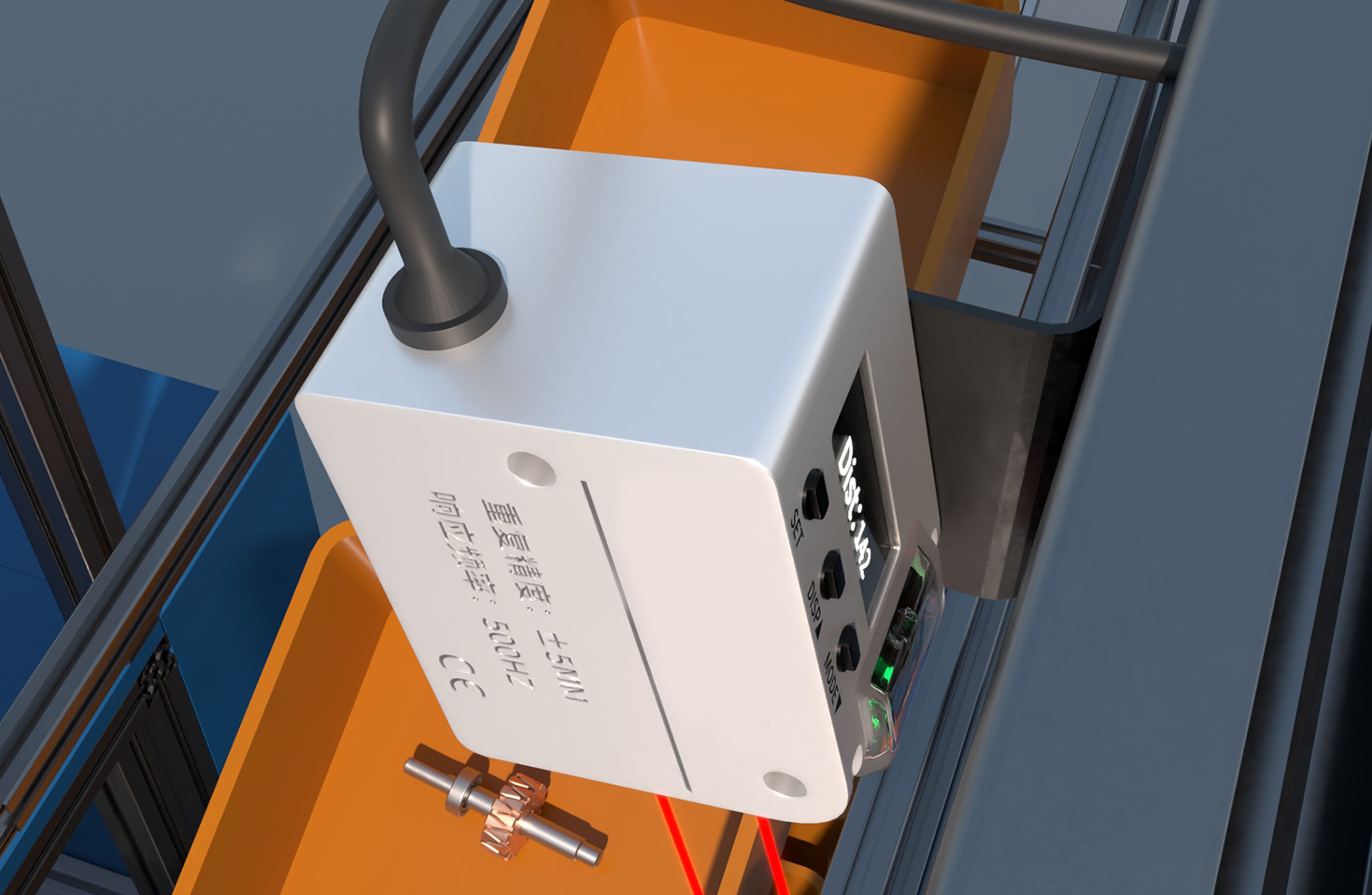
Industrial applications are extensive. In aerospace, LDV validates computational fluid dynamics (CFD) models for aircraft and spacecraft design. The automotive industry relies on it for optimizing engine in-cylinder flows, reducing emissions, and improving vehicle aerodynamics. In power generation, it monitors coolant flows in nuclear reactors and analyzes combustion dynamics in gas turbines. Chemical engineers use LDV to study mixing efficiency in reactors, while environmental scientists employ it for atmospheric research and river hydrology. Recent advancements see miniaturized LDV probes integrated into medical devices for measuring blood flow velocity, offering new diagnostic capabilities.
Despite its strengths, LDV is not without challenges. It requires the presence of natural or seeded scattering particles in the flow. In clean gases or liquids, introducing seeding particles like oil droplets or hollow glass spheres is necessary, which may not always be permissible. The equipment cost and operational complexity are higher compared to conventional sensors, demanding skilled personnel for setup and data interpretation. Alignment of optical components is critical and can be sensitive to vibration in harsh industrial environments.
Future trends point toward further miniaturization, increased robustness for online process monitoring, and integration with other optical techniques like Particle Image Velocimetry (PIV). The development of solid-state lasers and advanced digital signal processors continues to make systems more reliable and user-friendly. As industries push for greater efficiency and deeper process understanding, the demand for the precise, non-intrusive data provided by laser Doppler velocimetry is set to grow, solidifying its role as an indispensable tool for fluid dynamicists and engineers worldwide. The technology's ability to deliver fundamental insight into flow behavior makes it a critical asset for innovation across sectors from energy to biotechnology.