In the rapidly evolving landscape of industrial automation and precision measurement, the laser sensor operating at 5000 Hz represents a significant leap in performance. This frequency, denoting 5000 measurement cycles per second, is a critical parameter that defines the sensor's ability to capture high-speed events with exceptional temporal resolution. Unlike standard sensors operating at lower frequencies, a 5000 Hz laser sensor provides a sampling interval of just 0.2 milliseconds, enabling the detection of minute changes in position, distance, or profile that would otherwise be missed.
The core technology enabling this high-frequency operation typically involves advanced modulation techniques and high-speed photodetector circuits. The laser diode emits a focused beam, often in the visible red or infrared spectrum. The reflected light is captured and processed by a receiver. At 5000 Hz, the signal processing electronics must be exceptionally fast and robust to handle the immense data stream without aliasing or latency. This requires specialized integrated circuits, efficient algorithms for noise filtering, and stable thermal management to maintain accuracy over prolonged operation.
Key performance metrics are profoundly enhanced at this frequency. The effective measurement speed allows for real-time monitoring of fast-moving objects on production lines, such as in bottling plants, semiconductor wafer handling, or high-speed packaging. The high data rate minimizes the "dead time" between samples, providing a near-continuous data stream that is crucial for closed-loop control systems. For instance, in robotic guidance or vibration analysis, a 5000 Hz sampling rate can accurately trace rapid oscillations or sudden displacements, enabling predictive maintenance and immediate corrective actions.
Applications for 5000 Hz laser sensors are diverse and demanding. In the automotive industry, they are deployed for precise weld seam tracking, gap and flush measurement on assembly lines, and testing of brake disc runout at high rotational speeds. In electronics manufacturing, these sensors verify component placement on printed circuit boards moving at high velocities. Furthermore, in logistics and sorting systems, they enable rapid dimensioning and volume calculation of parcels on conveyor belts. The high frequency is also indispensable in scientific research, such as studying fluid dynamics or material deformation under impact.
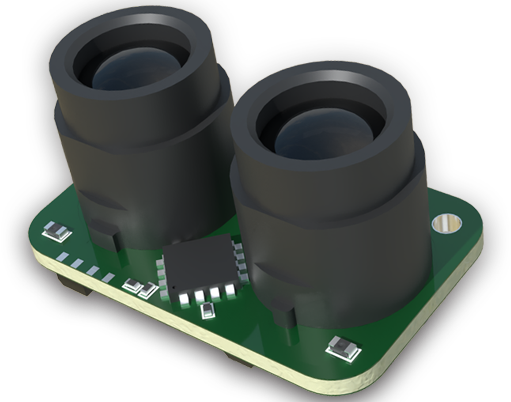
However, implementing a sensor at this frequency presents specific challenges. Environmental factors like ambient light, dust, or steam can interfere with the laser beam. The high data throughput demands compatible and high-speed data interfaces (e.g., EtherCAT, PROFINET IRT) and significant processing power from the host controller. System integrators must also consider the sensor's measurement range and spot size; while frequency defines speed, these parameters define the application's spatial envelope. Calibration and alignment are more critical than ever, as minor errors are sampled and potentially amplified at such a high rate.
When selecting a 5000 Hz laser sensor, engineers must evaluate the complete specification sheet: not just the frequency, but also linearity, repeatability, resolution, and the type of measurement (e.g., diffuse reflection, retro-reflective, or through-beam). The choice between a time-of-flight (ToF) principle or triangulation method depends on the required accuracy and distance. ToF sensors are excellent for longer ranges, while triangulation sensors offer superior accuracy at shorter distances, even at 5000 Hz.
In conclusion, the 5000 Hz laser sensor is a powerhouse tool for modern industry, pushing the boundaries of what is measurable in real-time. It transforms processes by providing a depth of data previously unattainable, driving efficiency, quality control, and innovation. As production speeds continue to increase and the demand for precision grows, the role of these high-frequency sensing solutions will only become more central to advanced manufacturing and research paradigms. Their ability to capture the fleeting details of motion and form is, quite literally, illuminating the path toward smarter automation.
