In industrial automation and control systems, proximity sensors are indispensable components for non-contact detection of objects. A fundamental and often critical specification for these devices is their sensing distance, also known as the nominal sensing distance (Sn). This parameter is not a fixed, absolute value but a reference point defined under specific, standardized conditions. Understanding what influences this distance and how it behaves in real-world applications is essential for reliable system design and sensor selection.
The nominal sensing distance, Sn, is the theoretical operating distance for which the sensor is designed. It is typically determined using a standard target defined by the sensor's manufacturer, often a square of mild steel (e.g., Fe 360) with a side length equal to the sensor's diameter or the diameter of its sensing face. This measurement is conducted at a nominal supply voltage and an ambient temperature of 20-25°C. It is crucial to recognize that this is a reference value, not a guaranteed detection point in all circumstances.
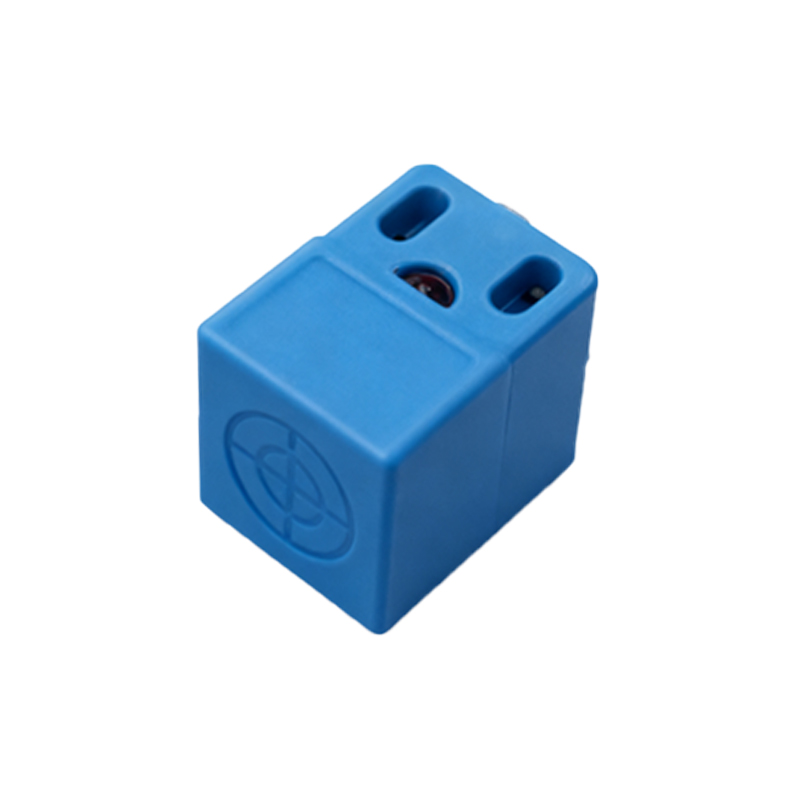
Several key factors can cause the actual, usable sensing distance (Sa) to deviate from the nominal Sn. The first is the target material. Inductive proximity sensors, which detect metallic objects, are calibrated for mild steel. For other metals, a correction factor must be applied. For instance, stainless steel may reduce the sensing distance to approximately 0.7-0.9 times Sn, while aluminum or copper can reduce it dramatically to 0.3-0.4 times Sn. Capacitive sensors, used for non-metallic materials, are also highly sensitive to the target's dielectric constant.
The second major factor is the target's size, shape, and orientation. A target smaller than the standard test piece will reduce the effective sensing distance. Similarly, the shape matters; a rounded surface will have a shorter detection range compared to a flat surface presented squarely to the sensor face. The optimal orientation is with the target moving perpendicularly towards the sensing face. A lateral or tangential approach can significantly shorten the detection range.
Environmental conditions play a substantial role. Temperature fluctuations affect the electronic components and oscillation circuits within the sensor. Most datasheets specify a temperature drift coefficient, indicating how much the sensing distance may change per degree Celsius. Typically, the sensing distance decreases as temperature increases. Supply voltage variations can also influence the sensor's performance, though modern regulated sensors minimize this effect. The presence of external magnetic fields can interfere with inductive sensors, while humidity, dust, or contaminants can affect capacitive and optical variants.
For practical installation, the concept of "assured operating distance" (Sr) is vital. This is the distance within which reliable operation is guaranteed, considering all manufacturing tolerances and the factors mentioned above. It is always less than the nominal Sn, often around 0.9 x Sn or as specified by the manufacturer. Designers must use this Sr value, not Sn, when determining mounting positions to ensure a safety margin and prevent false triggers or missed detections.
Another critical consideration is the hysteresis (H). This is the difference between the switch-on point (as the target approaches) and the switch-off point (as the target recedes). Hysteresis, typically 3-10% of Sn, prevents output oscillation when a target is positioned right at the sensing limit and provides stable switching despite minor vibrations or positioning inaccuracies.
When selecting and applying a proximity sensor, follow these guidelines: Always refer to the manufacturer's datasheet for specific correction factors and performance graphs. Choose a sensor with a nominal sensing distance (Sn) greater than your required physical gap to account for the assured operating distance (Sr) and material factors. For non-standard materials, conduct practical tests if possible. Ensure stable environmental conditions or select sensors with appropriate protection ratings (IP67, IP69K) and temperature specifications. Finally, consider the mounting; flush-mounted sensors (shielded) have a shorter range than non-flush (unshielded) types but are immune to lateral metal interference.
In conclusion, the sensing distance of a proximity sensor is a deceptively simple specification. Its effective value in an application is the result of a complex interaction between the sensor's design, the target's properties, and the operating environment. A deep understanding of these interdependencies—moving beyond the nominal Sn to consider assured distance, hysteresis, and material effects—is what separates a functional installation from a robust, reliable, and maintenance-free automation solution. Proper selection and margin planning are the keys to leveraging the full, non-contact potential of these versatile devices.