Laser sealing sensors represent a sophisticated class of instrumentation widely employed in high-precision industrial environments, particularly within the electrical, semiconductor, and advanced manufacturing sectors. These sensors operate on the fundamental principle of utilizing coherent laser light to detect, measure, and verify the integrity of seals in real-time. The core mechanism involves the emission of a focused laser beam directed precisely at the sealing interface—be it on electronic housings, hermetic packages, or fluid system connections. As the laser interacts with the surface, several optical phenomena are harnessed for analysis.
The primary working principle is based on laser interferometry or high-resolution triangulation. In an interferometric setup, the sensor splits the laser beam into a reference path and a measurement path directed at the seal. The light reflected from the seal recombines with the reference beam, creating an interference pattern. Any microscopic deformation, gap, or discontinuity in the seal alters the optical path length, causing a measurable shift in the interference fringes. This shift is detected by photodiodes or CCD arrays and processed by onboard algorithms to quantify seal quality with nanometer-scale sensitivity. Triangulation-based sensors, alternatively, project a laser spot onto the seal surface. A receiver lens at a known angle captures the reflected spot's position. Any surface height variation due to a faulty seal changes the spot's location on the detector, enabling precise measurement of seal profile and detection of imperfections.
Key components of a laser sealing sensor system include the laser diode (typically in the visible or near-infrared spectrum), precision optics for beam shaping and focusing, a high-sensitivity photodetector, and a signal processing unit. The laser's coherence, monochromaticity, and low divergence are critical for achieving high signal-to-noise ratios and accurate measurements in challenging industrial settings with ambient vibrations or variable temperatures. Advanced systems integrate machine vision, where the laser line or pattern is projected across the entire seal perimeter. A camera captures the distorted pattern, and 3D reconstruction software analyzes the deformation to identify leaks, cracks, or insufficient bonding material with exceptional speed.
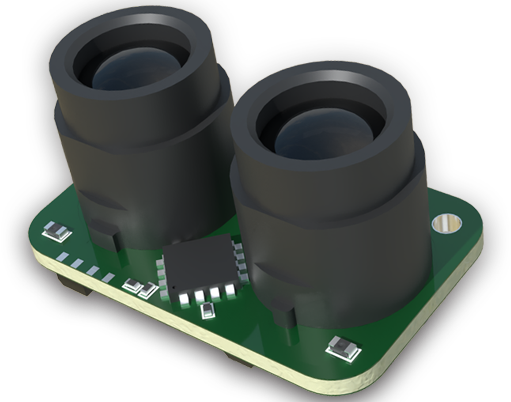
The applications are extensive. In electrical engineering, these sensors ensure the hermetic sealing of high-voltage components, transformers, and semiconductor packages, preventing moisture ingress and corrosion. In battery manufacturing for electric vehicles, laser sensors verify the seal integrity of cell casings, which is paramount for safety and longevity. The pharmaceutical and food packaging industries use them to inspect tamper-evident and vacuum seals. The non-contact nature of laser sensing is a paramount advantage, eliminating mechanical wear and allowing inspection of hot, sterile, or delicate seals without contamination or damage.
Performance is characterized by parameters such as measurement range (often from micrometers to several millimeters), resolution (down to sub-micron levels), sampling rate (critical for inline production inspection), and environmental robustness. Calibration against known standards is essential for maintaining accuracy. Modern trends involve the integration of these sensors with Industry 4.0 frameworks, where sensor data feeds into centralized control systems for predictive maintenance and real-time process optimization, minimizing downtime and waste.
Despite their advantages, challenges persist. Highly reflective or transparent sealing materials can complicate signal acquisition, often necessitating specialized coatings or optical filters. Furthermore, the initial investment and expertise required for system integration can be significant. However, the return on investment is justified through unparalleled quality control, reduced failure rates, and compliance with stringent industry regulations. Ongoing research focuses on miniaturization, multi-spectral laser systems for material differentiation, and enhanced AI-driven defect classification, promising even broader adoption in the future of smart manufacturing and electrical system reliability.