In the realm of industrial automation and quality control, laser inspection sensors have emerged as indispensable tools for achieving unparalleled precision, speed, and reliability. These sophisticated devices operate on the principle of emitting a focused beam of coherent light—a laser—towards a target object. The sensor then detects the interaction of this beam with the object, whether through reflection, scattering, or triangulation, to gather critical data about its presence, position, dimensions, profile, or surface characteristics. Unlike conventional photoelectric or proximity sensors, laser sensors offer significantly higher resolution and accuracy, often down to the micrometer level, making them ideal for demanding applications where minute details are paramount.
The core technology behind these sensors varies, leading to several distinct types. Laser triangulation sensors are among the most common for distance and displacement measurement. They project a laser spot onto the target, and a receiving lens focuses the reflected light onto a position-sensitive detector. Any change in the target's distance causes the spot to shift on the detector, allowing for precise calculation of displacement. Conversely, laser profile sensors, or line scanners, project a laser line instead of a single spot. A camera captures the deformation of this line as it sweeps across an object, generating a detailed 2D or 3D cross-sectional profile. This is invaluable for contour inspection, gap and flush measurement, and volume calculation. Another critical category is the laser contrast sensor, designed to detect subtle differences in surface color, texture, or material, even on challenging surfaces where standard sensors fail.
The applications of laser inspection sensors span virtually every manufacturing sector. In the automotive industry, they are deployed for rigorous tasks such as verifying the precise gap dimensions between car body panels, inspecting weld seam quality, and ensuring the correct assembly of engine components. Electronics manufacturers rely on them to measure the coplanarity of chip leads, inspect solder paste volume on PCBs, and verify the placement of miniature components. In pharmaceutical packaging, laser sensors verify fill levels in vials, check for cap presence and alignment, and inspect label positioning with faultless accuracy. Furthermore, they play a crucial role in logistics for dimensioning packages and guiding robotic arms in pick-and-place operations with sub-millimeter precision.

Selecting the appropriate laser sensor for a specific task requires careful consideration of several technical parameters. The required measurement range and stand-off distance are primary factors. Resolution and repeatability define the sensor's capability to detect minute changes and produce consistent results. The type of output (e.g., analog voltage/current, digital switching, or serial data via Ethernet/IP or PROFINET) must be compatible with the existing control system. Environmental robustness is also critical; factors such as ambient light interference, dust, vibration, and temperature fluctuations can affect performance. Therefore, sensors with high IP ratings, robust housings, and specialized filters are necessary for harsh industrial environments. Additionally, the target surface properties—whether it's shiny, dark, transparent, or textured—will influence the choice of sensor model and its configuration settings.
Integration and calibration are vital steps to ensure optimal performance. Proper mechanical mounting to minimize vibration, alignment of the laser beam, and configuration of sensing windows and thresholds are essential. Many modern sensors come with intuitive software for easy setup, real-time data visualization, and advanced diagnostics. Regular maintenance, primarily keeping the lens clean from contaminants, ensures long-term reliability and accuracy.
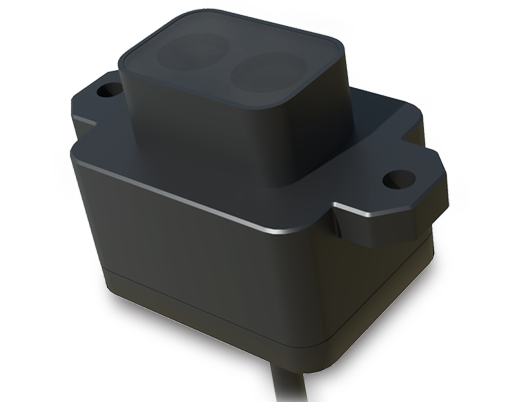
Looking ahead, the evolution of laser inspection technology continues. Trends point towards smarter sensors with embedded processing power, enabling edge computing for faster decision-making without burdening the central PLC. The integration of artificial intelligence and machine learning algorithms allows for more complex pattern recognition and adaptive inspection, moving beyond simple go/no-go checks to predictive quality analysis. Furthermore, miniaturization is making high-precision laser sensing accessible for more compact machinery and delicate applications.
In conclusion, laser inspection sensors represent a cornerstone of modern precision manufacturing and automation. Their ability to deliver non-contact, high-speed, and exceptionally accurate measurements solves complex inspection challenges that other sensing technologies cannot address. By understanding their operating principles, diverse applications, and key selection criteria, engineers and system integrators can effectively harness their power to enhance product quality, optimize production efficiency, and drive innovation across industries. As technology advances, these sensors will undoubtedly become even more capable, further solidifying their critical role in the factories of the future.
