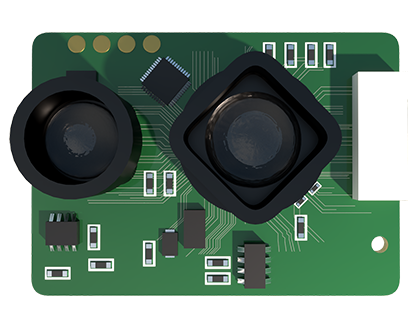
In the rapidly evolving landscape of industrial automation and precision engineering, unbounded laser sensors have emerged as a transformative technology. Unlike traditional confined or bounded sensing systems, these advanced devices operate without physical constraints on their measurement range, offering unparalleled flexibility and accuracy. The core principle involves emitting a highly focused laser beam toward a target; the reflected light is then analyzed to determine parameters such as distance, displacement, thickness, or presence with exceptional resolution. This non-contact methodology eliminates mechanical wear, reduces maintenance costs, and ensures consistent performance even in harsh environments filled with dust, vibration, or extreme temperatures.
A key advantage of unbounded laser sensors lies in their adaptability. They can be seamlessly integrated into diverse applications, from automotive assembly lines—where they verify part dimensions and alignments—to semiconductor manufacturing, monitoring microscopic wafer thicknesses. In logistics, these sensors facilitate precise object detection and sorting in high-speed warehouses. Their ability to deliver real-time, high-speed data enables proactive quality control, minimizing production errors and enhancing overall operational efficiency. Advanced models incorporate intelligent features like automatic calibration, ambient light compensation, and Ethernet connectivity for Industry 4.0 compatibility, allowing seamless data exchange with central control systems.
Despite their sophistication, selecting the appropriate unbounded laser sensor requires careful consideration of factors such as measurement range, response time, beam type (e.g., point, line), and environmental robustness. For instance, in outdoor applications, sensors with robust housings and immunity to sunlight interference are essential. As industries increasingly prioritize smart manufacturing and IoT integration, the demand for these sensors is projected to grow exponentially. Future developments may focus on enhancing multi-sensor fusion capabilities, reducing power consumption, and incorporating AI-driven analytics for predictive maintenance. Ultimately, unbounded laser sensors represent not just an incremental improvement but a paradigm shift, empowering engineers to achieve levels of precision and reliability previously unattainable, thereby driving innovation across sectors from aerospace to consumer electronics.