Proximity switch sensors are fundamental components in modern industrial automation, offering non-contact detection of metallic and non-metallic objects. Understanding their working principle is crucial for engineers and technicians involved in system design and maintenance. This article delves into the core operational mechanics, effectively visualized through an animated explanation, tailored for the electrical and automation industry.
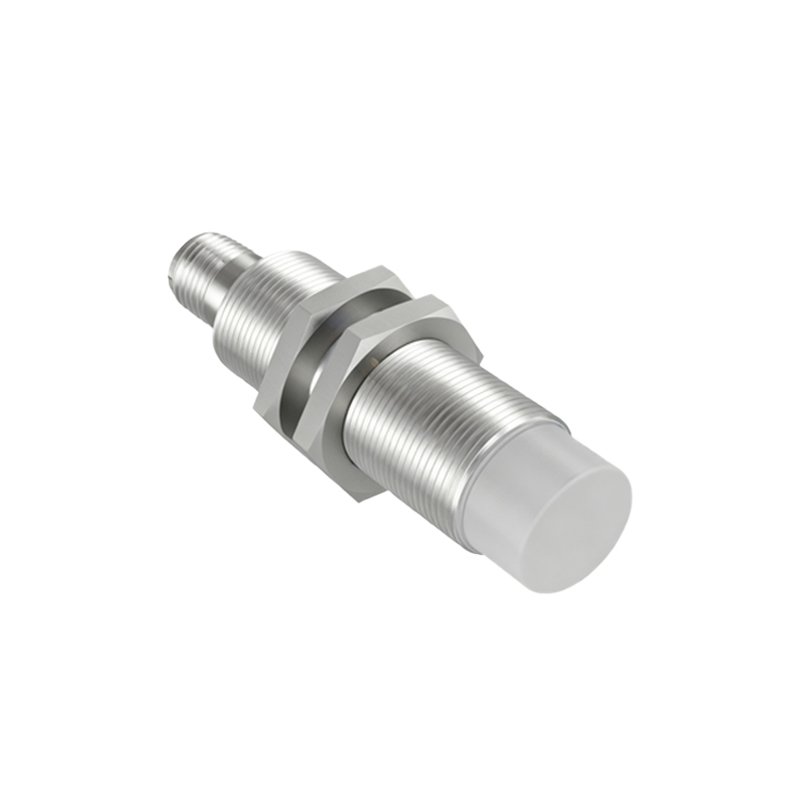
At its heart, a proximity sensor detects the presence or absence of an object within its sensing range without physical contact. The most common types are inductive, capacitive, and photoelectric. The inductive proximity sensor, widely used for metal detection, operates on the principle of electromagnetic induction. An internal oscillator generates a high-frequency electromagnetic field that radiates from the sensor's active face. When a metallic target enters this field, eddy currents are induced on the target's surface. These eddy currents draw energy from the oscillator circuit, causing a reduction in oscillation amplitude. This change is detected by a threshold circuit, which subsequently triggers a solid-state switch to change its output state (ON or OFF). The animation would vividly show the generation of the electromagnetic field, the disturbance caused by the incoming metal object, the formation of eddy currents, and the final switching action of the output transistor.
Capacitive proximity sensors function by detecting changes in capacitance. The sensor forms one plate of a capacitor, with the target object acting as the other plate. The internal oscillator is tuned to a specific capacitance value. As a target (metal, plastic, wood, liquid) approaches the sensor face, it alters the dielectric constant and the effective capacitance of the system. This change increases the oscillation amplitude. Once the amplitude reaches a predetermined threshold, the output circuit switches. An animated sequence would illustrate the electrostatic field, the variation in capacitance as different materials approach, and the corresponding trigger mechanism.
Photoelectric sensors, another critical category, use a light beam (visible, infrared, or laser). The basic types are through-beam, retro-reflective, and diffuse. In a through-beam setup, the animation would demonstrate an emitter sending a continuous light beam to a separate receiver. An object interrupting this beam causes the receiver to signal the output to switch. The key principle here is the modulation of light to ensure immunity to ambient light interference.
The output stage of these sensors typically features a solid-state switch (like an NPN or PNP transistor) or a relay contact. The animation is instrumental in showing how the internal detection signal seamlessly drives this output stage, providing a clean electrical signal to programmable logic controllers (PLCs), motor starters, or other control devices. It highlights the absence of moving parts, leading to high reliability, long operational life, and fast response times—essential factors in high-speed automation and packaging lines.
Furthermore, the animation effectively clarifies critical specifications such as sensing distance, repeatability, hysteresis, and the concept of a "shielded" versus "non-shielded" design in inductive sensors. A shielded sensor's field is concentrated frontally, allowing flush mounting in metal, while a non-shielded sensor has a larger lateral field. Visualizing these fields prevents common installation errors.
In summary, a well-crafted animation demystifies the abstract electromagnetic and capacitive phenomena behind proximity switches. It translates complex electrical principles into an intuitive, step-by-step visual narrative. This enhances comprehension for troubleshooting, proper sensor selection based on target material and environmental conditions, and optimal integration into control systems. For any electrical professional, grasping these animated principles is not just academic; it is a practical necessity for designing efficient, robust, and fail-safe automated industrial processes. The seamless interaction between the sensing field, the target, and the electronic switching circuit forms the bedrock of countless automated systems, from conveyor belts and robotic arms to safety interlocks and material level control.