In the realm of industrial automation, the integration of laser distance sensors has revolutionized precision handling and robotic grasping applications. These advanced sensors provide non-contact, high-accuracy measurement capabilities essential for modern manufacturing and logistics systems. Utilizing time-of-flight or phase-shift measurement principles, laser sensors emit a focused beam toward a target object. The sensor then calculates the distance by analyzing the time delay or phase difference of the reflected light. This process occurs within milliseconds, enabling real-time, dynamic distance feedback crucial for automated systems.
The core advantage of laser distance sensors in grasping tasks lies in their exceptional accuracy and resolution. Typical industrial-grade sensors offer sub-millimeter precision, even at ranges extending several meters. This level of detail allows robotic arms and automated guided vehicles (AGVs) to precisely locate objects within a work envelope. For instance, in bin-picking applications, a laser sensor mounted on a robot's end-effector can scan a disordered bin of parts. It generates a detailed 3D point cloud or profile data, identifying the position and orientation of each component. The control system uses this data to compute the optimal grasp point and trajectory, ensuring the gripper engages the object correctly without collisions.
Environmental robustness is another critical factor. Modern laser sensors are designed to withstand typical industrial challenges such as ambient light interference, dust, vibration, and temperature fluctuations. Many models feature IP67 or higher ingress protection ratings, making them suitable for harsh environments like welding cells or foundries. The coherent, narrow beam of a laser is less susceptible to stray light compared to other optical methods, providing reliable operation under varying lighting conditions on the factory floor.
Integration into control architectures is streamlined through standard industrial communication protocols. Most laser distance sensors offer interfaces like analog voltage/current outputs, RS-232, RS-485, or Ethernet-based protocols such as EtherNet/IP, PROFINET, and EtherCAT. This allows seamless connectivity with Programmable Logic Controllers (PLCs), robotic controllers, and PC-based systems. The sensor's data directly informs the motion control loop, enabling closed-loop positioning where the gripper's movement is continuously adjusted based on the live distance measurement until the target is securely acquired.
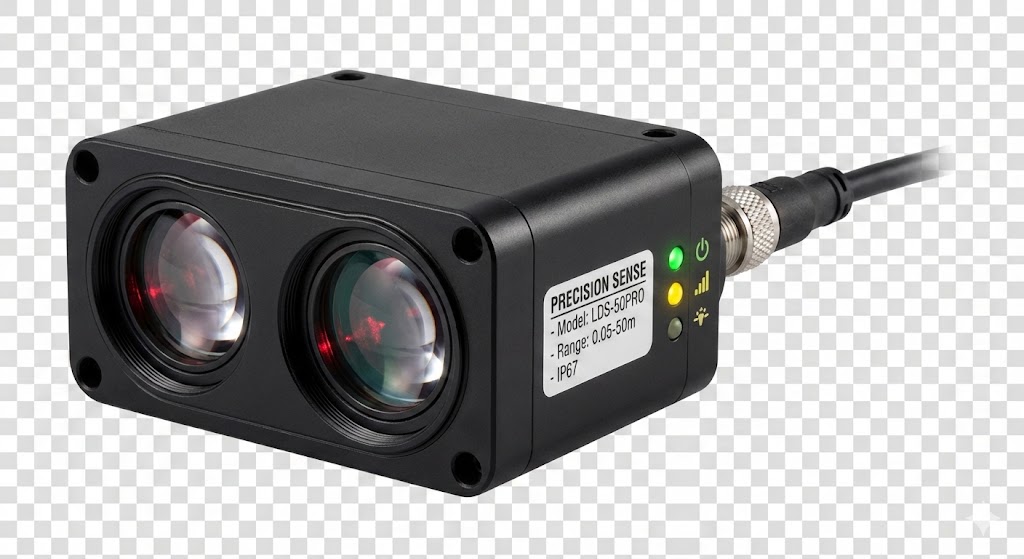
Application examples abound across industries. In automotive assembly, laser sensors guide robots to accurately pick and place delicate components like windshields or interior panels onto vehicle bodies. In electronics manufacturing, they ensure precise placement of circuit boards and connectors. Packaging and palletizing lines use these sensors to detect the height of stacked boxes, allowing grippers to adapt their stroke for efficient layer picking. Even in logistics, automated storage and retrieval systems (AS/RS) rely on laser sensors to position shuttle carts and cranes for item retrieval from storage bins.
Selecting the right sensor involves key parameters: measuring range, accuracy, repeatability, response time, and beam spot size. For grasping irregular or reflective objects, a sensor with a small, precise beam spot and advanced filtering algorithms to handle signal noise is preferable. The mounting position and angle relative to the target must also be considered to avoid shadowing or specular reflection issues. Regular maintenance, primarily lens cleaning, ensures long-term measurement stability.
Looking forward, advancements in sensor fusion and smart sensors are enhancing capabilities. Combining laser distance data with 2D vision or force/torque sensor feedback creates a more comprehensive perception system for complex grasping tasks. Embedded intelligence allows sensors to perform preliminary data processing, reducing the computational load on the central controller. As Industry 4.0 and the Industrial Internet of Things (IIoT) evolve, laser distance sensors will increasingly serve as critical data nodes, providing not only measurement values but also diagnostic and prognostic information for predictive maintenance and optimized workflow.
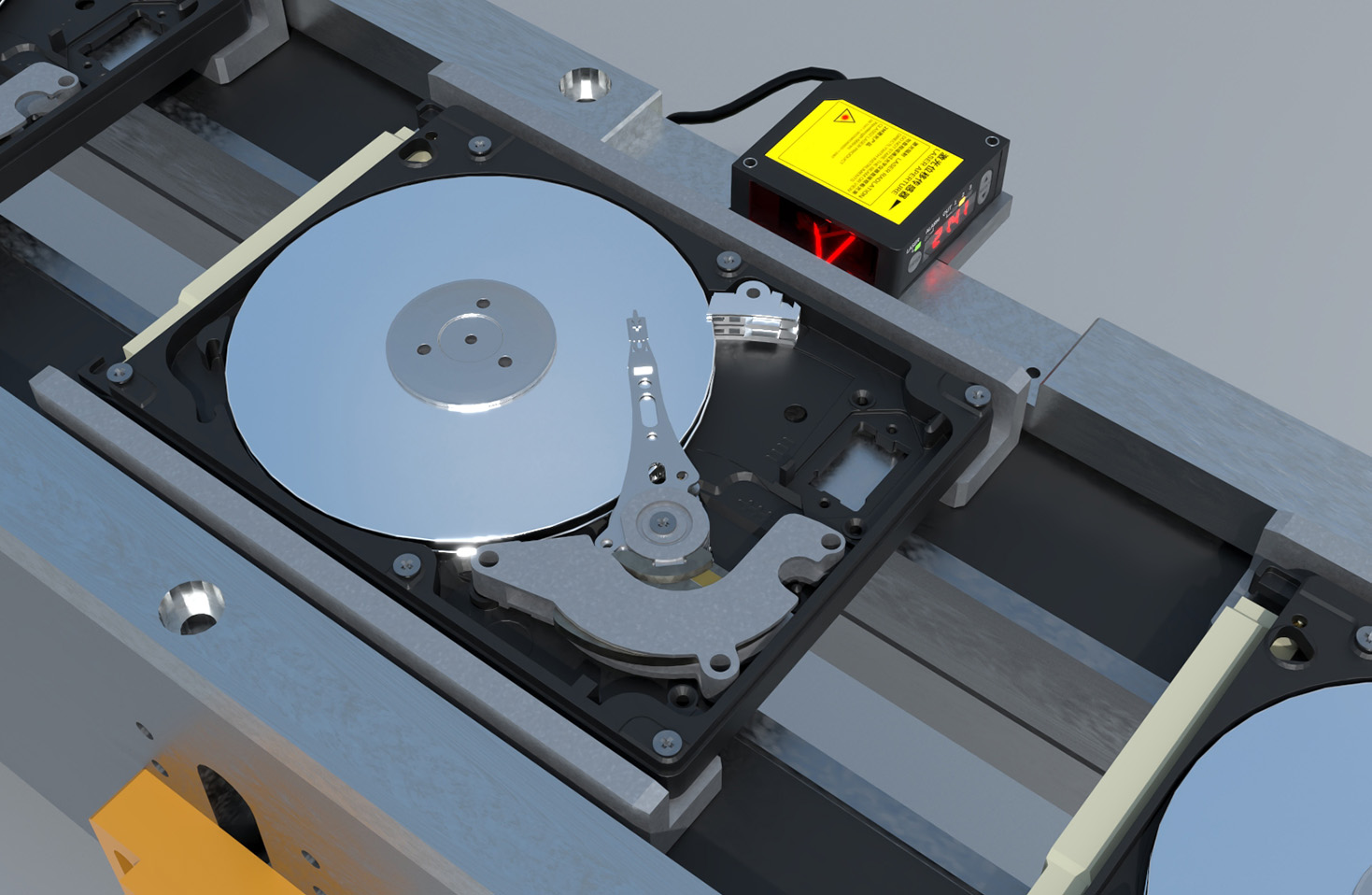
In conclusion, laser distance sensors are indispensable for achieving high-precision, reliable object handling in automated systems. Their speed, accuracy, and durability address the core demands of modern industrial grasping, from simple pick-and-place to complex, unstructured bin picking. By delivering exact spatial data, they empower robots to interact with their environment intelligently and efficiently, driving productivity and flexibility in automated production and material handling.