In the rapidly evolving landscape of industrial automation, 360-degree laser sensors have emerged as a cornerstone technology, enabling unprecedented levels of precision, safety, and efficiency. Unlike traditional single-point or line-scanning LiDAR systems, a 360 laser sensor emits a rotating laser beam to create a continuous, real-time two-dimensional map of its entire surroundings. This omnidirectional field of view, typically achieving a full 360° horizontal scan with a certain vertical field, is fundamentally transforming applications from autonomous mobile robots (AMRs) to advanced safety systems in manufacturing cells.
The core principle of a 360 laser sensor is based on time-of-flight (ToF) or phase-shift measurement. The sensor's emitter rotates at high speed, emitting laser pulses. When these pulses strike an object, they are reflected back to a receiver within the sensor. By precisely calculating the time delay between emission and reception, the sensor determines the distance to the object with millimeter-level accuracy. Thousands of such distance measurements per second generate a dense point cloud, a precise digital representation of the environment. Modern sensors offer configurable scanning angles and zones, allowing engineers to ignore irrelevant areas and focus on critical detection fields, thereby optimizing processing power and response times.
The applications for 360 laser sensors are vast and critical. In logistics and warehousing, they are the primary "eyes" of AMRs. They enable simultaneous localization and mapping (SLAM), allowing robots to navigate dynamic, human-populated environments safely and efficiently by detecting pallets, racks, and personnel in real-time. In manufacturing, these sensors create virtual safety zones around hazardous machinery. If a person or object breaches a predefined warning or stop zone, the sensor triggers an immediate safety response through a safety-rated controller, halting equipment without the physical constraints of traditional light curtains or fences. Furthermore, in automated guided vehicle (AGV) systems, 360 sensors facilitate precise docking, convoy driving, and collision avoidance, ensuring smooth material flow.
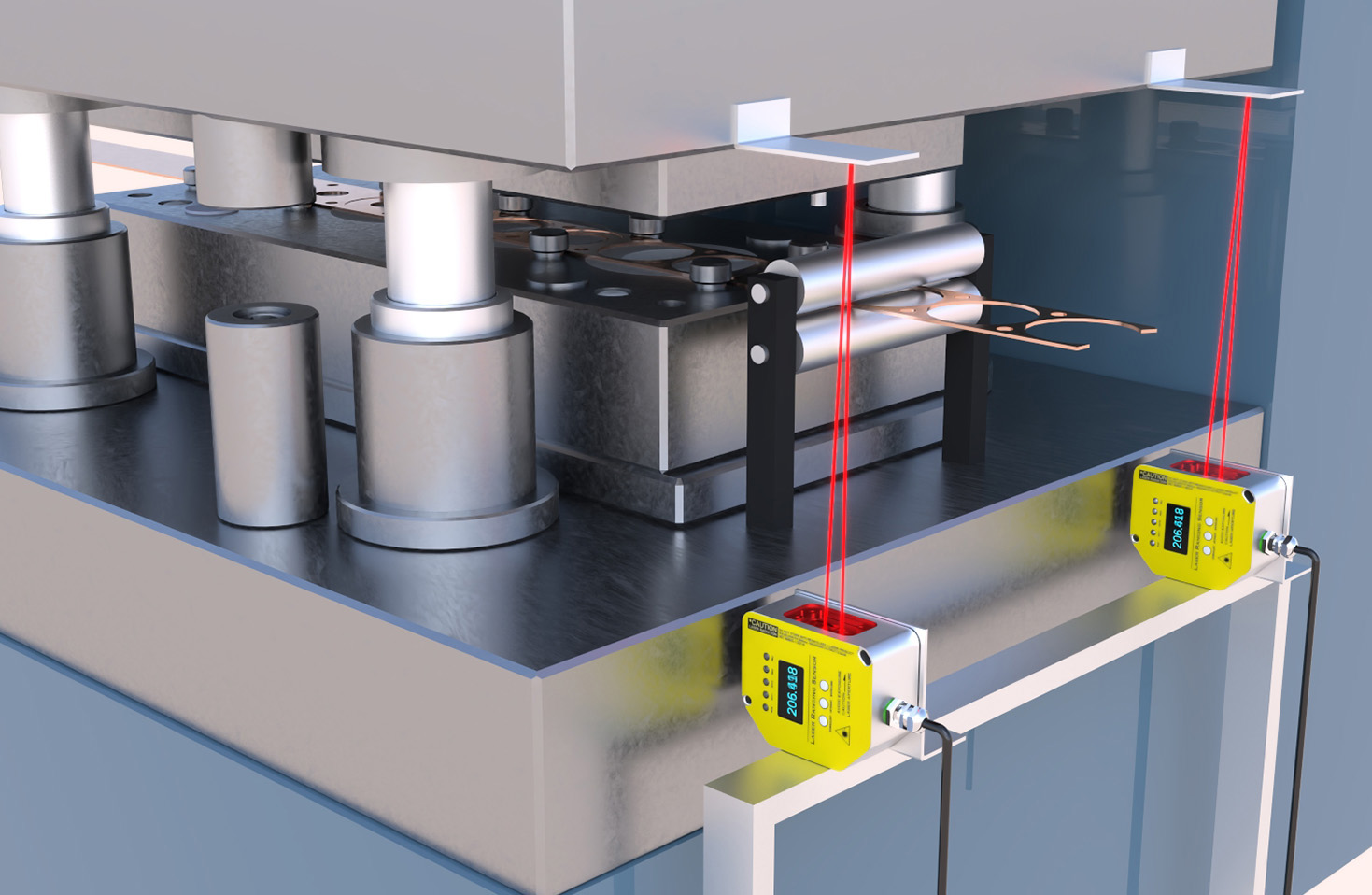
Selecting the appropriate 360 laser sensor requires careful consideration of several technical parameters. Range is paramount; indoor applications may only require 10-30 meters, while outdoor AGVs might need 50 meters or more. Scanning frequency, often 25 Hz or higher, determines how quickly the environment is updated, crucial for high-speed robots. Angular resolution defines the distance between measured points; finer resolution yields more detailed maps but generates more data. Environmental sealing (IP ratings) is essential for operation in dusty, humid, or washdown conditions. Finally, the interface—Ethernet/IP, PROFINET, EtherCAT, or simple TCP/IP—must integrate seamlessly with the existing control architecture.
The integration of 360 laser sensors with Industrial Internet of Things (IIoT) platforms represents the next frontier. Sensor data can be streamed to cloud analytics for predictive maintenance, monitoring performance degradation, or optimizing fleet routes for multiple robots. Advanced algorithms can now classify detected objects, distinguishing between a human, a cardboard box, and a metal rack, enabling more intelligent and context-aware automation decisions.
Despite their advantages, challenges remain. Highly reflective or absorbent surfaces can cause measurement errors. Dense fog or airborne contaminants can attenuate the laser beam. Therefore, system design must include redundancy and environmental testing. The cost, though decreasing, remains higher than simpler sensors, necessitating a clear ROI analysis focused on safety improvements, uptime, and operational flexibility.
In conclusion, 360-degree laser sensors are not merely incremental improvements but foundational enablers for the smart factories and autonomous systems of today and tomorrow. By providing a reliable, precise, and comprehensive spatial awareness, they form the critical perception layer upon which safe, efficient, and flexible automation is built. As technology advances, we can expect even greater ranges, higher resolutions, and more embedded intelligence, further solidifying their indispensable role in industrial innovation.