Proximity sensors, the silent sentinels of industrial automation, are marvels of modern electrical engineering. Their ability to detect the presence or absence of an object without physical contact is fundamental to countless applications, from assembly lines and robotics to consumer electronics and automotive safety systems. Understanding their manufacturing process is crucial for engineers specifying, integrating, or troubleshooting these devices. This guide delves into the intricate journey from raw materials to a fully tested proximity sensor, adhering to industry standards and best practices.
The manufacturing process begins with the core component: the sensing element. For inductive sensors, designed to detect metallic objects, this involves the precise winding of copper wire around a ferrite core. Automated winding machines ensure consistent coil geometry, which is critical for stable oscillation frequency and sensing range. The coil is then potted or encapsulated in a thermosetting resin to protect it from moisture, vibration, and mechanical stress. For capacitive sensors, used for non-metallic materials, the process focuses on creating precisely sized and spaced electrode plates, often through photolithography or precision stamping on a printed circuit board (PCB).
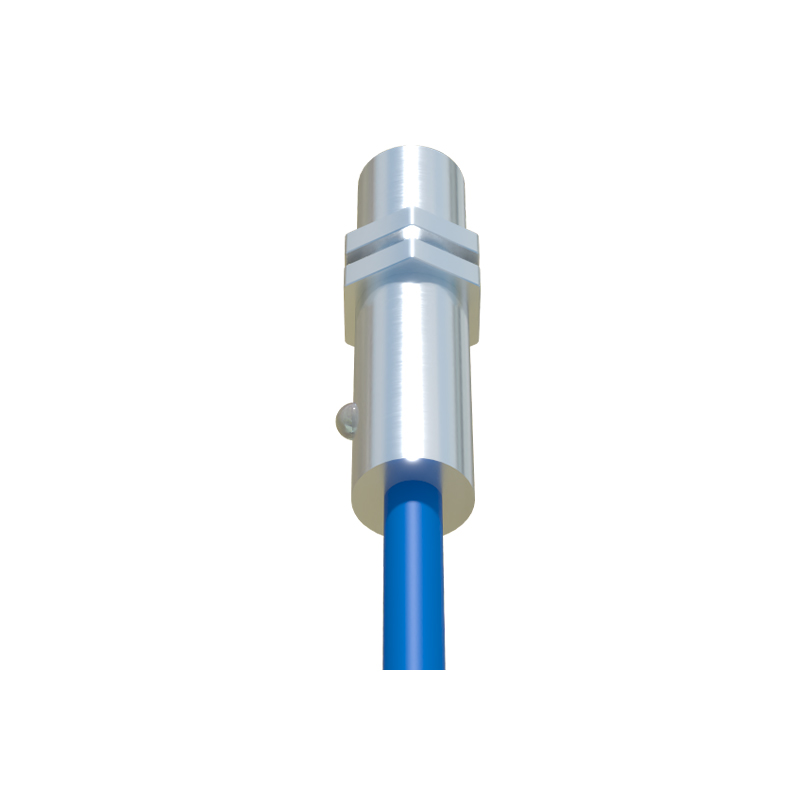
The heart of the sensor is its oscillator and evaluation circuitry. A dedicated ASIC (Application-Specific Integrated Circuit) or a microcontroller is typically employed. This IC generates the high-frequency electromagnetic field (inductive) or measures capacitance changes (capacitive). The semiconductor die is bonded to a lead frame or directly onto a hybrid circuit substrate. Surface-mount technology (SMT) lines then populate the main PCB with resistors, capacitors, and other passive components. Reflow soldering in controlled ovens creates reliable electrical connections. For harsh environments, conformal coating is applied to the assembled PCB to protect against contaminants, dust, and condensation.
The housing assembly is a critical phase defining the sensor's ingress protection (IP) rating and mechanical robustness. Housings are typically injection-molded from engineering plastics like PBT or PA, or from stainless steel for heavy-duty applications. The sensing face, often made of a specific polymer that allows electromagnetic fields to pass through (for inductive types), is integrated. The potted sensing coil and the populated PCB are carefully assembled into the housing. Precision is key here to ensure the optimal distance and alignment between the sensing coil and the front face, directly impacting performance specifications.
Following assembly, the sensor undergoes a rigorous sealing process. O-rings, gaskets, and potting compounds are used to achieve IP67, IP68, or IP69K ratings. This step is vital for sensors deployed in washdown areas or outdoor environments. Potting the entire internal cavity with epoxy resin is common for high-vibration applications, locking components in place and providing excellent environmental sealing.
No sensor leaves the factory without comprehensive testing and calibration, the most critical phase for quality assurance. Each unit undergoes automated functional tests. For an inductive sensor, this involves checking its switching output against certified metal targets at specified distances (the rated sensing distance). The switch-on and switch-off points are verified, and hysteresis is measured. Response time, temperature drift, and short-circuit protection are also validated. Calibration involves fine-tuning the oscillator's threshold to meet the exact specifications on the datasheet. Lasers often mark the final product with its type code, serial number, and electrical ratings.
Finally, the sensors are packaged according to customer requirements, often in anti-static materials, and prepared for shipment. The entire manufacturing process is governed by quality management systems like ISO 9001, with traceability maintained for every component. For engineers, appreciating this complex interplay of materials science, electronics fabrication, precision mechanics, and stringent testing underscores the reliability engineered into every proximity sensor, enabling smarter and more efficient automated systems.