Laser sensors represent a cornerstone of modern industrial automation, measurement, and control systems. Their ability to provide non-contact, high-precision, and rapid detection makes them indispensable across diverse sectors. This article delves into the full spectrum of laser sensor technology, exploring operating principles, key classifications, and practical application scenarios.
Fundamental Operating Principle
At its core, a laser sensor operates by emitting a focused beam of coherent light—typically from a laser diode—towards a target object. The sensor then detects the interaction of this beam with the target. This interaction can be analyzed in several ways, forming the basis for different sensor types. The most common methods involve measuring the time-of-flight (ToF) of the light pulse, triangulation of the reflected beam's position, or analyzing the phase shift or frequency modulation of the returned signal. The emitted laser light is highly collimated, allowing for precise targeting over long distances with minimal beam divergence.
Primary Classifications and Technologies
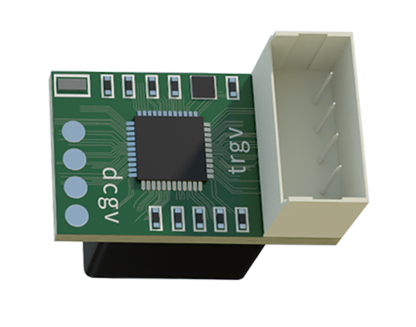
The laser sensor family is broadly categorized based on the measurement principle and the specific property being sensed.
1. Laser Distance Sensors: These measure the interval between the sensor and a target. Key subtypes include:
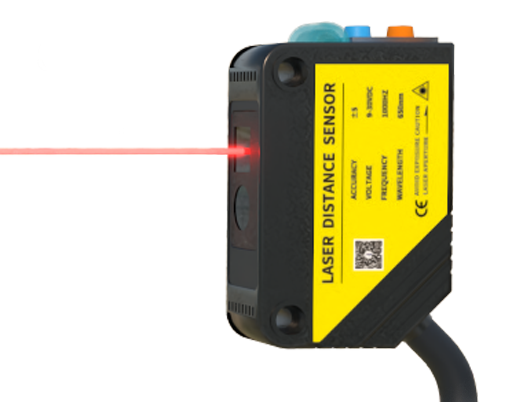
* Time-of-Flight (ToF) Sensors: Calculate distance based on the time a laser pulse takes to travel to the target and back. Ideal for long-range measurements (up to several hundred meters) with moderate accuracy.
* Triangulation Sensors: Use a laser emitter, a receiving lens, and a position-sensitive detector (PSD or CMOS). The position of the reflected spot on the detector changes with distance, enabling extremely high precision for short to medium ranges.
* Phase-Shift and Frequency-Modulated Continuous Wave (FMCW) Sensors: Offer a balance of range and high accuracy by analyzing the phase difference or frequency modulation between emitted and reflected continuous-wave laser light.
2. Laser Displacement Sensors: A subset of distance sensors optimized for measuring minute changes in position, vibration, or thickness with sub-micron resolution. Triangulation-based sensors dominate this category for high-precision tasks.
3. Laser Profilers/Line Scanners: These project a laser line onto a target surface. A camera captures the deformation of this line, enabling the reconstruction of a 2D profile or, through scanning, a full 3D contour of an object. Crucial for dimensional inspection and reverse engineering.
4. Laser Contrast/Color Sensors: Detect the presence, absence, or contrast of marks, labels, or colors by analyzing the intensity of the reflected laser light. They are highly effective for reading challenging codes on various backgrounds.
5. Laser Micrometer/Optical Gauging Sensors: Utilize parallel laser beams or scanning beams to perform non-contact measurement of external dimensions like diameter, thickness, and gap width with exceptional speed and accuracy.
6. Laser Edge Detection Sensors: Precisely locate the edge of a material (e.g., web, sheet metal) by detecting a sharp change in the reflected signal as the laser beam scans across the boundary.
Critical Selection Parameters
Choosing the correct laser sensor requires careful evaluation of several parameters:
* Measuring Range: The minimum and maximum distance over which the sensor can operate reliably.
* Accuracy and Resolution: The closeness to the true value and the smallest detectable change.
* Spot Size: The diameter of the laser beam on the target, affecting spatial resolution.
* Response Time/Sampling Rate: How quickly the sensor can take and output measurements.
* Target Characteristics: Surface color, material, texture, and angle significantly influence the reflectivity and quality of the return signal.
* Environmental Conditions: Resistance to ambient light, dust, moisture, vibration, and temperature extremes is vital for industrial durability.
Industrial Application Domains
Laser sensors enable automation and quality control in countless applications:
* Manufacturing & Assembly: Robot guidance, part presence verification, pick-and-place positioning, weld seam tracking, and component alignment.
* Quality Inspection & Metrology: Thickness gauging, coplanarity checking, warp detection, profile measurement, and defect identification.
* Logistics & Material Handling: Palletizing, dimensioning for shipping, warehouse automation, and AGV (Automated Guided Vehicle) navigation.
* Electronics & Semiconductor: Wafer mapping, lead frame inspection, solder paste height measurement, and micro-component placement.
* Automotive: Brake disk thickness measurement, body panel gap analysis, and adaptive cruise control systems (using LiDAR, a advanced laser sensing form).
Future Trends and Conclusion
The evolution of laser sensor technology continues toward miniaturization, enhanced intelligence, and multi-functionality. Integration with AI and machine vision systems allows for more complex decision-making at the sensor level. Emerging technologies like LiDAR for autonomous vehicles and high-speed 3D scanning are pushing the boundaries of performance. Understanding the full series of laser sensors—from basic photoelectric counterparts to sophisticated profiling systems—empowers engineers to select the optimal tool. The correct sensor not only solves a measurement challenge but also drives efficiency, improves product quality, and enables next-generation automation solutions across the industrial landscape. Their role as precise, reliable, and versatile data acquisition devices ensures they will remain fundamental to technological advancement.