In the realm of industrial automation and machinery control, proximity switches and speed sensors are fundamental components that ensure operational efficiency, safety, and precision. These devices, though often discussed separately, frequently work in tandem to monitor and control mechanical processes. This article delves into their principles, types, applications, and key considerations for selection and integration.
Proximity switches, also known as proximity sensors, are non-contact devices that detect the presence or absence of an object within a specified range. They operate based on various physical principles, with inductive, capacitive, and magnetic types being the most common. Inductive proximity switches are widely used in metal detection applications. They generate an electromagnetic field and detect changes caused by metallic objects, making them ideal for harsh industrial environments where dirt, oil, or moisture is present. Capacitive proximity switches, on the other hand, can detect both metallic and non-metallic materials by sensing changes in capacitance. They are suitable for applications involving liquids, plastics, or granular materials. Magnetic proximity switches utilize reed switches or Hall-effect sensors to detect magnetic fields, often employed in position sensing for cylinders or rotary encoders.
The primary advantages of proximity switches include their durability, high switching frequency, and immunity to environmental contaminants. Since they lack mechanical contacts, they suffer minimal wear and tear, leading to longer service life and reduced maintenance. Typical applications include object counting, limit switching in conveyor systems, position verification in assembly lines, and safety interlocks in machinery guards.
Speed sensors, specifically rotational speed sensors, are designed to measure the rotational velocity of shafts, wheels, or gears. Common types include magnetic pickups, Hall-effect sensors, and optical encoders. Magnetic speed sensors, such as variable reluctance sensors, generate a voltage pulse when a ferromagnetic gear tooth passes by, with the pulse frequency proportional to rotational speed. Hall-effect speed sensors use a semiconductor to detect changes in magnetic field as a magnet or gear tooth approaches, providing a digital output signal. Optical encoders employ a light source and photodetector to read patterns on a disc, offering high resolution and accuracy for precise speed control.
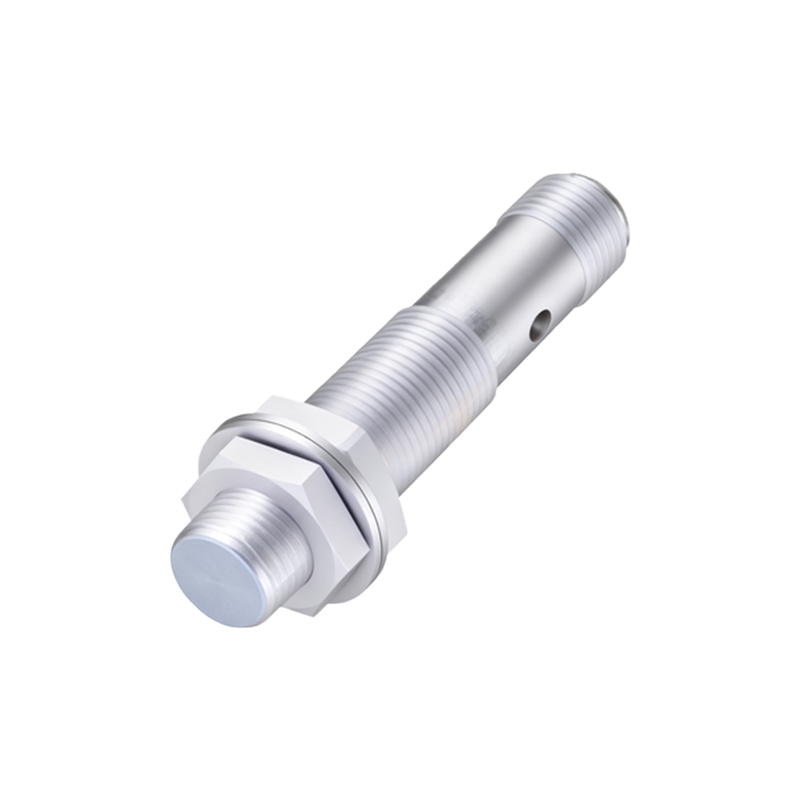
These sensors are critical in applications requiring real-time speed monitoring and control. In automotive systems, they measure wheel speed for anti-lock braking systems (ABS) and transmission input/output speeds. In industrial machinery, they monitor motor and conveyor speeds to prevent overloads, synchronize processes, and enable variable frequency drive (VFD) control. Additionally, speed sensors are integral to turbine monitoring, wind energy systems, and robotics, where accurate velocity feedback is essential for performance and safety.
The integration of proximity switches and speed sensors often enhances system functionality. For instance, in a packaging line, a proximity switch might detect the presence of a product, triggering a speed sensor to measure conveyor belt velocity for precise positioning. In motor control, a proximity switch could confirm rotor position, while a speed sensor regulates RPM through a feedback loop. Selecting the right combination requires careful analysis of environmental conditions, measurement ranges, output signals (e.g., analog, digital, or pulse), and compatibility with controllers like PLCs or microprocessors.
Key considerations for deployment include environmental factors such as temperature extremes, vibration, and exposure to chemicals or dust. Proximity switches must be chosen based on sensing distance, material composition of target objects, and electrical requirements (e.g., NPN vs. PNP outputs). For speed sensors, parameters like resolution, response time, and mounting constraints are crucial. Regular calibration and maintenance, though minimal for solid-state devices, help ensure long-term reliability.
Advancements in technology continue to refine these components. Smart sensors with integrated diagnostics and IO-Link communication are becoming more prevalent, enabling predictive maintenance and easier integration into Industry 4.0 frameworks. Miniaturization and enhanced materials also expand their applicability in compact or demanding settings.
In summary, proximity switches and speed sensors are indispensable in modern industrial systems. Their non-contact operation, robustness, and precision contribute significantly to automation, safety, and efficiency. Engineers must leverage their distinct characteristics and synergistic potential to design resilient and high-performing control systems. As industries evolve toward greater connectivity and intelligence, these sensors will remain at the core of mechanical monitoring and control solutions.