In the realm of precision measurement and industrial automation, the integrity of data acquisition under dynamic or harsh conditions is paramount. Among the suite of advanced sensing technologies, laser displacement sensors stand out for their non-contact, high-accuracy, and high-speed measurement capabilities. However, their application in environments subject to vibration, seismic activity, or mechanical shock—common in sectors like civil engineering, heavy machinery, aerospace, and energy—presents a significant challenge. This is where the specialized field of seismic-resistant or vibration-resistant laser displacement sensors becomes critical. These are not merely standard sensors placed in a sturdy box; they are engineered systems designed from the ground up to ensure reliable performance amidst physical disturbances.
The core principle of a laser displacement sensor involves projecting a laser beam onto a target surface and analyzing the reflected light, typically using triangulation or time-of-flight methods, to calculate distance with micron-level precision. External vibrations can disrupt this process in several ways. They can cause relative movement between the sensor body and its mounting base, induce internal misalignment of optical components, or create oscillations in the target itself that are indistinguishable from intended measurement changes. The result is signal noise, measurement drift, or complete data loss, compromising the entire control or monitoring system.
Engineering a laser displacement sensor for seismic resistance involves a multi-faceted approach addressing mechanical, optical, and electronic domains. Mechanically, the design focuses on robust housing materials like cast aluminum or stainless steel, which provide inherent damping. Internal components are secured using shock-absorbing mounts, dampers, and strategic potting compounds that dissipate vibrational energy before it reaches sensitive optics and circuitry. The mounting interface itself is often designed with anti-vibration lock mechanisms to prevent loosening over time.
Optically, the system must maintain beam alignment. This is achieved through the use of rigid, thermally stable lens barrels and secured optical paths. Some advanced designs incorporate active or passive alignment correction systems. Electronically, the signal processing unit is the brain that filters out noise. Sophisticated digital signal processors (DSPs) run algorithms that can differentiate between high-frequency vibration noise and the actual displacement signal of the target. Adaptive filtering and advanced averaging techniques are employed, often allowing users to set frequency filters to match the known vibration profile of their environment.
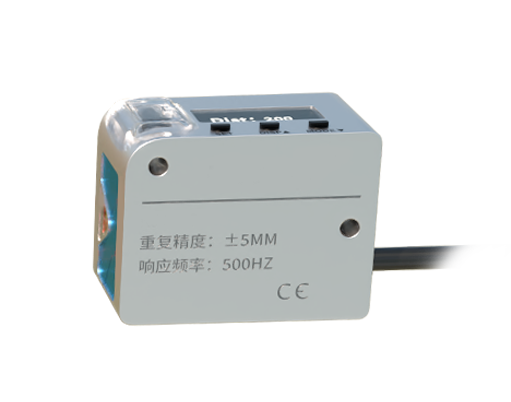
The selection and application of a seismic-resistant laser displacement sensor require careful consideration. Key specifications to evaluate include not only standard parameters like measuring range, resolution, and linearity but also vibration resistance ratings. These are often specified in terms of frequency ranges (e.g., 10 to 2000 Hz) and amplitudes (e.g., up to 20 G for shock, 2 G for continuous vibration) per standards like IEC 60068-2-6. Environmental sealing (IP67/IP68 ratings) is also crucial, as sites with vibration often coincide with dust or moisture.
In practice, these sensors are indispensable. In structural health monitoring of bridges, dams, and skyscrapers, they measure minute deformations or settlement, with the sensors themselves immune to ambient traffic or wind-induced vibrations. Within power generation plants, especially geothermal or hydroelectric, they monitor turbine shaft displacement or casing expansion amidst constant mechanical hum. In precision manufacturing, such as semiconductor fabrication or automotive assembly lines, they ensure robotic arms or machining tools maintain exact positioning despite floor vibrations from other equipment.
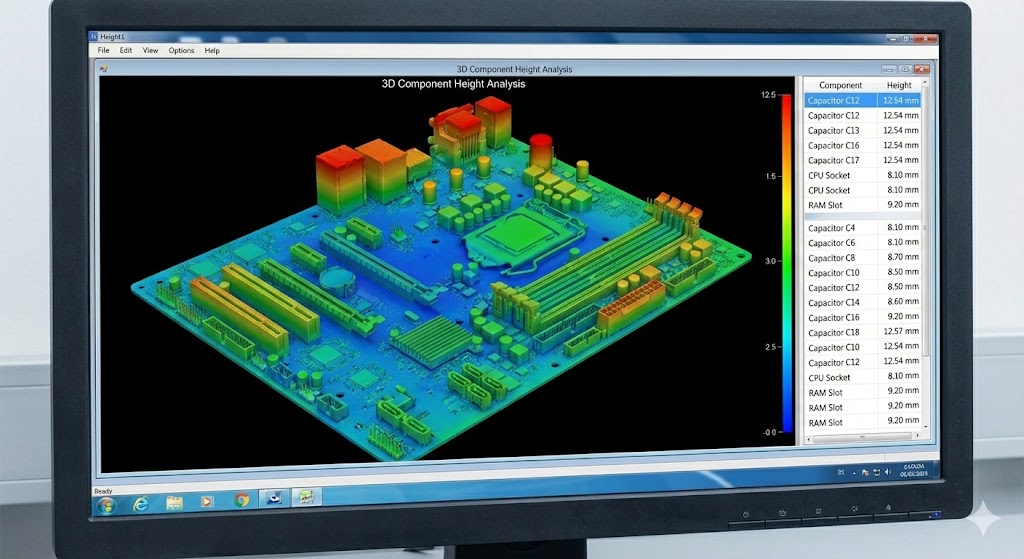
The future of this technology points toward greater intelligence and integration. The advent of Industrial Internet of Things (IIoT) facilitates sensors with built-in diagnostics that can report their own health and the vibration spectrum they are experiencing. Wireless versions eliminate cable-induced noise and simplify installation in complex structural monitoring networks. Furthermore, sensor fusion, combining laser displacement data with inputs from integrated accelerometers, allows for more sophisticated compensation algorithms, effectively subtracting the sensor's own motion from the measurement to isolate true target displacement.

In conclusion, seismic-resistant laser displacement sensors represent a critical convergence of precision metrology and rugged environmental engineering. They transform a sensitive optical instrument into a robust industrial tool capable of delivering trustworthy data where it is needed most—in the unstable, demanding heart of modern industry and infrastructure. Their continued development is essential for advancing safety, efficiency, and innovation in fields where stability cannot be assumed, but must be accurately measured and assured.