In the realm of industrial automation, precision and reliability are paramount. Bar code laser sensors have emerged as a critical technology for achieving these goals, offering unparalleled accuracy in data capture and object identification. These sophisticated devices utilize laser beams to read bar codes with exceptional speed and precision, making them indispensable in various sectors, including manufacturing, logistics, and retail.
A bar code laser sensor operates by emitting a focused laser beam onto a bar code label. The sensor's photodetector then captures the reflected light, which varies in intensity based on the contrasting patterns of the bar code. This data is processed to decode the information embedded within the code, such as product details, serial numbers, or tracking information. The use of laser technology allows for long reading distances and high-resolution scanning, even on poorly printed or damaged labels.
One of the key advantages of bar code laser sensors is their versatility. They can read a wide range of bar code symbologies, including linear codes like UPC and Code 128, as well as 2D codes such as Data Matrix and QR codes. This flexibility makes them suitable for diverse applications, from inventory management and quality control to automated sorting systems. Additionally, these sensors are designed to withstand harsh industrial environments, with robust housings that protect against dust, moisture, and mechanical shocks.
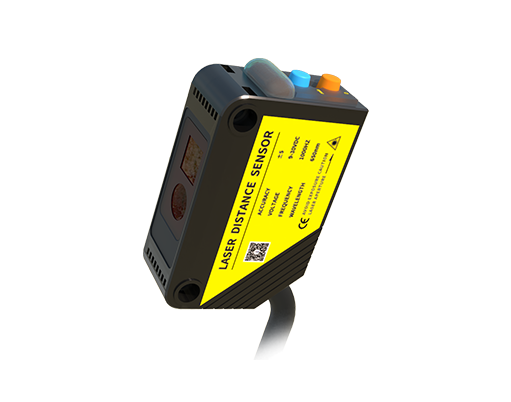
When selecting a bar code laser sensor, several factors must be considered. Reading distance is crucial, as it determines how far the sensor can be placed from the target. Typical ranges vary from a few centimeters to several meters, depending on the model. Scan rate is another important parameter, referring to the number of scans per second. Higher scan rates enable faster processing of moving objects on conveyor belts, enhancing overall system efficiency. Resolution, measured in mils (thousandths of an inch), affects the sensor's ability to read dense bar codes with narrow bars and spaces.
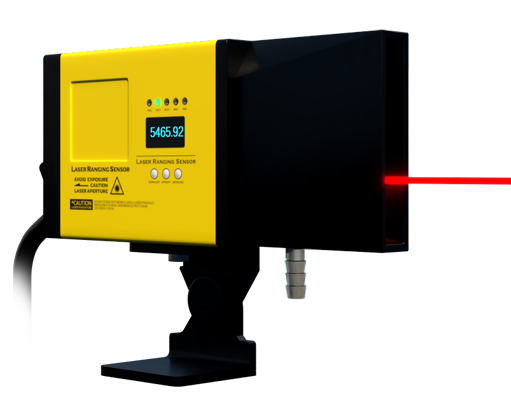
Integration of bar code laser sensors into automated systems often involves connectivity options such as Ethernet, PROFINET, or IO-Link, allowing seamless communication with PLCs (Programmable Logic Controllers) and other control devices. This facilitates real-time data exchange and enables adaptive processes, such as dynamic routing or quality assurance checks. Moreover, advanced sensors come with software tools for configuration and diagnostics, simplifying setup and maintenance.
Despite their robustness, bar code laser sensors face challenges in certain scenarios. Reflective surfaces, extreme lighting conditions, or highly curved labels can interfere with scanning accuracy. To mitigate these issues, manufacturers have developed features like automatic gain control, which adjusts the laser intensity based on ambient light, and algorithms that filter out noise from the reflected signal. Regular calibration and cleaning of the sensor lens are also recommended to maintain optimal performance.
Looking ahead, the evolution of bar code laser sensors is closely tied to trends in Industry 4.0 and the Internet of Things (IoT). Smart sensors with embedded intelligence can now perform preliminary data processing locally, reducing latency and bandwidth usage. Integration with AI (Artificial Intelligence) enables predictive maintenance, where sensors detect potential failures before they occur, minimizing downtime. Furthermore, the rise of mobile robotics and autonomous vehicles is driving demand for compact, energy-efficient sensors that can operate in dynamic environments.

In conclusion, bar code laser sensors are a cornerstone of modern industrial automation, offering speed, accuracy, and durability. By understanding their principles, applications, and selection criteria, engineers can leverage these devices to optimize processes and enhance productivity. As technology advances, we can expect even more innovative features that will further expand their capabilities and solidify their role in the connected factory of the future.