In modern industrial automation, the synergy between laser sensors and Programmable Logic Controllers (PLCs) has become a cornerstone for achieving high-precision, reliable, and efficient control systems. Laser sensors, known for their exceptional accuracy, non-contact measurement capabilities, and rapid response times, are increasingly deployed across diverse sectors such as automotive manufacturing, packaging, material handling, and robotics. When seamlessly integrated with PLCs—the robust industrial computers designed for real-time control—these sensors enable sophisticated automation solutions that enhance productivity, ensure quality, and reduce operational costs.
Laser sensors operate by emitting a focused beam of light toward a target object. The reflected light is then analyzed to determine parameters like distance, position, thickness, or presence. Common types include time-of-flight sensors, triangulation sensors, and confocal sensors, each suited for specific applications based on range, resolution, and environmental conditions. For instance, in assembly lines, laser sensors can detect minute part misalignments or measure dimensions with micron-level precision, feeding real-time data to the PLC. The PLC processes this input according to pre-programmed logic—often written in ladder logic or structured text—and triggers appropriate outputs, such as activating a robotic arm to correct a position or halting a conveyor belt if a defect is identified.
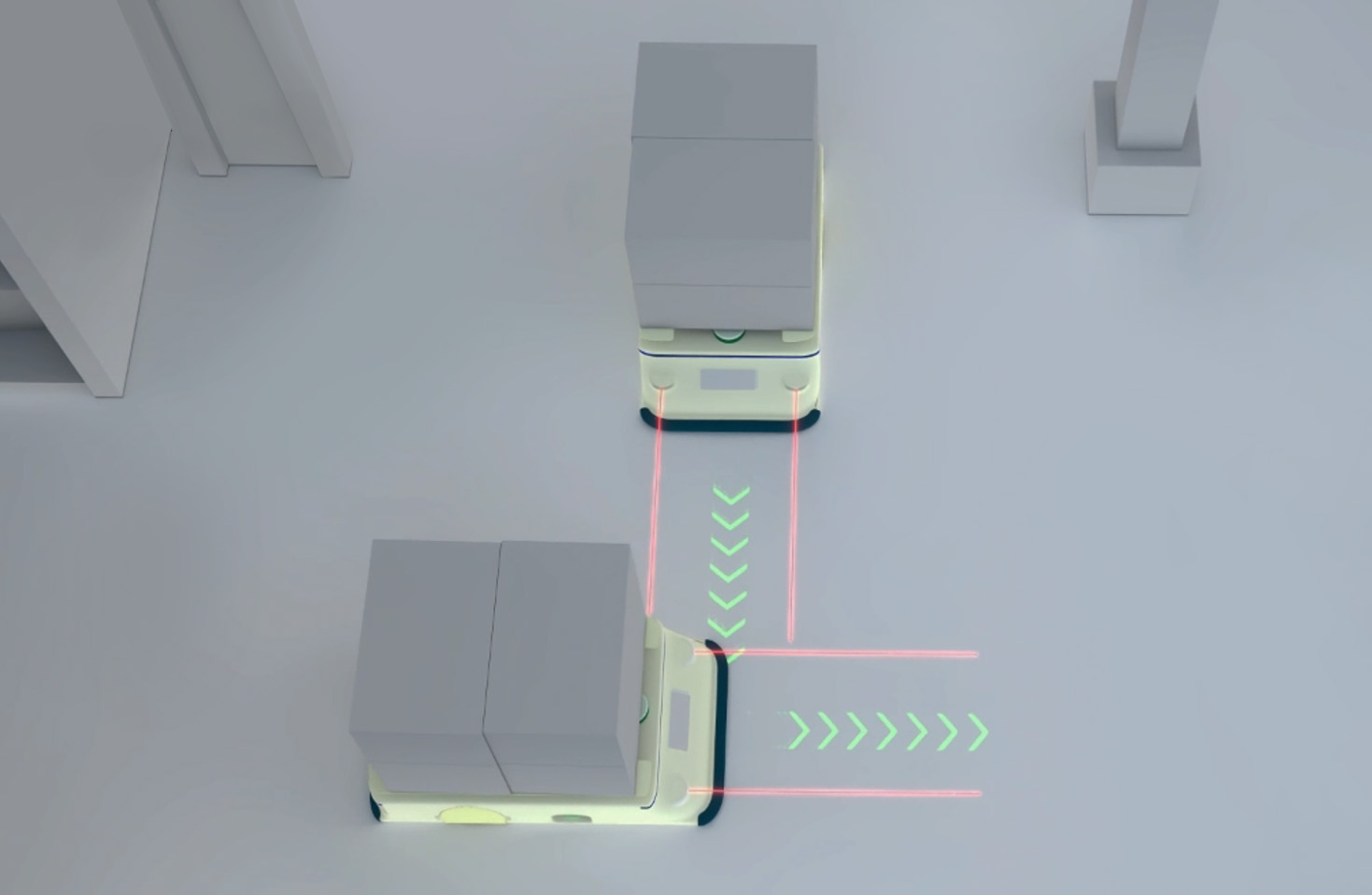
The integration process typically involves connecting the laser sensor to the PLC via standard industrial communication protocols. Ethernet/IP, PROFINET, and Modbus TCP/IP are widely used for their high-speed data exchange and network compatibility. Analog or digital I/O modules can also be employed for simpler setups. Key considerations during integration include selecting sensors with suitable specifications (e.g., sensing range, beam type, and environmental ratings), ensuring proper calibration to avoid interference from ambient light or reflective surfaces, and programming the PLC to handle sensor data effectively. Advanced PLCs, such as those from Siemens, Allen-Bradley, or Mitsubishi, offer dedicated function blocks or libraries for sensor integration, simplifying development and maintenance.
One significant advantage of this integration is enhanced flexibility. PLC programs can be easily modified to adapt to new production requirements without hardware changes, while laser sensors can be repositioned or reconfigured for different tasks. In quality control, for example, a laser sensor might scan products on a fast-moving line, with the PLC comparing measurements against tolerance thresholds and logging data for traceability. This not only minimizes human error but also enables predictive maintenance by monitoring equipment wear. Moreover, the non-contact nature of laser sensors reduces mechanical wear and tear, extending system lifespan.
However, challenges exist, such as managing costs for high-end sensor-PLC systems and ensuring robustness in harsh environments like those with dust, vibration, or temperature extremes. Selecting sensors with IP67 or higher ratings and using shielded cables can mitigate these issues. Additionally, cybersecurity measures must be implemented to protect networked systems from unauthorized access.
Looking ahead, trends like Industry 4.0 and the Industrial Internet of Things (IIoT) are driving further innovation. Smart laser sensors with embedded intelligence can now pre-process data before sending it to PLCs, reducing latency and PLC workload. Cloud connectivity allows for remote monitoring and analytics, enabling data-driven optimization across facilities. As artificial intelligence and machine learning evolve, PLCs may leverage sensor data for adaptive control, making automation systems more autonomous and responsive.
In conclusion, the integration of laser sensors with PLCs represents a powerful paradigm in industrial automation. By combining precise sensing with programmable control, industries can achieve unprecedented levels of efficiency, accuracy, and adaptability. Engineers and technicians should focus on proper selection, calibration, and programming to maximize benefits, while staying abreast of emerging technologies to future-proof their systems. This synergy not only streamlines operations but also paves the way for smarter, more connected factories.