In modern industrial automation, laser sensors have become indispensable tools for precision measurement, object detection, and quality control. Their ability to deliver high-accuracy, non-contact readings makes them ideal for environments ranging from manufacturing floors to robotic assembly lines. However, a persistent challenge that engineers and technicians face is signal interference, which can compromise sensor performance, leading to measurement errors, system downtime, and reduced operational efficiency. This article delves into the common sources of laser sensor signal interference, its impact on industrial processes, and practical strategies for mitigation.
Laser sensors operate by emitting a focused beam of light toward a target and analyzing the reflected signal. The time-of-flight, phase shift, or intensity of the return beam is used to calculate distance, presence, or other parameters. Interference occurs when external factors disrupt this process, causing the sensor to misinterpret data. The primary sources of interference can be categorized into environmental, electrical, and optical factors.
Environmental interference often stems from ambient light conditions. In facilities with strong overhead lighting—such as high-intensity discharge (HID) lamps or direct sunlight—stray light can enter the sensor's receiver, overwhelming the intended laser signal. This is particularly problematic for sensors operating in the visible or near-infrared spectra. Additionally, airborne contaminants like dust, smoke, or steam can scatter or absorb the laser beam, attenuating the signal or creating false reflections. Temperature fluctuations and vibrations may also affect sensor alignment and stability, indirectly contributing to signal degradation.
Electrical interference, or electromagnetic interference (EMI), arises from nearby equipment generating electromagnetic fields. Common culprits include variable frequency drives (VFDs), motors, welding machines, and radio frequency (RF) devices. These can induce noise in the sensor's circuitry or cabling, leading to erratic readings. Poor grounding, improper shielding, and long cable runs exacerbate this issue, allowing EMI to couple into signal lines.
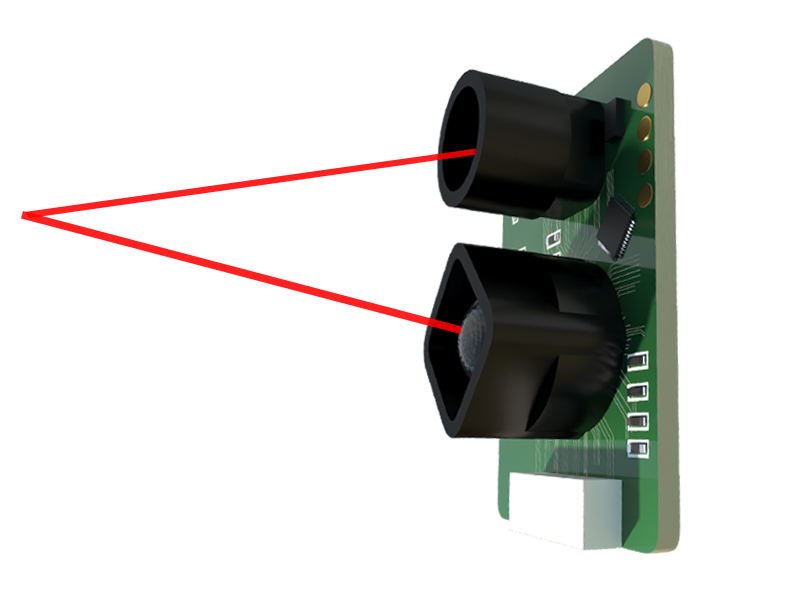
Optical interference involves direct interaction with other light sources. In dense sensor arrays, crosstalk may occur if multiple laser sensors operate at similar wavelengths and are aimed in close proximity, causing one sensor to detect another's beam. Reflective surfaces in the environment, such as polished metal or glass, can create multipath reflections, where the laser beam bounces off unintended surfaces before reaching the receiver, distorting distance calculations.
The consequences of unaddressed interference are significant. In precision applications like semiconductor manufacturing or automotive assembly, even minor errors can lead to defective products, rework costs, and safety hazards. For example, a laser sensor used for part positioning in a robotic cell might misread a component's location due to EMI, causing a collision. Similarly, in logistics automation, interference from ambient light could trigger false object detection on a conveyor, disrupting sorting processes.
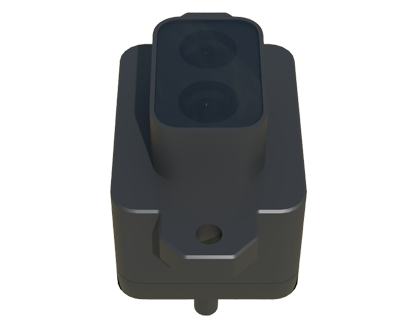
To mitigate these issues, a multi-faceted approach is essential. For environmental challenges, selecting sensors with robust housing and appropriate ingress protection (IP) ratings can shield against dust and moisture. Using sensors with modulated laser signals and narrow-band optical filters helps distinguish the intended beam from ambient light. In high-contaminant areas, periodic lens cleaning and maintenance are crucial. Enclosures or baffles can be installed to block stray light, while stabilizing mounts reduce vibration effects.
Addressing electrical interference requires diligent installation practices. Employing shielded cables with proper grounding minimizes EMI pickup. Keeping sensor cables away from power lines and noisy equipment, using twisted-pair wiring, and incorporating ferrite cores can further suppress noise. Selecting sensors with high immunity to EMI, certified to standards like IEC 61000-6-2, ensures reliability in electrically harsh environments. For facilities with persistent EMI, isolating power supplies or using fiber-optic communication links may be necessary.
To prevent optical interference, sensor placement and configuration are key. Ensuring adequate spacing between laser sensors and angling them to avoid direct line-of-sight reduces crosstalk. Choosing sensors with unique modulation frequencies or pulsed operation allows differentiation in multi-sensor setups. For reflective backgrounds, adjusting the sensor's sensitivity or using polarized lenses can mitigate multipath effects. Regular calibration and testing under actual operating conditions help identify and correct interference early.
Advanced solutions include digital signal processing (DSP) algorithms within sensors that filter out noise and enhance signal integrity. Some modern laser sensors feature adaptive technologies that automatically adjust parameters based on environmental changes. Integrating sensors with industrial networks for real-time monitoring enables proactive maintenance, alerting operators to interference before it impacts production.
In conclusion, while laser sensor signal interference is a common industrial challenge, understanding its sources and implementing targeted mitigation strategies can ensure optimal performance. By combining proper sensor selection, careful installation, and ongoing maintenance, engineers can harness the full potential of laser sensing technology, enhancing accuracy, reliability, and productivity across applications. As industries evolve toward greater automation and precision, addressing interference will remain a critical aspect of system design and operation.