Proximity sensors are indispensable components in modern industrial automation, providing non-contact detection and precise distance measurement for a vast array of applications. Unlike mechanical limit switches, these sensors operate without physical contact, offering superior reliability, longevity, and speed. This article delves into the working principles of key proximity sensor technologies and explores their critical role in distance-sensing tasks.
The fundamental principle behind proximity sensing involves the emission of an electromagnetic field or a beam of radiation (like infrared light) and the analysis of changes in the returned signal. The distance to a target object is inferred from these changes. Several technologies dominate the landscape, each with distinct advantages.
Inductive proximity sensors are the workhorses for detecting metallic objects. They generate an oscillating electromagnetic field from a coil. When a conductive metal enters this field, eddy currents are induced on the metal's surface, which dampens the oscillation amplitude of the sensor's internal circuit. This change is detected and triggers a switching output. While primarily binary (on/off), advanced analog inductive sensors provide a voltage or current output proportional to the distance, enabling precise measurement of a metal target's position, typically within a range of a few millimeters to about 30 mm. They are immune to dust, oil, and non-metallic contaminants, making them ideal for harsh machining and material handling environments.
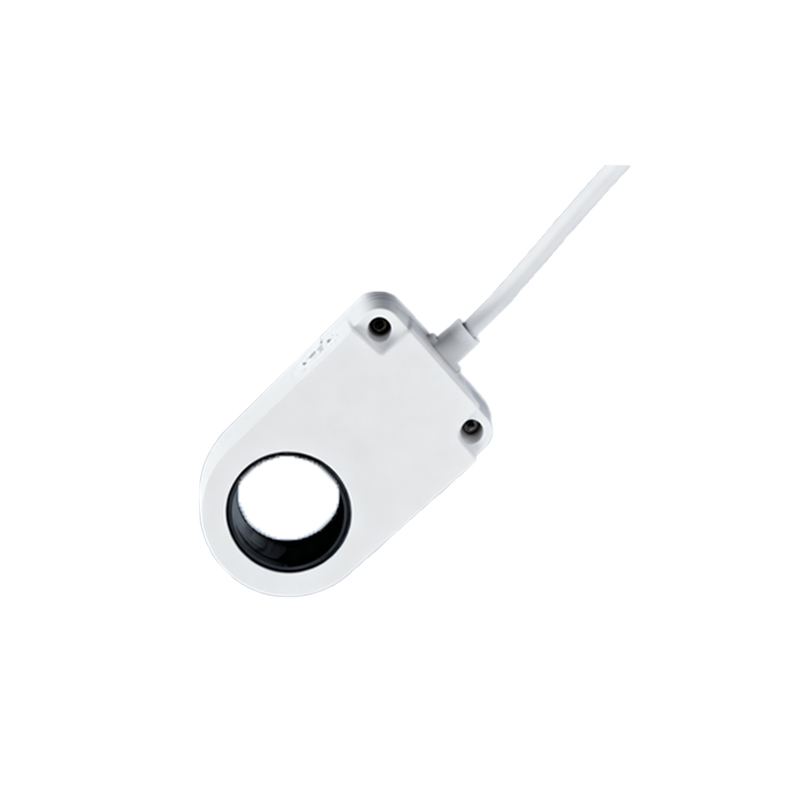
Capacitive proximity sensors can detect both metallic and non-metallic materials, including liquids, plastics, wood, and granules. They function by generating an electrostatic field. Any object with a dielectric constant different from air entering this field alters the sensor's capacitance. This change is measured and converted into a switching or analog output. For distance measurement, analog capacitive sensors are used to monitor fill levels in tanks (through the container wall), control the thickness of materials, or detect the presence of non-metallic objects with precise gap control. Their sensing range is generally comparable to inductive types.
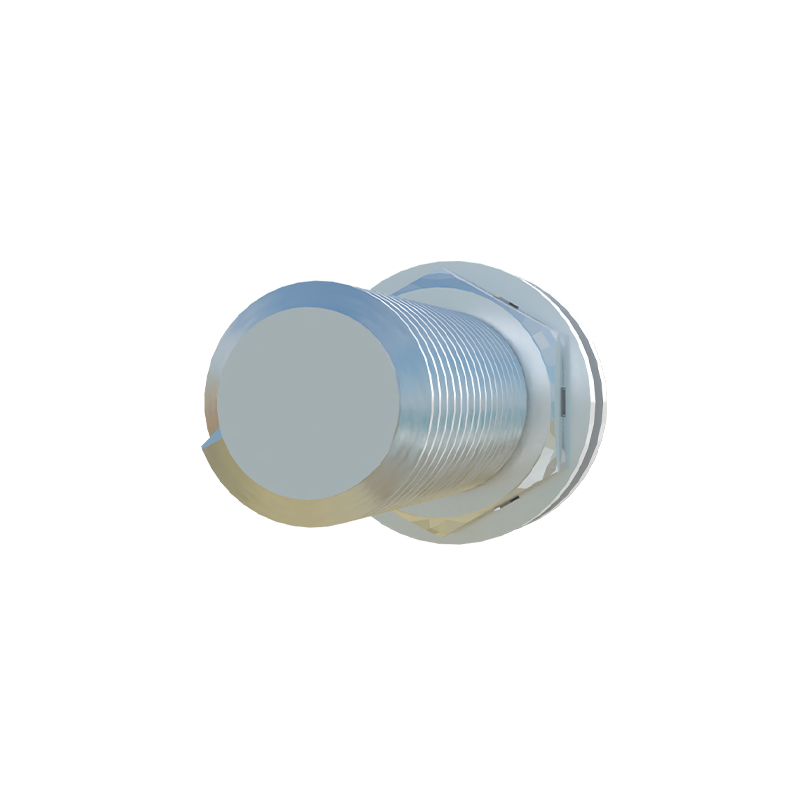
Ultrasonic sensors are the preferred choice for longer-range distance measurement, from a few centimeters up to several meters. They operate on the time-of-flight principle. The sensor emits high-frequency sound pulses and listens for the echo reflected from a target. The distance is calculated based on the time interval between pulse emission and echo reception and the known speed of sound in the medium (usually air). Advanced models compensate for temperature variations that affect sound speed. Ultrasonic sensors are excellent for measuring the distance to bulk materials, detecting transparent objects (like glass or clear films), and performing level monitoring in challenging conditions with dust or vapor.
Photoelectric sensors, particularly the diffuse-reflective type with background suppression or the time-of-flight (ToF) variants, are highly effective for precise distance measurement. Background suppression sensors use triangulation to measure distance, ensuring the sensor only triggers for objects within a specific window, ignoring the background. Photoelectric ToF sensors, like their ultrasonic counterparts, measure the time for a light pulse (often laser) to travel to the target and back, providing very accurate distance data over ranges from a few centimeters to many meters. They are extremely fast and suitable for high-precision positioning, robot guidance, and dimension checking.
The selection of a proximity sensor for distance measurement hinges on several factors: target material, required sensing range, environmental conditions (presence of dust, moisture, or temperature extremes), required accuracy and resolution, response speed, and output signal type (binary switch, analog 4-20 mA, or digital IO-Link).
In practice, analog proximity sensors feed continuous distance data into PLCs or controllers for real-time process control. For instance, in coil winding, an analog inductive sensor ensures constant wire tension by monitoring the coil's diameter. In automated assembly, a capacitive sensor verifies the precise insertion depth of a plastic component. On a packaging line, an ultrasonic sensor maintains the correct stack height of boxes. Robotic arms frequently use a combination of sensors for accurate pick-and-place operations based on object position.
In conclusion, proximity sensors provide a versatile, robust, and accurate solution for non-contact distance measurement in industrial settings. Understanding the strengths and limitations of inductive, capacitive, ultrasonic, and photoelectric technologies is crucial for optimal system design. The correct sensor choice enhances automation efficiency, improves product quality, and enables sophisticated control strategies, forming the bedrock of smart manufacturing and Industry 4.0 initiatives.