In the rapidly evolving landscape of industrial automation, robotics, and autonomous systems, precision guidance is paramount. At the heart of this technological revolution lies a critical component: the laser sensor. Far more than simple distance-measuring devices, modern navigation laser sensors are sophisticated systems that enable machines to perceive, interpret, and navigate their environment with unprecedented accuracy. This article delves into the principles, applications, and future trends of these indispensable tools.
Fundamentally, navigation laser sensors operate on the principle of LiDAR (Light Detection and Ranging) or time-of-flight (ToF) measurement. They emit pulsed or modulated laser beams towards a target. By precisely measuring the time it takes for the light to reflect back to the sensor, or by analyzing phase shifts in the modulated signal, the sensor calculates the distance to the object with extreme precision, often down to millimeter or even sub-millimeter levels. This distance data, when collected across a scanning field—either through mechanical rotation, MEMS mirrors, or solid-state phased arrays—generates a detailed point cloud, a three-dimensional map of the surrounding environment.

The applications for navigation laser sensors are vast and transformative. In the realm of Autonomous Guided Vehicles (AGVs) and Autonomous Mobile Robots (AMRs), these sensors are the primary eyes. They create real-time maps of warehouses, factories, or outdoor spaces, allowing vehicles to navigate dynamic environments, avoid static and moving obstacles, and optimize their paths for efficiency and safety. Unlike traditional methods relying on magnetic tapes or QR codes, laser-based navigation offers unparalleled flexibility, enabling rapid reconfiguration of workspaces without physical guide modifications.
Beyond mobile robotics, laser sensors are crucial in aerial drones for terrain mapping, obstacle avoidance, and precision landing. In automotive technology, they form the core of advanced driver-assistance systems (ADAS) and are fundamental to the development of fully autonomous vehicles, where they work in sensor fusion with cameras and radar. Industrial automation also heavily relies on them for precise positioning of robotic arms, conveyor belt tracking, and quality inspection tasks that require non-contact, high-speed measurement.
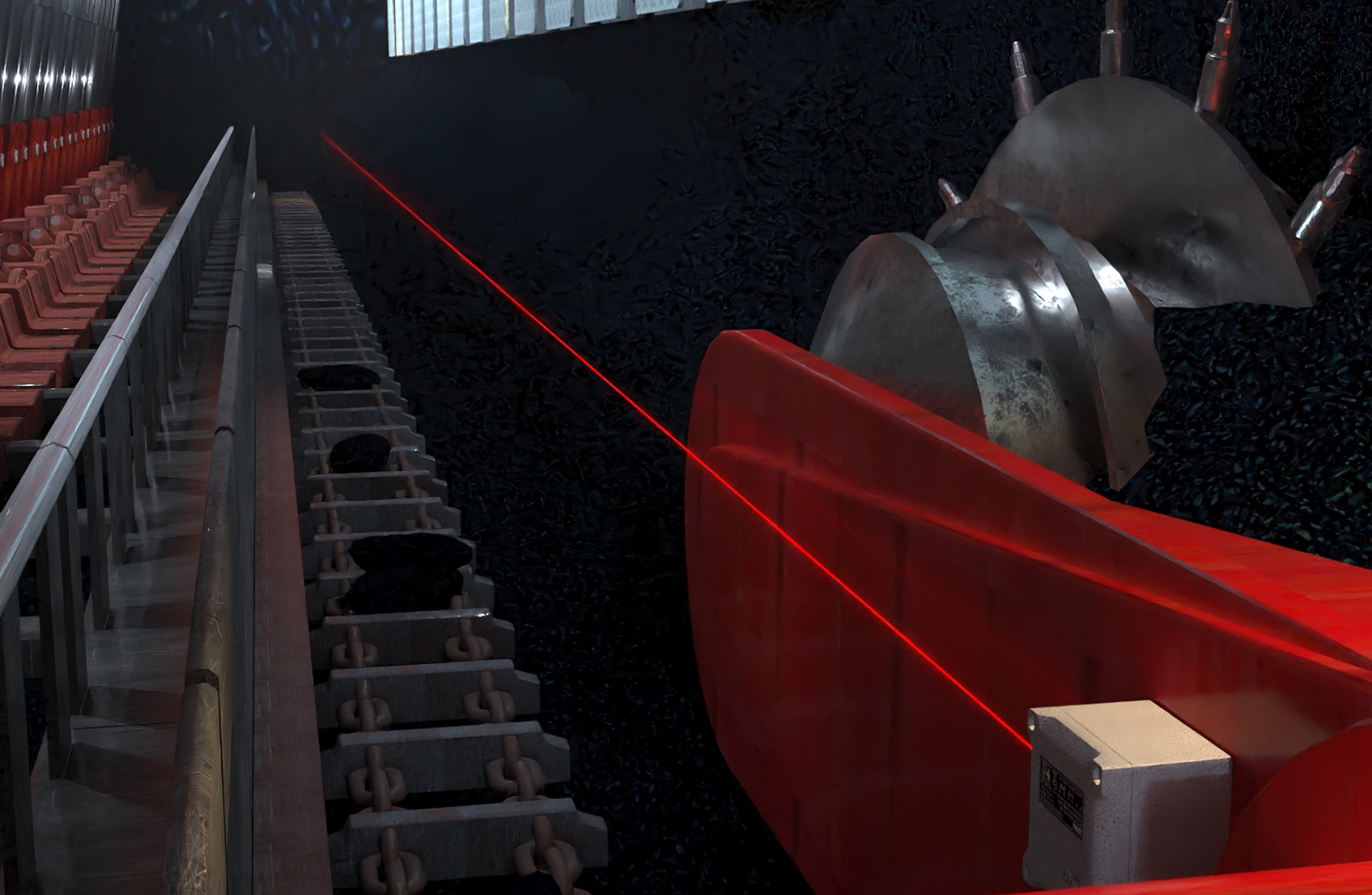
The advantages of using laser sensors for navigation are compelling. They offer high accuracy and resolution, excellent performance in varying lighting conditions (unlike vision systems that struggle in darkness or direct sunlight), and the ability to measure distance directly without complex image processing. Modern sensors are also becoming more robust, compact, and energy-efficient, facilitating their integration into smaller and more diverse platforms.
However, challenges persist. Performance can be degraded by adverse weather conditions like heavy fog, rain, or snow, which scatter the laser beams. Highly reflective or absorbent surfaces can also cause measurement errors. Furthermore, the computational power required to process vast point cloud data in real-time is significant, pushing the boundaries of onboard processing units. Cost, while decreasing, remains a consideration for large-scale deployments.
Looking ahead, the future of navigation laser sensors is bright and points toward greater integration and intelligence. The trend is moving towards solid-state LiDAR, which eliminates moving parts, enhancing reliability and reducing size. Sensor fusion—combining laser data with camera imagery, inertial measurement units (IMUs), and radar—will create more robust and context-aware perception systems. Artificial intelligence and machine learning algorithms are being increasingly deployed to interpret point cloud data more intelligently, distinguishing between different object types (a person vs. a cart) and predicting trajectories. Furthermore, the development of cheaper, more powerful semiconductor lasers and detectors will continue to drive adoption across even more industries.

In conclusion, navigation laser sensors are not merely components; they are enablers of autonomy and precision. By providing machines with a detailed, three-dimensional understanding of their surroundings, they form the foundational layer upon which smarter factories, safer vehicles, and more capable robots are built. As technology advances to address current limitations, their role will only become more central, quietly guiding the automated systems that are increasingly shaping our world.