In the realm of industrial automation and control systems, proximity sensors stand as fundamental components, enabling machines to "sense" the presence or absence of objects without any physical contact. A proximity sensor is a device that detects the presence of a nearby object within its sensing range and converts this information into an electrical signal. This non-contact detection capability is crucial for enhancing efficiency, reliability, and safety across countless applications, from assembly lines and robotics to consumer electronics and automotive systems.
The core principle behind most proximity sensors involves generating an electromagnetic field or a beam of radiation (like infrared light) and then monitoring for changes in that field or the return signal. When an object enters the sensing zone, it alters the field or reflects the radiation back to the sensor. This disturbance is detected and processed by the sensor's internal circuitry, triggering a switch-like output signal—typically a change in voltage or current—that can be read by a programmable logic controller (PLC) or other control unit.
There are several primary types of proximity sensors, each based on different physical principles and suited for specific materials and environments.
1. Inductive Proximity Sensors: These are among the most common types in industrial settings. They generate an oscillating electromagnetic field. When a metallic object (ferrous or non-ferrous) enters this field, it induces eddy currents within the object, which in turn dampens the oscillation amplitude of the sensor's coil. This damping effect is detected, causing the sensor to switch its output state. Inductive sensors are robust, resistant to dirt and moisture, and ideal for detecting metal parts in harsh manufacturing environments. They are not suitable for detecting non-metallic materials.
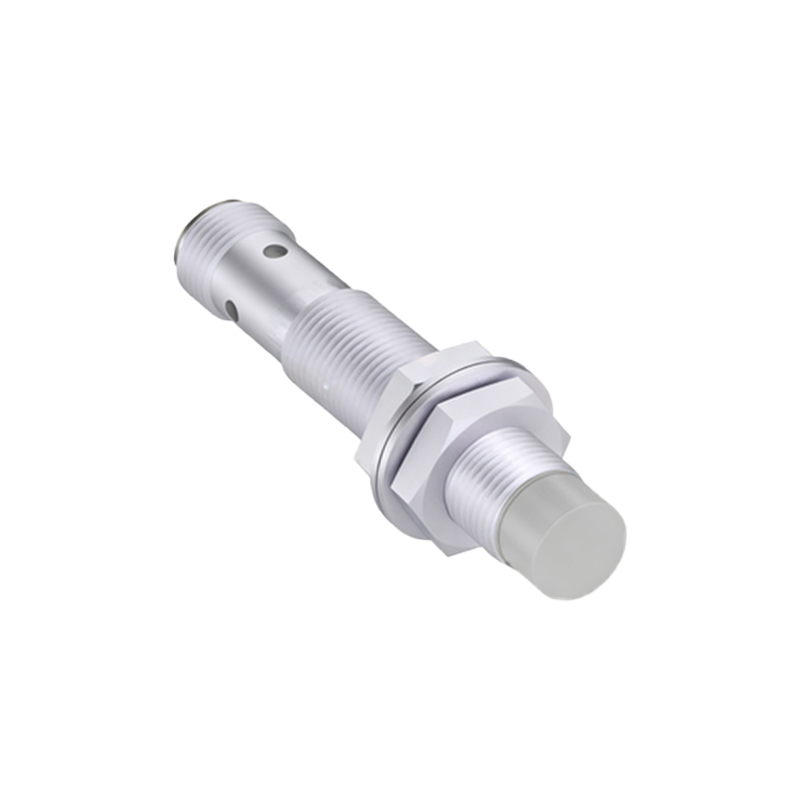
2. Capacitive Proximity Sensors: These sensors can detect both metallic and non-metallic objects, including liquids, powders, plastics, and wood. They operate by generating an electrostatic field. Any object that enters this field alters the capacitance between the sensor's electrodes. The sensor's circuitry measures this change in capacitance to detect the object's presence. Capacitive sensors are often used for level detection in tanks (liquids or granules), material handling, and detecting non-metallic containers.
3. Ultrasonic Proximity Sensors: These sensors work on the principle of echolocation. They emit high-frequency sound waves (ultrasonic pulses) and measure the time it takes for the echo to return after bouncing off a target object. The time-of-flight calculation determines the object's distance. Ultrasonic sensors can detect objects of virtually any material, shape, or color, and are effective in challenging environments with dust, smoke, or vapors. Common applications include distance measurement, liquid level control, and object detection on conveyor belts.
4. Photoelectric Sensors: While sometimes categorized separately, they function as proximity sensors. They consist of a light emitter (usually LED—infrared, red, or laser) and a receiver. When the emitted light beam is interrupted or reflected by an object, the receiver detects the change, triggering the output. There are three main modes: through-beam (separate emitter and receiver), retro-reflective (uses a reflector), and diffuse (reflective), where the sensor detects light reflected directly from the object. Photoelectric sensors offer long sensing ranges and can detect small objects precisely.
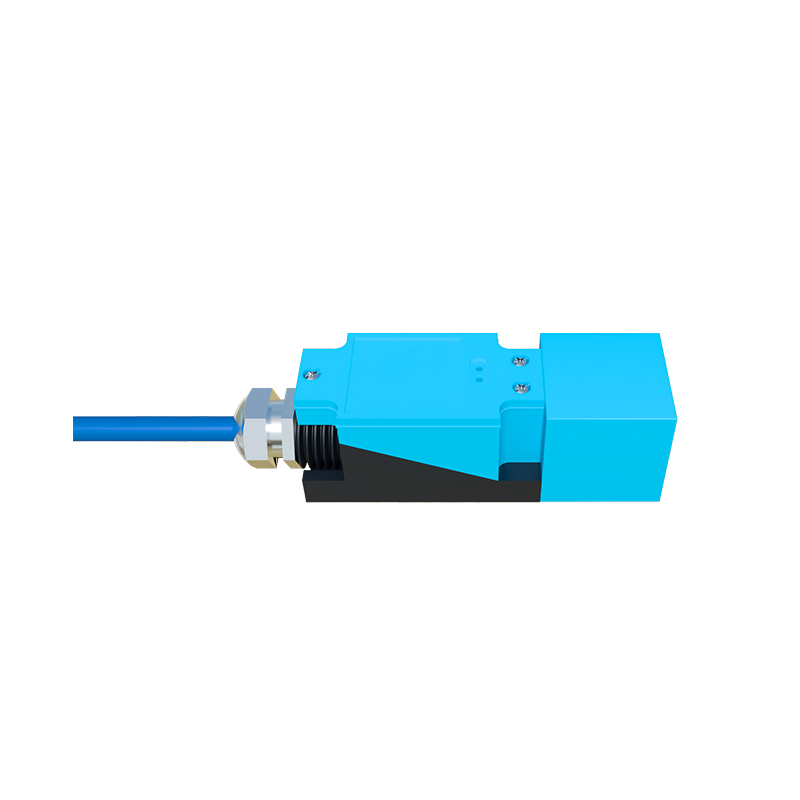
5. Magnetic Proximity Sensors (Reed Switches): These simple sensors are activated by the presence of a permanent magnet. They contain two ferromagnetic reeds sealed in a glass tube. When a magnet approaches, the reeds are magnetized and attract each other, closing the electrical contact. They are highly reliable for detecting the position of doors, cylinders, or any moving part equipped with a magnet.
Key selection criteria for engineers include the target material, required sensing distance, environmental conditions (temperature, contaminants), output type (PNP/NPN, analog, IO-Link), switching frequency, and physical housing size. Proper installation is also critical, ensuring adequate clearance from metal surfaces and other sensors to prevent mutual interference.
The applications are vast. In automotive manufacturing, inductive sensors count metal gears or verify piston position. In packaging, capacitive sensors detect the level of liquid in bottles, while photoelectric sensors ensure labels are correctly placed. Ultrasonic sensors manage pallet stacking height in warehouses. In consumer devices, capacitive sensors enable touchless faucets or screen proximity detection in smartphones.
In conclusion, proximity sensors are the silent, intelligent sentinels of modern industry. By providing reliable, non-contact detection, they form the essential sensory layer that feeds data to control systems, driving automation, improving quality control, preventing equipment damage, and ensuring operational safety. As technology advances, sensors are becoming smarter, smaller, and more integrated with communication networks like IIoT (Industrial Internet of Things), further solidifying their indispensable role in the automated world.
SEO