In the realm of industrial automation and control systems, proximity sensors stand as a cornerstone technology, enabling machines to perceive their environment without physical contact. Among the various types, the concept of an "infinite proximity sensor" often refers to sensors with exceptionally long sensing ranges or those designed for continuous, non-contact detection over variable distances. This article delves into the underlying technology, key types, and pivotal applications of these sophisticated devices.
At its core, a proximity sensor is a device that detects the presence or absence of an object within a specified field. It does this by emitting an electromagnetic field or a beam of electromagnetic radiation and looking for changes in the field or return signal. The term "infinite" in this context is somewhat metaphorical, indicating a capability for detection over a considerable and often adjustable range, unlike simple on/off switches. The primary technologies employed include Inductive, Capacitive, Ultrasonic, and Photoelectric sensing.
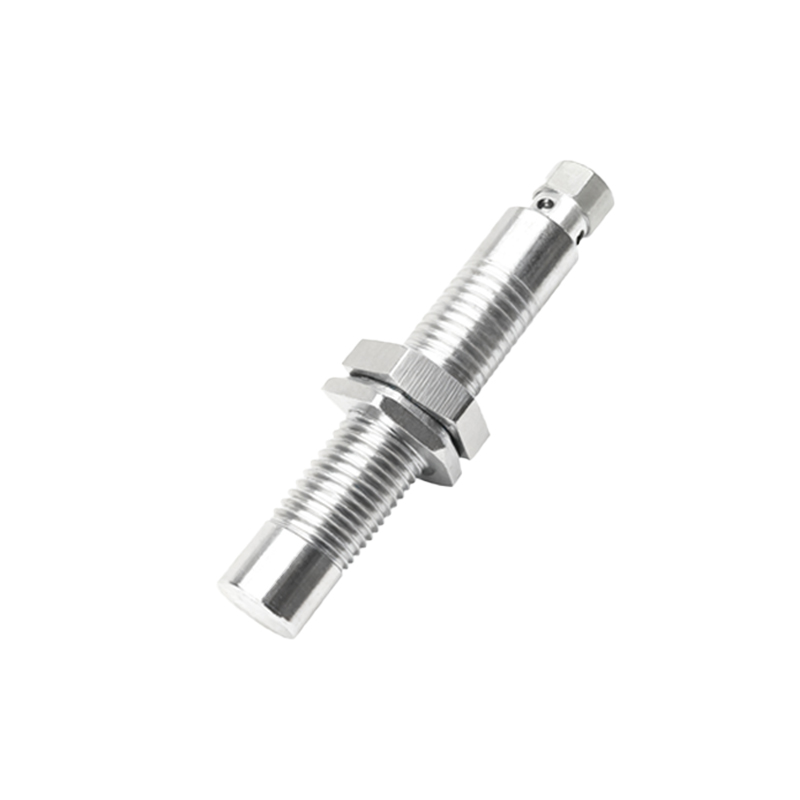
Inductive proximity sensors are the workhorses for detecting metallic objects. They generate an oscillating electromagnetic field. When a metallic target enters this field, it induces eddy currents, causing a change in the oscillation amplitude. This change is detected by the sensor's circuitry, triggering an output signal. Their range is typically limited to a few tens of millimeters, but advanced models offer extended sensing distances, making them suitable for harsh industrial environments where durability and reliability are paramount.
Capacitive proximity sensors, on the other hand, can detect both metallic and non-metallic materials such as liquids, plastics, and wood. They function by measuring changes in capacitance between the sensor and the target object. As an object approaches the sensor's active surface, it alters the dielectric constant of the surrounding space, leading to a detectable change in capacitance. This technology allows for greater flexibility and is often used in level detection or material handling applications.
For truly long-range, non-contact detection, ultrasonic and photoelectric sensors are the preferred choices. Ultrasonic sensors emit high-frequency sound waves and calculate distance by measuring the time taken for the echo to return. They are excellent for detecting objects over distances from a few centimeters to several meters, regardless of color, transparency, or material (though absorbent materials can be challenging). Photoelectric sensors use light beams, typically infrared, visible red, or laser. By analyzing the reflected or interrupted light beam, they can detect objects at even greater ranges with high precision. The "through-beam" type, with separate emitter and receiver, offers the longest possible range, effectively creating a "line" of detection that can be considered a form of infinite proximity monitoring along that axis.
The applications of these advanced proximity sensors are vast and critical across industries. In automotive manufacturing, they ensure precise positioning of robotic arms for welding and assembly. In packaging lines, they count products, verify lid placement, and control filling levels without ever touching the product, maintaining hygiene and speed. In material handling and logistics, they facilitate pallet detection, conveyor belt control, and automated guided vehicle (AGV) navigation, preventing collisions and optimizing workflow. Furthermore, in the realm of safety, these sensors form the backbone of safety light curtains and area guarding systems, creating invisible protective barriers around hazardous machinery.
Selecting the right proximity sensor requires careful consideration of several factors: the required sensing distance, the nature of the target material, environmental conditions (like temperature, humidity, or presence of contaminants), required response speed, and output type (e.g., digital NPN/PNP, analog 4-20mA). It is also crucial to understand the sensor's specifications, such as nominal sensing distance (Sn), repeatability, and hysteresis, to ensure reliable integration into a control system.
Looking ahead, the evolution of proximity sensing is intertwined with Industry 4.0 and the Internet of Things (IoT). Modern sensors are becoming smarter, equipped with IO-Link communication that allows for parameter setting, real-time diagnostics, and process data monitoring directly from the controller. This connectivity enables predictive maintenance, where a sensor can report its health status or warn of gradual performance degradation before a failure occurs, thereby minimizing downtime.
In conclusion, while a literal "infinite" proximity sensor does not exist, the continuous advancements in inductive, capacitive, ultrasonic, and photoelectric technologies provide solutions that approach this ideal for a wide array of industrial challenges. These devices are indispensable for creating efficient, safe, and intelligent automated systems. Their ability to provide reliable, non-contact detection forms the essential sensory layer upon which modern industrial automation is built, driving productivity and innovation forward.