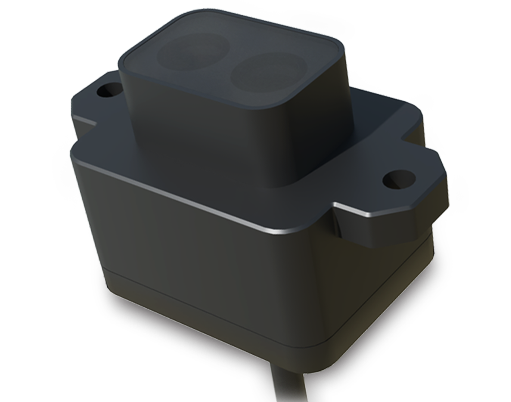
In the realm of industrial automation, quality control, and precision measurement, laser displacement sensors have become indispensable tools. Their ability to perform non-contact, high-speed, and high-accuracy measurements makes them vital for applications ranging from semiconductor inspection to automotive assembly. However, for engineers and procurement specialists, navigating the cost landscape of these sensors can be complex. The price of a laser displacement sensor is not a single figure but a composite of several interlinked technological and commercial factors.
At the core of the cost structure is the measurement principle and the type of laser used. Sensors utilizing triangulation with a red semiconductor laser are often the most cost-effective entry point, suitable for many general-purpose applications. However, as demands for resolution, speed, or measurement on challenging surfaces (like shiny metals) increase, more advanced technologies come into play. Blue laser sensors, which offer superior performance on organic materials and glossy surfaces due to their shorter wavelength, command a higher price. For extreme precision in the sub-micron range, confocal chromatic or interferometric principles are employed, involving sophisticated optics and signal processing, significantly elevating the unit cost. The choice between a point sensor, a line sensor (profiler), or a 2D/3D scanning system also causes a substantial price jump, as complexity and data processing requirements multiply.
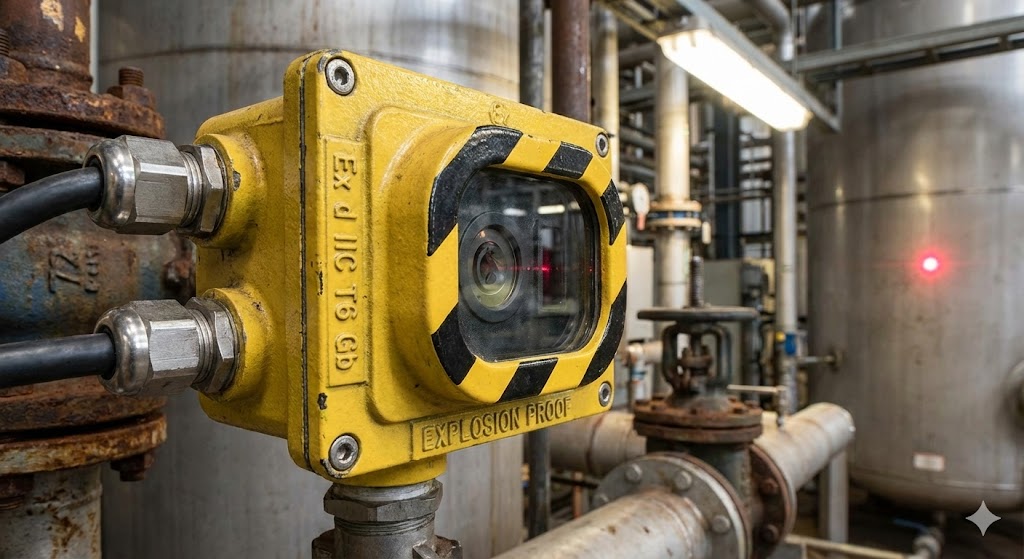
Performance specifications are direct cost drivers. Key parameters include measuring range, resolution, repeatability, linearity, and sampling speed. A sensor with a 10mm range and 0.1µm resolution will be fundamentally different and more expensive than one with a 100mm range and 10µm resolution. High-speed applications requiring sampling rates in the hundreds of kilohertz necessitate faster processors and specialized components. Furthermore, environmental robustness adds cost. An IP67-rated housing for dust and water resistance, metal casings for durability, and enhanced temperature stability components for operation in harsh industrial environments all contribute to the final price. Integrated cooling systems or protective air purge fittings for use in foundries or welding areas are additional premium features.
The sophistication of the integrated electronics and software is a major, sometimes underestimated, cost component. Advanced sensors feature onboard processors for real-time edge computing, such as waveform analysis, peak detection, or complex filtering. This intelligence allows for pre-processing data at the source, reducing the load on central PLCs. The accompanying software suite for configuration, data visualization, and analysis also varies. A basic setup tool differs greatly from a comprehensive SDK (Software Development Kit) that allows for deep system integration and custom algorithm development, with the latter adding to the overall solution cost.
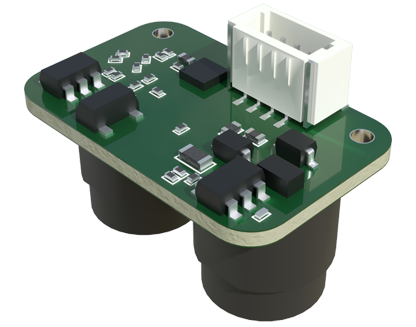
Beyond the sensor unit itself, auxiliary components and lifecycle costs must be considered. Mounting brackets, alignment tools, calibration fixtures, and specific cables (often proprietary) are recurring expenses. For line lasers or scanners, high-quality external controllers are usually required. The total cost of ownership (TCO) encompasses calibration services, potential downtime, and maintenance. Sensors from established manufacturers with global support networks might have a higher initial purchase price but offer greater long-term reliability, comprehensive documentation, and accessible technical support, reducing TCO. In contrast, lower-cost alternatives may pose risks in consistency, longevity, and availability of spare parts.
Market dynamics and supplier strategy also influence pricing. Established brands with decades of R&D investment and a reputation for reliability typically position their products at a premium. They offer extensive application engineering support. Newer entrants or manufacturers focusing on standardized, high-volume models may compete aggressively on price for specific market segments. Volume purchasing agreements can lead to significant discounts for OEMs or large-scale integrators.
In conclusion, the cost of a laser displacement sensor is a direct reflection of its technological capabilities, build quality, and the ecosystem surrounding it. A thorough cost-benefit analysis is crucial. Selecting a sensor based solely on the lowest initial price can lead to inadequate performance, higher integration effort, and increased downtime, ultimately costing more. The optimal choice balances technical specifications, environmental suitability, brand support, and lifecycle costs to deliver the required precision and reliability for the specific industrial application, ensuring value over the long term.