In the rapidly evolving landscape of industrial automation, precision, reliability, and efficiency are paramount. Miboo laser sensors have emerged as a critical component in this domain, offering advanced solutions for a wide array of measurement and detection tasks. These sensors utilize laser technology to deliver non-contact, high-accuracy readings, making them indispensable in environments where traditional mechanical or optical sensors fall short.
The core technology behind Miboo laser sensors typically involves time-of-flight (ToF), triangulation, or phase-shift measurement principles. For instance, in distance measurement applications, a laser diode emits a focused beam towards a target. The sensor then calculates the distance by measuring the time it takes for the reflected light to return or by analyzing the displacement of the reflected beam on a position-sensitive detector. This method ensures micron-level precision, even at high speeds or over considerable distances, which is crucial for quality control in manufacturing processes like semiconductor fabrication, automotive assembly, and precision machining.
One of the standout features of Miboo laser sensors is their robustness in challenging industrial environments. They are often designed with high ingress protection (IP) ratings, making them resistant to dust, moisture, and vibrations. This durability ensures consistent performance in settings such as material handling, logistics, and heavy machinery monitoring. Furthermore, many Miboo models incorporate intelligent functions like background suppression, which allows the sensor to ignore irrelevant objects or surfaces, and programmable logic for adaptive threshold setting. This intelligence reduces false triggers and enhances system reliability.
The application spectrum for Miboo laser sensors is remarkably broad. In robotics and automated guided vehicles (AGVs), they provide essential data for navigation, obstacle avoidance, and object positioning. In packaging lines, they accurately detect label presence, measure fill levels, and verify product dimensions. The electronics industry relies on them for PCB inspection, component placement verification, and solder paste height measurement. Additionally, in the burgeoning field of smart logistics, these sensors facilitate precise parcel dimensioning and sorting at unprecedented speeds.
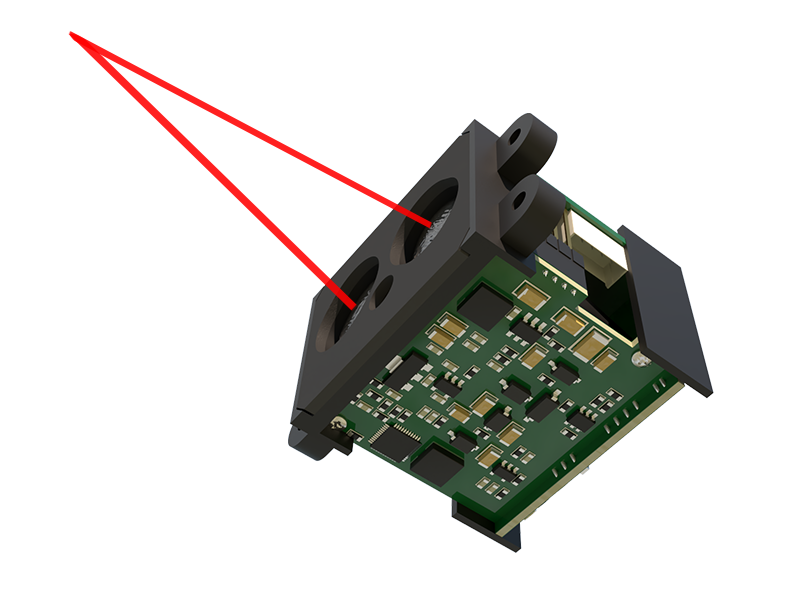
Integration into modern Industrial Internet of Things (IIoT) frameworks is another significant advantage. Miboo laser sensors often come equipped with various communication interfaces such as IO-Link, Ethernet/IP, Profinet, or Modbus TCP. This connectivity enables real-time data transmission to programmable logic controllers (PLCs) or supervisory control and data acquisition (SCADA) systems. The collected data can be used for predictive maintenance, process optimization, and overall equipment effectiveness (OEE) calculations, contributing to the development of smarter, more responsive factories.
When selecting a Miboo laser sensor for a specific application, engineers must consider several key parameters. These include measurement range, resolution, repeatability, response time, and the type of output signal required (analog, digital, or serial). The characteristics of the target object—such as its color, material, surface texture, and reflectivity—also significantly influence sensor performance. For example, a highly reflective or dark surface may require a sensor with automatic exposure control or a specialized model designed for low-reflectivity targets.
Looking ahead, the future of Miboo laser sensors is intertwined with advancements in miniaturization, power efficiency, and embedded intelligence. The integration of artificial intelligence for edge computing, allowing sensors to make preliminary decisions locally, is a promising development. Furthermore, the push towards greener manufacturing will drive demand for sensors that contribute to energy savings and waste reduction through more precise control.
In conclusion, Miboo laser sensors represent a sophisticated and versatile tool in the industrial engineer's arsenal. Their ability to provide precise, non-contact measurements under tough conditions makes them a cornerstone of modern automation. As industries continue to strive for greater efficiency and connectivity, the role of these advanced sensing solutions will only become more central, driving innovation and productivity across the global manufacturing sector.