In the realm of industrial measurement and non-destructive testing, laser sensors and eddy current sensors represent two pivotal technologies, each offering unique capabilities for precision, reliability, and versatility. Understanding their distinct principles, applications, and advantages is essential for engineers and technicians aiming to optimize processes in manufacturing, aerospace, automotive, and energy sectors.
Laser sensors operate on the principle of optical triangulation or time-of-flight measurement. They emit a focused laser beam toward a target surface, and the reflected light is captured by a detector. By analyzing the position or phase shift of the reflected beam, these sensors calculate distance, displacement, or thickness with high accuracy—often in the micrometer range. Common types include confocal sensors for transparent materials and laser Doppler vibrometers for vibration analysis. Key benefits include non-contact operation, fast response times, and suitability for reflective or colored surfaces. However, they can be sensitive to environmental factors like dust, smoke, or ambient light, requiring careful calibration. Applications span from dimensional inspection in assembly lines to alignment tasks in robotics and surface profiling in semiconductor fabrication.
Eddy current sensors, in contrast, rely on electromagnetic induction. They consist of a coil energized by an alternating current, generating a magnetic field. When this field interacts with a conductive target, it induces circular currents—eddy currents—within the material. Changes in the target's distance, conductivity, or permeability alter the coil's impedance, which is measured to determine parameters like displacement, thickness, or flaws. These sensors excel in harsh environments, as they are immune to non-conductive contaminants like oil, water, or dirt. They also offer high temperature tolerance and robustness, making them ideal for monitoring rotating machinery, such as turbines or shafts, and for detecting cracks in metal components. Limitations include sensitivity only to conductive materials and potential interference from nearby metals. Variants like differential eddy current sensors enhance resolution for critical tasks like runout measurement in bearings.
Comparing the two, laser sensors provide superior resolution for non-conductive or delicate surfaces, while eddy current sensors thrive in dirty, high-temperature, or electrically noisy settings. In practice, hybrid systems often combine both: for instance, using lasers for initial surface mapping and eddy current probes for subsurface defect detection in aerospace alloys. Industry trends emphasize miniaturization, integration with IoT for real-time data analytics, and enhanced signal processing to reduce noise. When selecting a sensor, factors like target material, environmental conditions, required precision, and cost must be weighed. For example, in automotive brake disc monitoring, eddy current sensors might check for wear, whereas lasers could verify disc flatness.
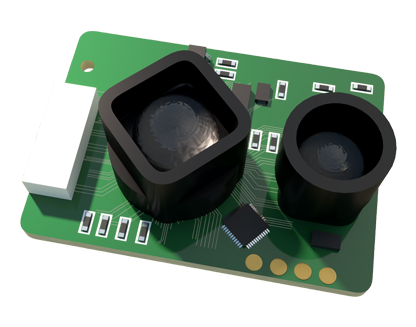
Maintenance involves regular calibration, lens cleaning for lasers, and coil inspection for eddy current units. Standards from organizations like ISO and ASTM guide their use, ensuring consistency in sectors like power generation, where sensor failure can lead to downtime. Emerging advancements include fiber-optic laser sensors for extreme temperatures and multi-frequency eddy current arrays for complex geometries. Ultimately, the choice between laser and eddy current sensors hinges on specific operational demands, with both technologies driving innovation in smart manufacturing and predictive maintenance. By leveraging their strengths, industries achieve higher efficiency, safety, and quality control, underscoring their indispensable role in modern engineering.