In the realm of electrical engineering and automation, laser-based light intensity sensors have emerged as pivotal components for precise measurement and control. These sensors utilize laser technology to detect and quantify light intensity with exceptional accuracy, making them indispensable in various industrial and scientific applications. Unlike conventional photodetectors, laser sensors offer superior resolution, faster response times, and enhanced reliability in challenging environments.
The core principle behind laser light intensity sensors involves emitting a focused laser beam toward a target or through a medium. The sensor then measures the intensity of reflected or transmitted light, converting it into an electrical signal proportional to the light level. This process relies on advanced photodiodes or phototransistors, often integrated with signal conditioning circuits to minimize noise and improve sensitivity. Key parameters such as wavelength, power output, and beam divergence are carefully calibrated to suit specific use cases, ranging from environmental monitoring to manufacturing quality control.
One of the primary advantages of laser-based sensors is their ability to operate over long distances with minimal signal degradation. This makes them ideal for applications like remote sensing, where consistent performance is critical. For instance, in industrial automation, these sensors are deployed for alignment, object detection, and surface inspection, ensuring high precision in assembly lines. Additionally, they play a crucial role in scientific research, such as spectroscopy and optical communications, where accurate light measurement is essential for data integrity.
Recent advancements have further enhanced the capabilities of laser light intensity sensors. Innovations in semiconductor technology have led to the development of compact, energy-efficient models with integrated digital interfaces. These sensors can now communicate directly with microcontrollers or industrial PLCs, enabling real-time data analysis and adaptive control systems. Moreover, the integration of AI algorithms allows for predictive maintenance and anomaly detection, reducing downtime and operational costs.
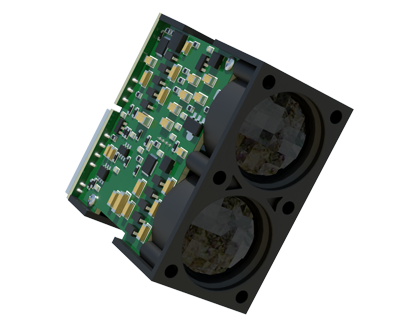
Despite their benefits, engineers must consider several factors when implementing laser sensors. Environmental conditions like ambient light, temperature fluctuations, and dust can affect performance, necessitating proper shielding and calibration. Safety is another critical aspect, as high-power lasers pose risks to human eyes and skin. Adherence to international standards, such as IEC 60825 for laser safety, is mandatory to ensure workplace protection.
Looking ahead, the future of laser-based light intensity sensors appears promising. Emerging trends include the use of fiber-optic integration for enhanced flexibility and the adoption of quantum dot technology for improved sensitivity. As industries continue to embrace Industry 4.0 and IoT, these sensors will likely become more interconnected, contributing to smarter, more efficient systems. For electrical engineers, staying updated on these developments is key to leveraging their full potential in innovative projects.
In summary, laser-based light intensity sensors represent a sophisticated tool in modern electrical engineering, combining precision, speed, and adaptability. Their applications span diverse fields, from automation to research, driven by ongoing technological evolution. By understanding their principles and best practices, professionals can harness these sensors to optimize processes and advance technological frontiers.