In the realm of industrial automation, laser navigation sensors have become indispensable components for precise positioning, mapping, and guidance in applications ranging from autonomous mobile robots (AMRs) and automated guided vehicles (AGVs) to complex material handling systems. A critical, yet often underexplored, aspect of these sensors is their power consumption and output power characteristics. Optimizing laser navigation sensor power is not merely an exercise in energy efficiency; it is a fundamental engineering consideration that directly impacts system reliability, operational lifespan, safety compliance, and overall application performance.
At its core, a laser navigation sensor, such as a LiDAR (Light Detection and Ranging) unit used for simultaneous localization and mapping (SLAM), operates by emitting laser pulses and measuring the time-of-flight or phase shift of the reflected light. The power of the emitted laser beam is a key parameter. Higher output power can extend the effective sensing range, improve signal-to-noise ratio in challenging environments (e.g., low-reflectivity surfaces, ambient light interference), and enhance the density and accuracy of point cloud data. This is crucial for applications requiring long-range detection or operating in dynamic, unstructured spaces. For instance, a large-scale warehouse AMR navigating wide aisles benefits from a sensor with sufficient power to detect obstacles at a distance, allowing for smoother deceleration and path replanning.

However, the pursuit of higher output power is bounded by several constraints. Firstly, safety regulations, most notably the IEC 60825-1 standard, classify lasers based on their potential to cause eye damage. Most industrial navigation sensors are designed to be Class 1 (inherently safe under all conditions) or Class 2 (safe due to the human aversion response). Increasing laser power could push a device into a higher, more restrictive hazard class, necessitating additional safety enclosures, interlocks, and labeling, which increase cost and complexity. Secondly, higher output power invariably leads to increased electrical power consumption. This is a significant factor for battery-operated platforms like AMRs. Excessive power draw shortens operational cycles, necessitates larger or more frequent battery swaps/charges, and increases the thermal load on the sensor and vehicle electronics.
Therefore, the engineering challenge lies in achieving an optimal balance. Modern laser navigation sensors employ sophisticated techniques to maximize performance per watt. Key strategies include:
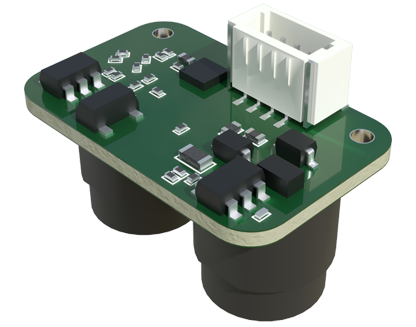
1. Adaptive Power Management: Advanced sensors can dynamically adjust their laser output power based on environmental feedback. In a clean, high-reflectivity environment or at short ranges, the power can be scaled down. When entering a dark area or needing to scan a distant target, power is intelligently ramped up. This closed-loop control significantly reduces average power consumption without sacrificing performance.
2. Efficient Optical Design: The efficiency of the optical path—including the laser diode itself, collimating lenses, and the receiver optics—is paramount. High-quality components that minimize internal light loss mean that less electrical input is required to achieve a desired effective optical output at the target.
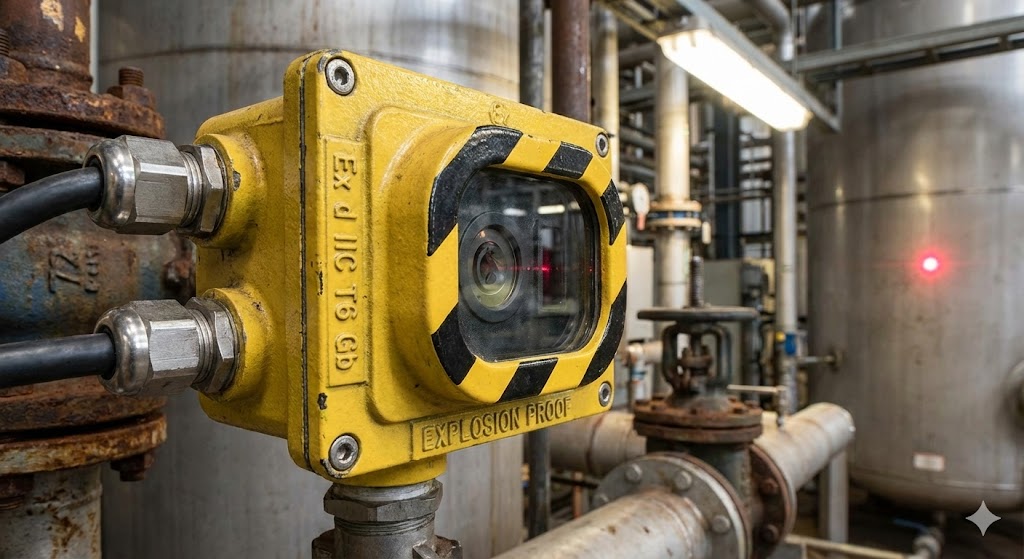
3. Signal Processing Sophistication: The role of onboard algorithms cannot be overstated. Powerful digital signal processors (DSPs) and filtering algorithms can extract clean, accurate data from a weaker return signal. This allows the sensor to maintain high performance even at moderate laser power levels, effectively decoupling raw power from perceived performance.
4. Thermal Design and Component Selection: Laser diodes and associated electronics are sensitive to temperature. Efficient thermal management (through heatsinks, careful PCB layout, or active cooling in extreme cases) ensures consistent performance and prevents thermal throttling. Using low-power, high-performance application-specific integrated circuits (ASICs) for core functions also reduces the system's overall power budget.
From a system integration perspective, engineers must consider the sensor's power specifications holistically. This involves examining not just the nominal operating voltage and current, but also the inrush current during startup, sleep/standby mode consumption, and the profile of power usage during active scanning cycles. Compatibility with the vehicle's power supply architecture (e.g., 12V, 24V, 48V DC) is essential to avoid inefficiencies from additional voltage regulation.
In conclusion, laser navigation sensor power is a multidimensional optimization problem. Simply selecting the sensor with the highest output power rating is rarely the correct approach. A systems-level analysis that considers the specific application's range, accuracy, and environmental requirements, alongside operational duration, safety mandates, and thermal constraints, is essential. The trend in the industry is unmistakably toward smarter, more adaptive sensors that deliver exceptional navigational intelligence with minimal electrical and optical power, thereby driving the next wave of efficiency and capability in industrial automation. By prioritizing optimal power design, engineers can build more reliable, longer-lasting, and higher-performing automated systems.