Magnetic proximity sensors, specifically those operating on the flux density principle, are fundamental components in modern industrial automation and control systems. Unlike other sensing technologies, these devices detect the presence or absence of a magnetic field, typically generated by a permanent magnet, without any physical contact. This non-contact operation is their primary advantage, leading to high reliability, long operational life, and suitability for harsh environments where dirt, oil, or vibration might compromise other sensor types.
The core operating principle is based on detecting changes in magnetic flux density. A typical sensor houses a magneto-sensitive element, such as a reed switch, a Hall-effect IC, or a magnetoresistive element. When a ferromagnetic target (like a steel gear tooth) or a permanent magnet approaches the active face of the sensor, it disturbs the magnetic field. This disturbance causes a measurable change in the flux density at the sensing element. For instance, in a Hall-effect-based sensor, this change in flux density alters the output voltage of the Hall IC. Once this change crosses a predefined threshold, the sensor's internal electronic circuitry triggers a switching action, changing its output state from "off" to "on" or vice versa. The sensing distance, a critical parameter, depends on the strength of the magnet, the size and material of the target, and the sensitivity of the internal sensing element.
These sensors are categorized mainly by their output type. The two most common are DC 3-wire models providing a PNP (sourcing) or NPN (sinking) transistor output, and 2-wire AC/DC models. PNP sensors switch the positive voltage to the load, while NPN sensors switch the negative or ground side. The choice depends on the control system's PLC or controller input card configuration. Another key distinction is between unipolar and bipolar sensors. Unipolar sensors respond to a single magnetic pole (typically the south pole) and ignore the opposite pole, which helps prevent false triggering. Bipolar sensors react to both north and south poles, often used in applications requiring direction detection.
The applications for magnetic flux proximity sensors are vast and critical. They are extensively used for position sensing, such as detecting the open or closed state of doors, hatches, and safety guards. In rotary motion control, they serve as non-contact limit switches or speed sensors by detecting passing gear teeth or encoder magnets on motor shafts. In fluid power systems, they are embedded in hydraulic or pneumatic cylinders to provide precise end-of-stroke piston position feedback. Their robustness makes them ideal for mobile equipment, agricultural machinery, and heavy industrial settings where exposure to contaminants, moisture, and mechanical shock is inevitable.
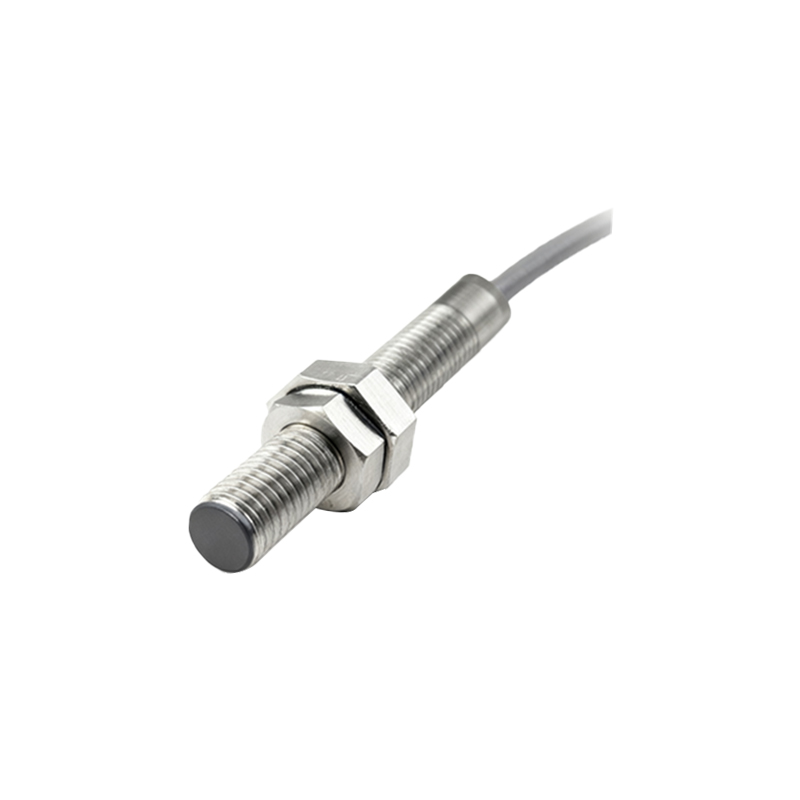
Selecting the right magnetic proximity sensor requires careful consideration of several parameters. First, define the required sensing distance and ensure it is rated for the specific target material (e.g., mild steel). The housing material is crucial; stainless steel (e.g., V2A/AISI 304, V4A/AISI 316) offers excellent corrosion resistance for washdown or outdoor applications, while nickel-plated brass or PBT plastic may suffice for less demanding environments. Electrical characteristics like operating voltage range (e.g., 10-30V DC), output type (PNP/NPN, NO/NC), and current rating must match the control circuit. Protection ratings, denoted by IP (Ingress Protection) codes like IP67 or IP69K, indicate the level of protection against dust and water ingress. For applications involving strong external magnetic fields or high temperatures, specifying sensors with appropriate shielding and temperature ratings is essential.
Installation and wiring practices significantly impact performance and longevity. Maintain the specified mounting clearance around the sensor to prevent side-effects from adjacent metal structures. Ensure the target approaches the sensor's active face correctly, as the sensing distance can vary with the target's approach axis. Use shielded cables in electrically noisy environments and follow proper grounding guidelines. For cylinder sensors, precise alignment with the magnet inside the piston is critical for reliable switching.
In conclusion, magnetic flux proximity sensors offer a reliable, durable, and versatile solution for non-contact detection in challenging industrial environments. A thorough understanding of their working principle, output configurations, and key selection criteria enables engineers and technicians to deploy them effectively, enhancing system reliability and operational efficiency. As technology advances, these sensors continue to evolve with improved sensing ranges, miniaturized designs, and integrated smart diagnostics, solidifying their indispensable role in industrial automation.