In industrial automation and precision measurement, laser displacement sensors are indispensable tools for non-contact, high-accuracy distance and position detection. At the core of their functionality lies the emission of laser beams—a process governed by sophisticated optoelectronic principles. This article delves into how these sensors generate and project laser light, exploring the underlying technology and its practical implications in various sectors.
The emission process begins within the laser diode, a semiconductor device that converts electrical energy into coherent light. When a forward voltage is applied across the diode’s p-n junction, electrons and holes recombine in the active region, releasing energy in the form of photons. This phenomenon, known as stimulated emission, is amplified within an optical cavity formed by reflective mirrors at both ends of the diode. One mirror is fully reflective, while the other is partially transparent, allowing a portion of the light to escape as a concentrated laser beam. The wavelength of the emitted laser typically falls within the visible red or near-infrared spectrum (e.g., 650 nm or 850 nm), chosen for its balance of visibility, safety, and environmental stability.
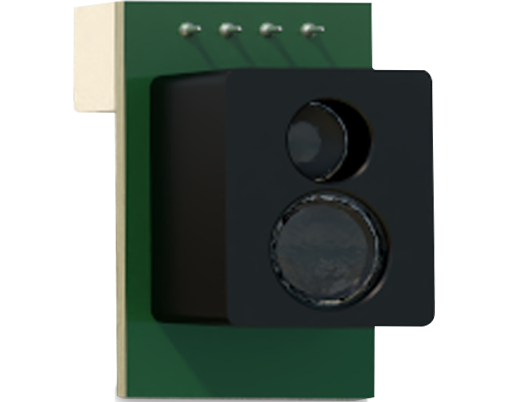
To ensure precision, the laser beam is conditioned through collimating optics. A collimating lens aligns the divergent rays into a parallel or slightly focused beam, reducing dispersion and maintaining a consistent spot size over distance. This is critical for applications requiring micrometer-level accuracy, such as semiconductor wafer inspection or automotive part alignment. Advanced sensors may incorporate beam shaping elements, like cylindrical lenses, to create linear or patterned laser lines for profile scanning. The emitted beam’s intensity is modulated to suit different surface materials—brighter surfaces may require lower power to avoid saturation, while dark or absorptive materials need higher output for reliable reflection.
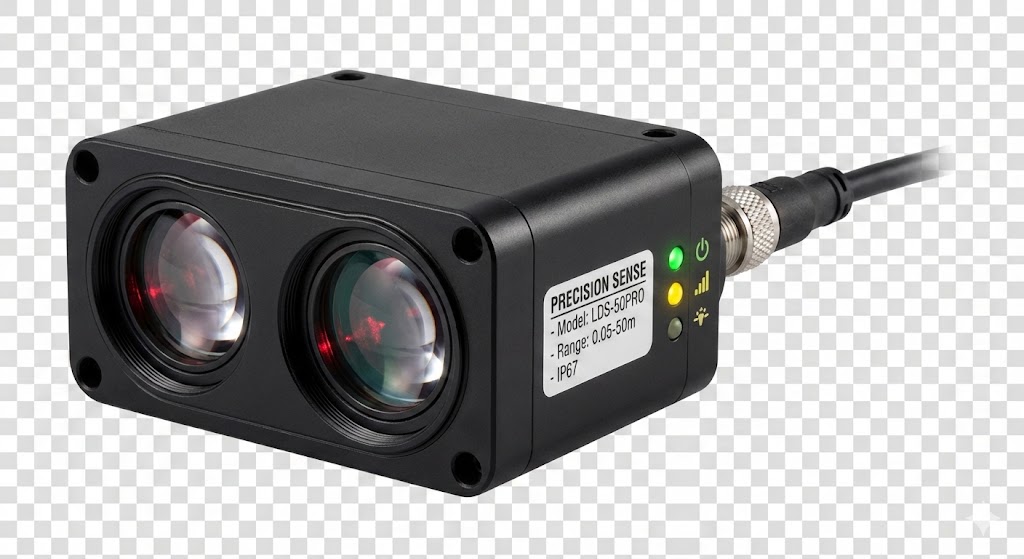
Environmental factors significantly influence laser emission. Temperature fluctuations can shift the diode’s wavelength and output power, leading to measurement drift. High-end sensors integrate thermoelectric coolers (TECs) and feedback loops to stabilize operation. Additionally, ambient light interference—especially from industrial lighting—is mitigated using optical filters or modulated laser signals with synchronous detection. For instance, by pulsing the laser at a specific frequency and filtering out non-matching signals, sensors can distinguish their own beam from background noise, enhancing reliability in harsh settings like welding shops or outdoor construction.
Safety is paramount in laser emission design. Most industrial laser displacement sensors comply with Class 2 or Class 3R safety standards, ensuring low-risk operation for human exposure. Features include automatic power reduction, emission indicators, and protective housings. In robotics, for example, sensors often include interlocks that deactivate the laser during maintenance. The beam’s coherence and low divergence also minimize energy loss, allowing efficient operation over long ranges—some models measure distances up to several meters with sub-micron repeatability.
Applications of laser emission in displacement sensors span diverse industries. In manufacturing, they enable real-time thickness monitoring of rolled steel or vibration analysis of rotating machinery. In electronics, they guide pick-and-place robots by emitting structured light to map component heights. Emerging uses include autonomous vehicle navigation, where laser beams scan road surfaces for obstacle detection, and biomedical engineering, for non-invasive tissue profiling. Each application tailors emission parameters—such as pulse duration, spot size, and scan rate—to optimize performance.
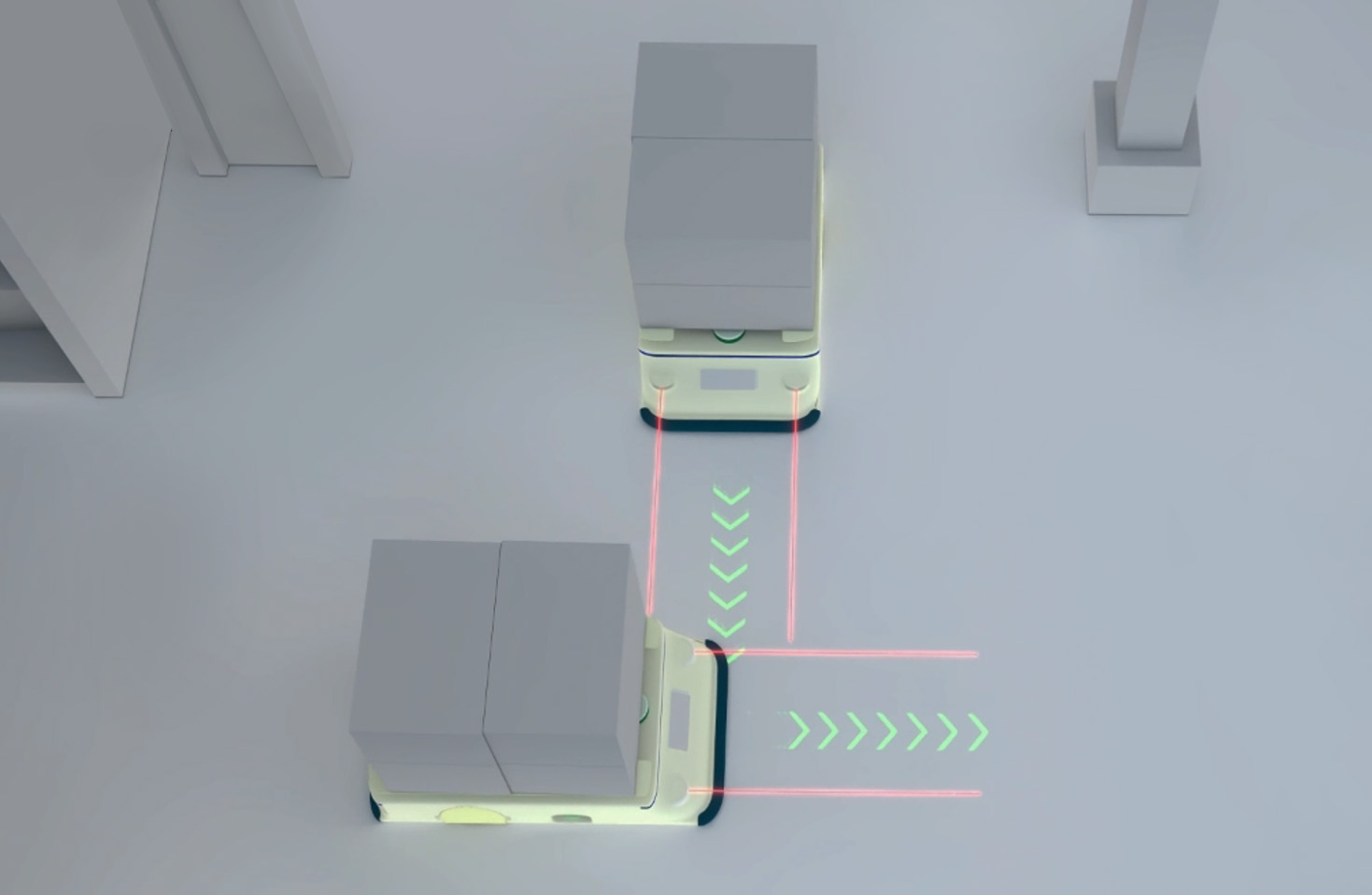
Future advancements focus on enhancing emission efficiency and integration. Developments in vertical-cavity surface-emitting lasers (VCSELs) promise lower power consumption and faster modulation, enabling compact sensor designs for IoT devices. Additionally, multi-wavelength emission systems are being explored to handle complex surfaces like transparent glass or oily metals, by analyzing reflections at different spectra. As Industry 4.0 accelerates, the role of laser emission in smart sensors will expand, driving innovations in predictive maintenance and digital twin modeling.
In summary, the emission of laser beams in displacement sensors is a finely tuned process combining semiconductor physics, optical engineering, and adaptive control. By understanding these mechanisms, engineers can better select and deploy sensors for precision tasks, ensuring robust measurements in dynamic industrial environments. Continuous improvements in laser technology will further elevate their accuracy, safety, and versatility, solidifying their status as cornerstone tools in modern automation.