In the rapidly evolving landscape of industrial automation, laser sensors have emerged as indispensable tools for precision measurement, detection, and quality control. Selecting the right industrial laser sensor manufacturer is a critical decision that impacts production efficiency, product quality, and overall operational ROI. This guide provides an in-depth analysis of the key players, technological considerations, and selection criteria for engineers and procurement specialists navigating this complex market.
The core technology behind industrial laser sensors involves emitting a focused beam of light and analyzing the reflected signal. Key measurement principles include time-of-flight (ToF), triangulation, and confocal chromatography, each suited for specific applications like distance measurement, profile scanning, or surface inspection. Leading manufacturers continuously innovate in these areas, pushing the boundaries of resolution, speed, and environmental robustness.
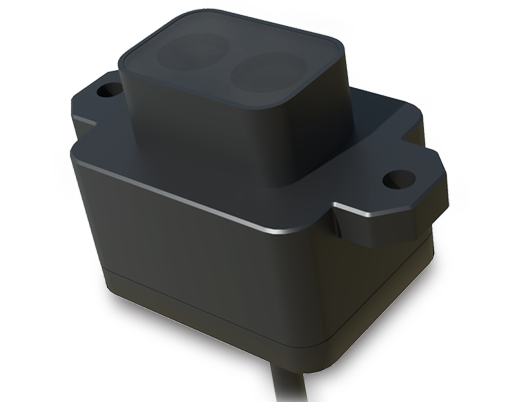
When evaluating manufacturers, several industry giants consistently set the benchmark. Companies like Keyence, Omron, SICK, and Banner Engineering are renowned for their extensive portfolios, global support networks, and robust R&D investments. Keyence, for instance, is often praised for its high-precision, user-friendly sensors with advanced software integration capabilities. Omron and SICK offer exceptional reliability and a vast array of sensor types, including safety-rated laser scanners for collaborative robotics and AGV navigation. Banner Engineering provides strong value-oriented solutions with excellent durability in harsh environments.
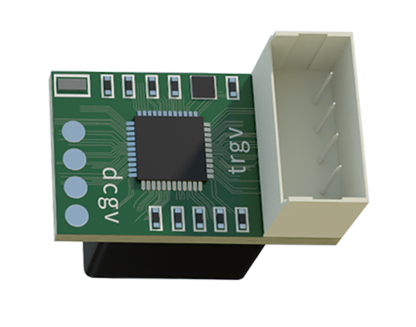
Beyond the well-known brands, a tier of specialized manufacturers excels in niche applications. Companies such as Micro-Epsilon focus on ultra-high-precision measurement sensors with sub-micron resolution, crucial for semiconductor and precision engineering sectors. LMI Technologies specializes in 3D laser profiling for shape and surface inspection. These specialists often deliver unparalleled performance in their specific domains, though their product range may be narrower.
Several critical technical factors must guide the selection process. First, consider the required specifications: measurement range, spot size, resolution, repeatability, and response time. The sensor's housing and ingress protection (IP) rating are vital for withstanding industrial conditions like dust, coolant, vibration, and temperature extremes. Communication protocols (e.g., IO-Link, Ethernet/IP, Profinet) are equally important for seamless integration into modern Industry 4.0 and IIoT frameworks. Ease of configuration and the availability of intuitive software tools can significantly reduce commissioning time and complexity.
The manufacturer's support ecosystem is a decisive, often overlooked factor. This includes the availability of local technical support, comprehensive documentation, application engineering assistance, and lead times for samples and volume orders. A manufacturer with a strong distribution and support network can drastically reduce downtime and long-term operational headaches.
Emerging trends are shaping the future offerings of these manufacturers. There is a growing demand for miniaturized sensors for compact machinery, intelligent sensors with embedded analytics, and enhanced safety features for human-robot interaction. Furthermore, the integration of AI and machine learning for predictive maintenance and advanced defect classification is becoming a key differentiator.
In conclusion, the choice of an industrial laser sensor manufacturer is not merely a component purchase but a strategic partnership. A thorough evaluation must balance technical specifications, application suitability, total cost of ownership, and the strength of the manufacturer's support. By carefully considering the leaders, the specialists, and the evolving technological landscape, engineering and procurement teams can make informed decisions that enhance automation efficacy, ensure quality, and drive innovation on the factory floor. The optimal manufacturer is one whose technological roadmap aligns with your long-term operational goals and challenges.