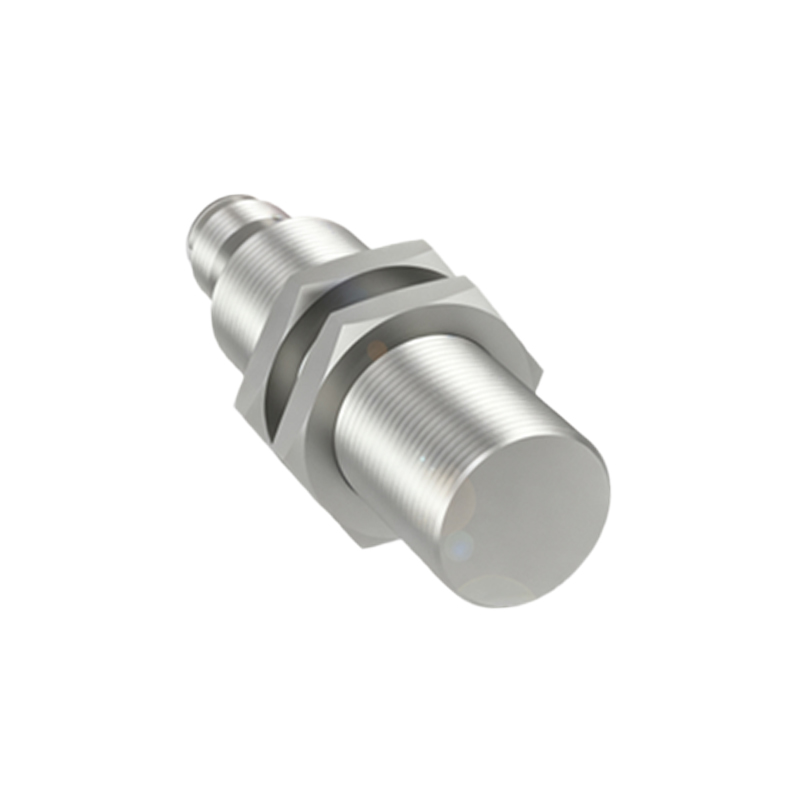
In the realm of industrial automation and control systems, output type proximity sensors stand as critical components for non-contact detection and precise measurement. These sensors, often referred to simply as proximity switches, operate by generating an electromagnetic field or beam of radiation and detecting changes in that field or return signal when a target object enters their sensing range. Unlike purely sensing devices, their defining characteristic is the integrated electronic circuitry that provides a discrete or analog output signal, ready for direct interface with programmable logic controllers (PLCs), motor drives, or other control units.
The core working principle varies based on the technology employed. Inductive proximity sensors are the most common type for detecting metallic objects. They contain an oscillator circuit that generates a high-frequency electromagnetic field at the active sensing face. When a ferrous or non-ferrous metal object enters this field, eddy currents are induced on the surface of the object. This causes a change in the oscillation amplitude, which is detected by the sensor's threshold circuit, subsequently triggering a solid-state output switch. Capacitive proximity sensors function similarly but can detect both metallic and non-metallic materials (plastics, wood, liquids, etc.) by sensing changes in capacitance caused by the dielectric properties of the target. Ultrasonic sensors use sound waves, while photoelectric sensors rely on light beams, each suited for specific application challenges like long-range detection or transparency.
The "output type" aspect is paramount. These sensors are categorized primarily by their output configuration. The two main families are discrete (digital) outputs and analog outputs. Discrete output sensors provide a simple ON/OFF signal. Common forms include NPN (sinking) and PNP (sourcing) transistor outputs for DC sensors, and relay or triac outputs for AC models. The choice between NPN and PNP is fundamental and depends on the input circuit configuration of the connected controller. Analog output sensors, on the other hand, provide a continuously variable signal—typically 0-10V DC or 4-20mA—that is proportional to the distance between the sensor and the target. This allows for tasks like position monitoring, thickness measurement, or edge guiding.
Selecting the correct output type proximity sensor requires a careful analysis of several application parameters. First, the target material dictates the sensor technology: inductive for metals, capacitive for a broader range. The required sensing distance, or nominal range, must be considered, typically specified for a standard target. Environmental factors are crucial; sensors are rated with Ingress Protection (IP) codes for dust and water resistance, and must withstand ambient temperature, humidity, and potential exposure to oils or chemicals. The electrical characteristics—operating voltage (e.g., 10-30V DC, 90-250V AC), output current capacity, and wiring scheme (2-wire, 3-wire, or 4-wire)—must match the control system's power supply and input module. For high-speed counting or precise positioning, the sensor's switching frequency (response time) becomes a critical specification.
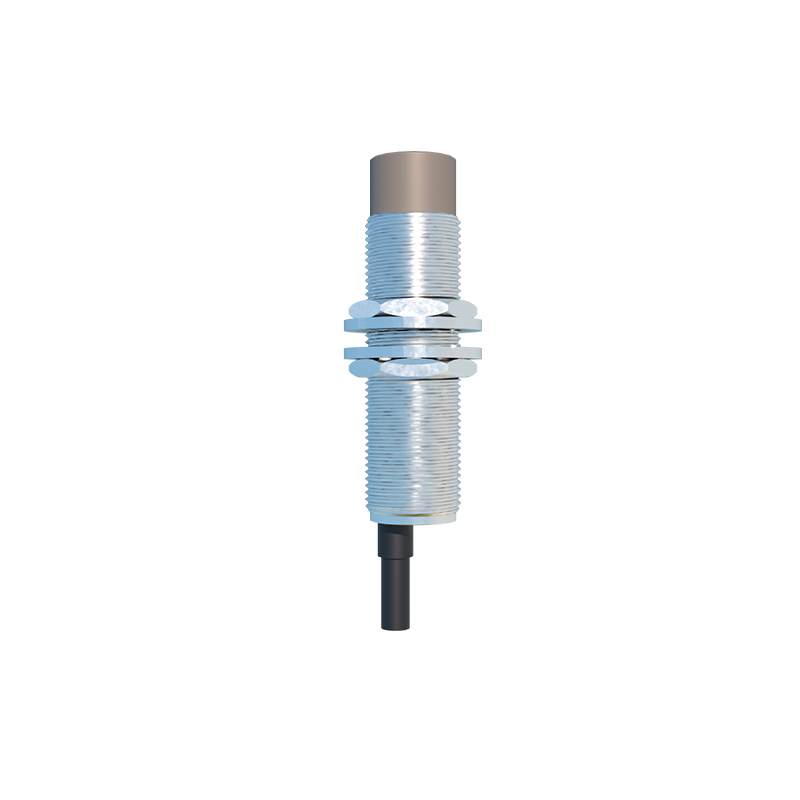
Applications are vast and integral to modern manufacturing. They are ubiquitously used for object detection on conveyor lines, part presence verification in assembly machines, end-of-travel limit sensing on actuators, rotary encoder synchronization, and liquid level control. In packaging, capacitive sensors detect fill levels in non-metallic containers. In automotive assembly, robust inductive sensors count gear teeth or verify component placement. The analog variants enable precise control in roll diameter measurement, tension control systems, and robotic arm positioning.
Installation and commissioning also demand attention. Proper mounting, with consideration for flush or non-flush mounting styles in inductive sensors, ensures rated sensing performance. Maintaining adequate clearance from surrounding metal (to avoid side-effects) and ensuring a stable power supply with correct polarity are essential for reliable operation. Regular maintenance, though minimal due to their non-contact nature, involves periodic cleaning of the sensing face and verification of performance.
In conclusion, output type proximity sensors are the workhorses of automated sensing, translating physical presence into actionable electrical signals. Their reliability, speed, and versatility make them indispensable. A successful implementation hinges on a methodical selection process that aligns sensor technology, output type, and performance specifications with the specific demands of the application, ensuring seamless integration and long-term operational efficiency in diverse industrial environments.