In the realm of industrial automation and control systems, the 24V proximity sensor stands as a fundamental and ubiquitous component. Its primary function is to detect the presence or absence of a target object without any physical contact, making it an essential tool for tasks ranging from simple object counting to complex position verification in high-speed machinery. The 24V DC operating voltage has become a de facto standard in industrial environments, offering a robust balance between safety, noise immunity, and compatibility with Programmable Logic Controllers (PLCs) and other control devices.
A proximity sensor operates on the principle of electromagnetic fields or capacitive changes. The most common type is the inductive proximity sensor, designed to detect metallic objects. It contains an oscillator circuit that generates a high-frequency electromagnetic field at its sensing face. When a metallic target enters this field, eddy currents are induced in the target, causing a change in the oscillation amplitude. This change is detected by the sensor's circuitry, which then triggers a solid-state switch to change the output state. For non-metallic objects, such as liquids, plastics, or wood, capacitive proximity sensors are employed. These sensors detect changes in capacitance caused by the presence of any material that alters the dielectric constant near the sensing face.
The "24V" specification is critical. This DC voltage level is widely adopted because it is low enough to be considered safe in many jurisdictions (often classified as Safety Extra-Low Voltage or SELV), reducing the risk of electric shock during installation and maintenance. Simultaneously, it is high enough to provide strong signal integrity over reasonable cable lengths, resisting electromagnetic interference (EMI) common in industrial settings. Most 24V sensors are designed as 3-wire devices: one wire for 24V DC supply (brown), one for 0V common (blue), and one for the switched output (black). The output can be either NPN (sinking) or PNP (sourcing), a crucial distinction that must match the input configuration of the controller it is connected to. PNP sensors are more common in Europe and many PLC systems, sourcing current to the load, while NPN sensors are often found in Asian markets.
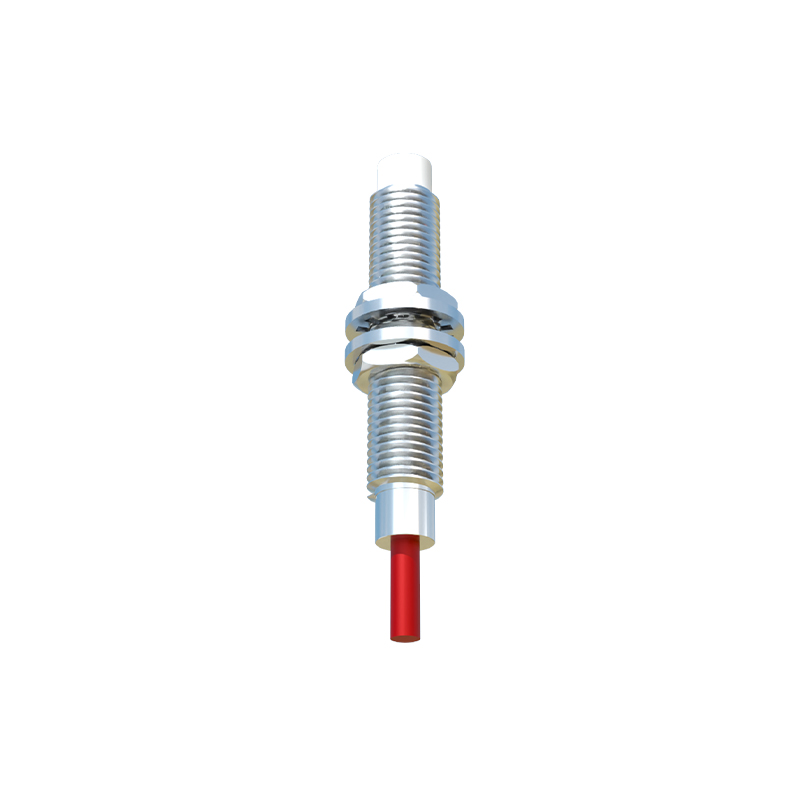
Key specifications define a sensor's suitability for an application. Sensing distance, or "sn," is the nominal range at which a standard target can be reliably detected. It is vital to note that this rating is for mild steel; other metals like aluminum or copper have correction factors that reduce the effective range. The housing material, typically nickel-plated brass, stainless steel, or PBT plastic, determines environmental resilience against chemicals, oils, and physical impact. Protection ratings, denoted by IP (Ingress Protection) codes like IP67 or IP69K, indicate the level of protection against dust and water ingress, which is paramount for washdown environments in food and beverage or pharmaceutical industries.
Installation and wiring require careful attention. Sensors must be mounted securely, with consideration for the "blind zone" around the sensing face. Metallic surroundings can influence the sensing field, so flush-mountable sensors are used when installed in metal. Proper shielding and routing of cables away from power lines minimize noise interference. Regular maintenance, though minimal, involves keeping the sensing face clean from debris, metal chips, or buildup that could cause false triggering or reduced sensing distance.
In conclusion, the 24V proximity sensor is a cornerstone of modern industrial automation. Its non-contact operation ensures longevity and reliability, while its standardized 24V DC interface guarantees seamless integration into control systems. From packaging lines and robotic cells to automotive assembly and material handling, understanding the types, principles, and application nuances of these sensors is indispensable for engineers and technicians aiming to design, maintain, and optimize efficient, safe, and productive automated processes.