Laser rangefinder sensors have revolutionized the way we measure distance, offering unparalleled precision, speed, and reliability across a vast spectrum of industries. At their core, these devices operate on a simple yet powerful principle: they emit a laser pulse towards a target and measure the time it takes for the reflected light to return. This time-of-flight (ToF) measurement, when combined with the known constant speed of light, allows for the calculation of distance with extraordinary accuracy. Modern iterations have refined this process, incorporating advanced phase-shift or triangulation methods for even greater resolution in specific applications.
The fundamental components of a laser rangefinder sensor include a laser diode emitter, a high-sensitivity photodetector receiver, a precision timing circuit, and a processing unit. The laser diode typically emits a focused, coherent beam of light in the visible or near-infrared spectrum. The choice of wavelength is critical, affecting factors like eye safety (with Class 1 or Class 2 lasers being common for consumer and industrial use), beam visibility, and performance under various environmental conditions. The receiver must be exceptionally sensitive to detect the often-faint reflected signal, especially over long distances or from low-reflectivity surfaces. Sophisticated signal processing algorithms filter out ambient light noise and precisely calculate the interval between emission and detection.
The applications for these sensors are remarkably diverse. In industrial automation and robotics, they are indispensable for object detection, positioning, collision avoidance, and bin picking. They guide autonomous mobile robots (AMRs) through dynamic environments with centimeter-level precision. In the construction and surveying sectors, laser rangefinders have replaced traditional tape measures and theodolites for tasks like land surveying, volume calculation, and building layout, dramatically improving efficiency and reducing human error. The consumer market is familiar with them in golf and hunting rangefinders, while more advanced units are integrated into smartphone cameras for autofocus assistance and augmented reality features. Furthermore, they are a critical enabling technology for autonomous vehicles, forming the core of LiDAR (Light Detection and Ranging) systems that create real-time 3D maps of the vehicle's surroundings.
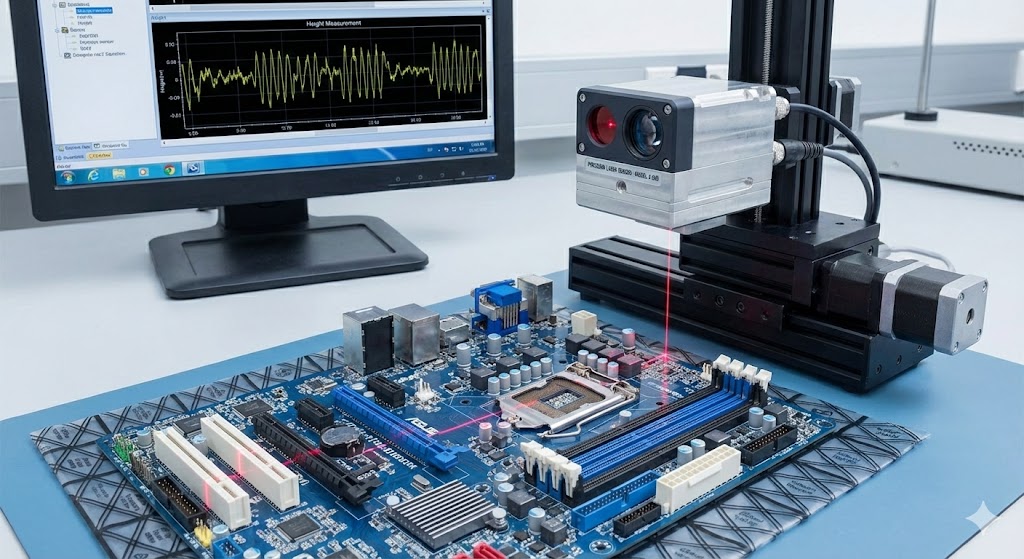
Selecting the right laser rangefinder sensor requires careful consideration of several key parameters. The primary specification is the measuring range, which can vary from a few centimeters for close-range inspection to several kilometers for topographical mapping. Accuracy and resolution define the sensor's precision; high-end models can achieve sub-millimeter accuracy. The measurement rate, or how many distance readings per second the sensor can provide, is vital for high-speed applications like robotics or quality control on a fast-moving production line. Environmental robustness is another crucial factor. Sensors designed for outdoor use or harsh industrial settings must have high ingress protection (IP) ratings against dust and water, and they must compensate for or resist interference from factors like varying ambient light, rain, fog, or extreme temperatures. Finally, the interface—common options include analog voltage, current loops, RS232, RS485, or Ethernet/IP—must be compatible with the user's control system.
Recent advancements continue to push the boundaries of this technology. The miniaturization of components has led to smaller, more power-efficient sensors suitable for integration into portable devices and drones. The development of solid-state LiDAR, which uses no moving parts, promises greater durability and lower costs for automotive and robotics applications. Enhanced software algorithms now allow for better target discrimination, enabling the sensor to ignore background clutter and focus on the intended object. Furthermore, the integration of Bluetooth and WiFi for wireless data transmission simplifies system setup and data logging.
In conclusion, laser rangefinder sensors are a cornerstone of modern measurement and perception systems. Their ability to deliver fast, contactless, and highly accurate distance data makes them an essential tool from the factory floor to the open road. Understanding their operating principles, vast application potential, and critical selection criteria empowers engineers, technicians, and decision-makers to leverage this technology effectively, driving innovation and operational excellence in their respective fields. As the technology evolves towards even smaller form factors, lower costs, and smarter functionalities, its adoption and impact are poised to grow exponentially.