In today's rapidly advancing technological landscape, laser sensors have become integral components across various industries, from manufacturing and robotics to healthcare and consumer electronics. These devices operate by emitting a focused beam of light to detect, measure, or identify objects with remarkable precision. Understanding how to properly activate or "dial" a laser sensor is crucial for ensuring optimal performance, safety, and accuracy in any application.
The process of activating a laser sensor typically begins with a thorough inspection of the device and its environment. Before powering on the sensor, it is essential to verify that all connections are secure and that the operating conditions—such as temperature, humidity, and ambient light—fall within the specified ranges provided by the manufacturer. Many laser sensors feature protective housings or lenses that must be clean and free of obstructions to prevent signal interference or damage. Once these preliminary checks are complete, the activation sequence can commence.
Most modern laser sensors are equipped with user-friendly interfaces, which may include physical buttons, touchscreens, or software-based controls. To initiate the sensor, locate the power or activation switch—often labeled clearly on the device. In some cases, a "dial" or rotary knob might be present to adjust sensitivity or range settings before activation. Gently turn or press this control to power the sensor, observing any indicator lights or display messages that confirm startup. It is important to follow the manufacturer's instructions precisely, as improper activation can lead to calibration errors or reduced lifespan.
During activation, the laser sensor emits a coherent light beam, which interacts with target objects to gather data. This beam is typically invisible to the naked eye, though some sensors use visible red or green lasers for alignment purposes. Safety cannot be overstated during this process; always avoid direct eye exposure to the laser beam and ensure that the area is clear of reflective surfaces that could scatter light. Many sensors include built-in safety features, such as automatic shutoff mechanisms or warning signals, but user vigilance remains key.
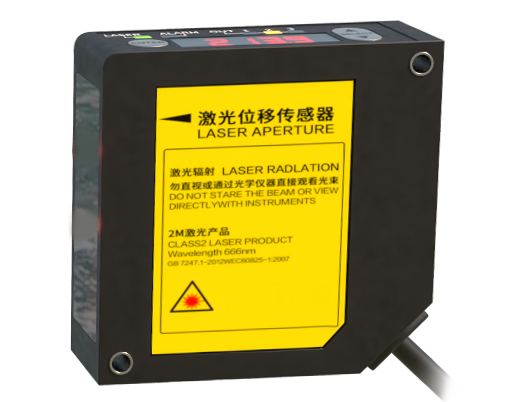
After activation, the sensor enters a stabilization phase where it calibrates itself based on environmental factors. This may take a few seconds to several minutes, depending on the model and application. During this time, avoid moving the sensor or introducing new objects into its field of view, as this could skew calibration. Once stabilized, the sensor is ready for operation, providing real-time data on distance, presence, thickness, or other parameters with high accuracy. Regular maintenance, including periodic recalibration and lens cleaning, helps sustain performance over time.
In industrial settings, laser sensors are often integrated into automated systems where activation is controlled remotely via programmable logic controllers (PLCs) or computer software. In such cases, "dialing" the sensor might involve configuring software parameters like response time, output signals, or detection thresholds. Technicians should be trained to handle these digital interfaces to prevent operational disruptions. For consumer applications—such as in laser printers or barcode scanners—activation is usually simplified to a single button press, though understanding basic troubleshooting steps can enhance user experience.

The versatility of laser sensors stems from their ability to perform non-contact measurements, making them ideal for delicate or high-speed tasks. From ensuring precise cuts in manufacturing lines to enabling gesture recognition in smart devices, their activation marks the first step toward innovation. As technology evolves, laser sensors continue to become more energy-efficient, compact, and intelligent, with features like self-diagnosis and adaptive learning. By mastering the activation process, users can unlock the full potential of these tools, driving efficiency and creativity in their respective fields.
In conclusion, activating a laser sensor is a straightforward yet critical procedure that demands attention to detail and safety. Whether through a physical dial or digital command, proper initiation sets the foundation for reliable data acquisition and system integration. As we embrace an increasingly automated world, the humble act of "dialing" a laser sensor symbolizes our connection to precision engineering—a small step that powers progress across countless domains.