In the realm of precision engineering and automated systems, laser autofocus sensors have emerged as critical components for achieving high-accuracy distance measurement and surface profiling. These sensors operate on the principle of triangulation or confocal displacement, utilizing a focused laser beam to determine the position of a target surface with micron-level resolution. The modeling of such sensors is essential for optimizing their performance in applications ranging from semiconductor manufacturing to biomedical imaging. This article delves into the fundamental modeling approaches, key parameters, and practical considerations for laser autofocus sensor design and integration.
The core of laser autofocus sensor modeling lies in understanding the optical and electronic interactions. For triangulation-based sensors, a laser diode emits a collimated beam that strikes the target surface. The reflected light is captured by a position-sensitive detector (PSD) or a CMOS/CCD array at an angle relative to the incident beam. By analyzing the displacement of the reflected spot on the detector, the distance to the target can be calculated using geometric relationships. The model typically incorporates variables such as laser wavelength, beam divergence, detector resolution, and the baseline distance between the emitter and receiver. Mathematical formulations, often derived from Snell's law and projective geometry, enable the simulation of sensor response under varying conditions, including surface reflectivity, tilt angles, and environmental disturbances like vibration or thermal drift.
Confocal displacement sensors, another prevalent type, employ a different modeling approach. Here, a laser beam passes through a pinhole aperture and is focused onto the target by an objective lens. Light reflected from the focal point returns through the same optical path, while out-of-focus light is blocked by the pinhole. The intensity of the returning light peaks when the target is precisely at the focal plane, allowing for sub-micrometer accuracy. Modeling this system involves wave optics principles, such as the point spread function and coherence length, alongside considerations for lens aberrations and pinhole size. Finite element analysis (FEA) and ray-tracing software like Zemax or Code V are commonly used to simulate these optical paths, aiding in the optimization of components for minimal crosstalk and maximum signal-to-noise ratio.
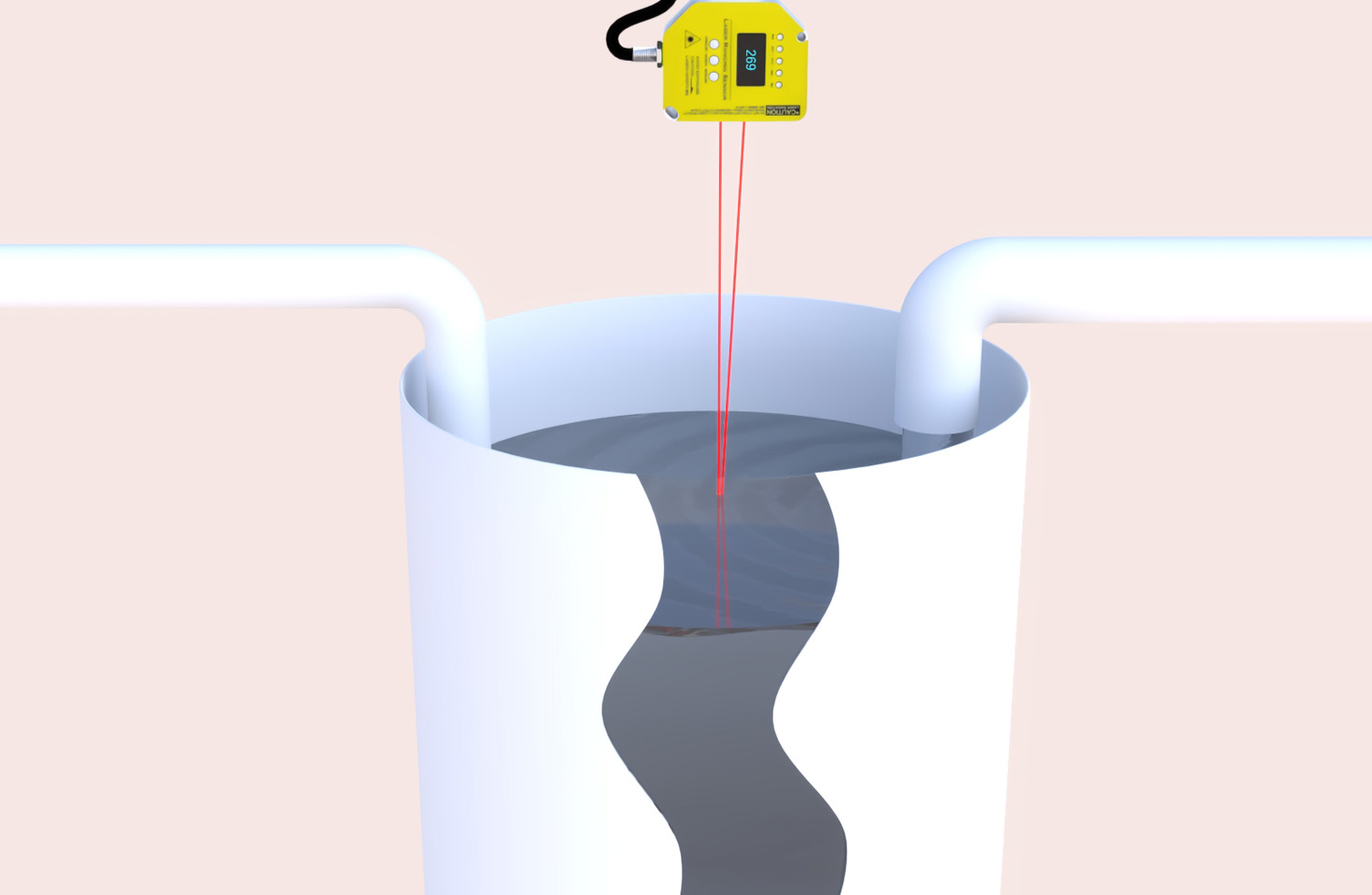
Key parameters in laser autofocus sensor modeling include linearity, repeatability, bandwidth, and working range. Linearity refers to the sensor's ability to produce a proportional output signal across its measurement range, often modeled through polynomial calibration curves. Repeatability, or precision, is influenced by factors like detector noise and laser stability, which can be represented statistically using Gaussian distributions. Bandwidth, critical for dynamic applications, depends on the response time of the detector and signal processing electronics, modeled via transfer functions in the frequency domain. The working range, determined by optical design, defines the limits within which the sensor operates effectively; modeling helps balance this with resolution requirements by adjusting focal lengths and detector sensitivities.
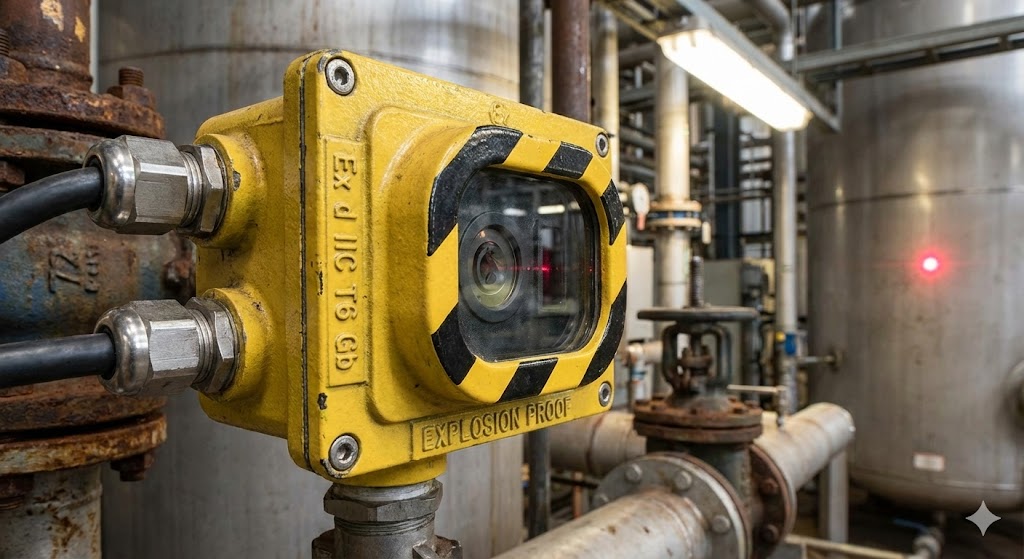
Practical challenges in modeling arise from real-world conditions. Surface properties—such as roughness, material transparency, or specular reflection—can distort measurements. For instance, a highly reflective surface may saturate the detector, while a transparent material might cause multiple reflections. Advanced models incorporate bidirectional reflectance distribution functions (BRDF) or Monte Carlo simulations to account for these effects. Environmental factors like ambient light, temperature fluctuations, and humidity also impact performance, necessitating thermal and electromagnetic interference (EMI) analyses in the model. Additionally, integration with motion systems requires modeling mechanical vibrations and alignment tolerances, often using multi-physics simulation tools to ensure robustness.
Recent advancements in modeling leverage machine learning algorithms to enhance sensor accuracy and adaptability. By training neural networks on datasets from experimental setups, models can predict and compensate for nonlinearities or environmental disturbances in real-time. This data-driven approach complements traditional physics-based modeling, enabling smarter sensors for complex industrial tasks like 3D scanning or robotic assembly. Furthermore, the trend toward miniaturization and MEMS-based laser sensors demands compact models that consider fabrication constraints, such as etching tolerances and material stress.
In conclusion, modeling laser autofocus sensors is a multidisciplinary endeavor that blends optics, electronics, and software engineering. A well-constructed model not only predicts sensor behavior but also guides design choices to meet stringent precision demands. As industries push toward higher automation and finer tolerances, ongoing research in modeling techniques will continue to drive innovations in laser sensing technology, paving the way for more reliable and efficient systems. Engineers and researchers are encouraged to utilize a combination of analytical, numerical, and empirical methods to develop comprehensive models tailored to specific applications.