In the realm of industrial automation, precision measurement is paramount. Among the array of sophisticated tools available to electrical engineers and system integrators, the split-type laser distance sensor stands out for its unique architecture and versatile application. Unlike conventional integrated laser sensors, this design features a distinct separation between the laser transmitter and the receiver, offering solutions to challenges that monolithic units cannot address.
The fundamental principle remains rooted in time-of-flight or phase-shift measurement. A laser diode in the transmitter module emits a focused beam of coherent light towards a target. The reflected light is then captured by a separate, strategically positioned photodetector in the receiver module. The sensor's internal processor calculates the distance based on the time delay or phase difference between the emitted and received signals. The critical innovation lies in the physical decoupling of these two core components.
This separation unlocks significant advantages. First and foremost is unparalleled installation flexibility. Engineers are no longer constrained by the line-of-sight and alignment limitations of a single housing. The transmitter can be mounted in cramped, hazardous, or high-temperature environments—such as inside a furnace viewing port or on a fast-moving robotic arm—while the receiver is placed in a safer, more accessible location for optimal signal capture. This protects sensitive electronic components from extreme conditions, enhancing system longevity and reliability.
Secondly, split-type configurations excel in measuring difficult surfaces. For transparent objects like glass or clear plastics, or highly reflective materials, an integrated sensor might struggle with signal saturation or pass-through. By angling the transmitter and receiver independently (often in a retro-reflective or diffuse mode with a specific angle), a reliable measurement point can be established, as the receiver detects the scattered or deflected beam rather than a direct, problematic reflection.
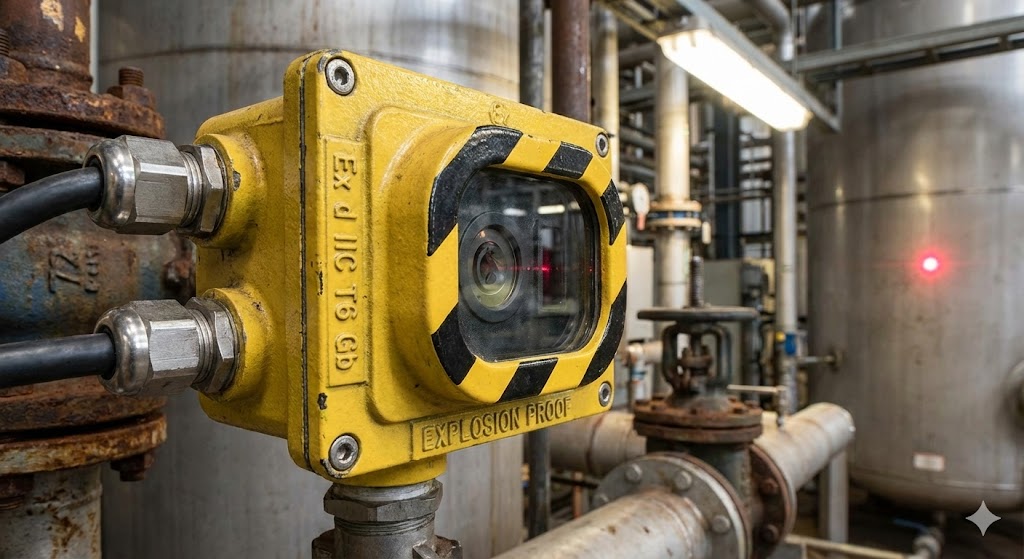
System integration also benefits. The separate modules often connect to a central processing unit via coaxial or industrial Ethernet cables, simplifying wiring in complex machinery. They can be interfaced with PLCs (Programmable Logic Controllers), industrial PCs, or data acquisition systems using standard protocols like 4-20mA analog output, RS-485, Modbus, or EtherNet/IP. This facilitates real-time monitoring and control in applications such as warehouse automation for pallet profiling, roll diameter measurement in paper and steel mills, and gap detection in assembly lines.
However, designing with split-type laser sensors requires careful consideration. Alignment, though more flexible, remains crucial. Precise mounting fixtures and alignment tools are often necessary during installation to ensure the receiver's field of view adequately captures the laser spot. Ambient light interference, particularly from strong industrial lighting or other lasers, must be mitigated, potentially requiring optical filters on the receiver. The choice between time-of-flight and phase-shift models depends on the required range and resolution; phase-shift types offer higher precision over shorter distances.
Maintenance practices differ as well. While the modular design allows for easy replacement of a damaged transmitter without disturbing the receiver setup, it introduces two potential points of failure. Regular calibration checks are essential to ensure the spatial relationship between the two modules remains constant, as any shift in their relative position will introduce measurement error.
In conclusion, the split-type laser distance sensor is a powerful tool in the electrical engineer's arsenal. Its design philosophy of separation provides a robust answer to demanding measurement scenarios where environmental factors, space constraints, or target material properties render integrated sensors ineffective. By understanding its operational principles, advantages, and integration nuances, professionals can deploy these sensors to enhance accuracy, reliability, and innovation in advanced automated systems, driving efficiency and quality in modern industrial operations.