In the rapidly evolving landscape of electrical engineering and industrial automation, blue laser tracking sensors have emerged as a pivotal technology, redefining precision measurement and control. Unlike traditional red laser sensors, blue lasers operate at shorter wavelengths—typically around 450 nanometers—which significantly enhances their resolution and accuracy. This advancement is particularly crucial in applications demanding micron-level precision, such as semiconductor manufacturing, robotics alignment, and aerospace component inspection.
The core principle behind blue laser tracking sensors involves emitting a focused blue laser beam onto a target surface. Specialized detectors then capture the reflected light, analyzing deviations in position or movement with exceptional sensitivity. The shorter wavelength of blue light reduces diffraction effects, allowing for tighter beam focusing and improved performance in detecting minute details or tracking high-speed objects. This makes blue laser sensors indispensable in environments where even slight errors can lead to substantial operational failures or product defects.
One of the standout advantages of blue laser tracking sensors is their superior performance in challenging conditions. For instance, in industrial settings with ambient light interference or on surfaces with low reflectivity, blue lasers maintain higher signal-to-noise ratios compared to their red counterparts. This reliability ensures consistent data acquisition, which is essential for real-time monitoring and adaptive control systems. Additionally, the integration of blue laser sensors with IoT platforms and AI-driven analytics has enabled predictive maintenance, reducing downtime and optimizing production workflows.
From an electrical engineering perspective, the design and implementation of these sensors involve sophisticated optoelectronics and signal processing circuits. Engineers must consider factors like power efficiency, thermal management, and compatibility with existing industrial networks. Modern blue laser sensors often incorporate advanced features such as auto-calibration, multi-axis tracking, and wireless connectivity, aligning with Industry 4.0 standards for smart manufacturing. Case studies in automotive assembly lines demonstrate how these sensors enhance quality control by precisely welding components or inspecting paint thickness, thereby boosting overall efficiency.

Despite their benefits, challenges remain in adopting blue laser tracking technology. High initial costs and the need for specialized training can be barriers for small-scale operations. However, ongoing research in materials science and photonics is driving down expenses while improving durability. Future trends point toward miniaturization and enhanced integration with machine vision systems, potentially expanding applications into fields like medical device fabrication and renewable energy infrastructure.
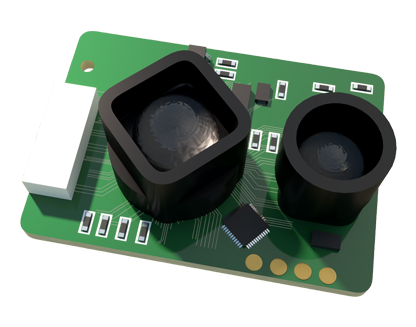
In conclusion, blue laser tracking sensors represent a significant leap forward in precision engineering. By offering unmatched accuracy and adaptability, they are transforming industrial processes and setting new benchmarks for quality and innovation. As technology continues to advance, these sensors will likely become even more integral to the electrical engineering domain, paving the way for smarter, more efficient automation solutions.