In the rapidly evolving landscape of industrial automation, precision measurement, and smart systems, laser sensor technology stands as a cornerstone of modern innovation. Leading laser sensor companies are at the forefront, driving advancements that redefine accuracy, reliability, and application scope. This article explores the core technologies, market trends, and pivotal contributions of these specialized firms, offering insights into how they are shaping the future across diverse sectors.
At its essence, a laser sensor operates by emitting a focused beam of light and analyzing the reflected signal to determine distance, displacement, presence, or profile of an object. Unlike conventional sensors, laser-based systems offer unparalleled precision, often down to the micrometer level, high-speed response, and the ability to function in challenging environments where contact is impossible or undesirable. The technological bedrock lies in several key principles: time-of-flight (ToF), triangulation, and interferometry. Time-of-flight sensors calculate distance by measuring the round-trip time of a laser pulse, ideal for long-range applications. Triangulation sensors use a laser point and a receiver at a known angle to determine position with extreme accuracy for short to medium ranges. Interferometric sensors, used for ultra-precise metrology, measure the interference pattern created by combining a reference laser beam with one reflected from a target.
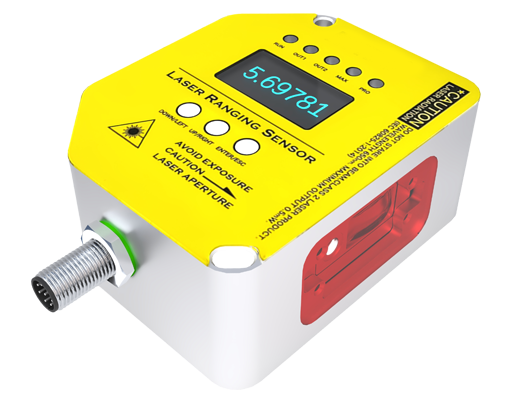
The competitive landscape is populated by both established industrial giants and agile, specialized innovators. Companies like Keyence, Sick AG, and Banner Engineering have built extensive portfolios, offering robust sensors for factory automation, including edge detection, precise positioning, and quality inspection on high-speed production lines. Their strength often lies in providing complete, user-friendly solutions with intuitive software interfaces. On the other hand, firms such as Micro-Epsilon and MTI Instruments focus on ultra-high-precision niche markets, catering to semiconductor manufacturing, aerospace component testing, and scientific research where nanometer-level accuracy is non-negotiable. These companies invest heavily in R&D to push the boundaries of resolution and thermal stability.
A significant trend is the miniaturization and integration of laser sensing components. Modern laser diodes and photodetectors are becoming smaller, more energy-efficient, and less expensive, enabling their integration into consumer electronics, autonomous vehicles (LiDAR), and portable medical devices. This democratization of technology opens new markets and forces companies to innovate not just in performance but also in form factor and power consumption. Furthermore, the integration of smart features is paramount. Contemporary laser sensors are increasingly equipped with onboard processors, IO-Link communication, and Ethernet connectivity, transforming them from simple data points into intelligent nodes within the Industrial Internet of Things (IIoT). They can perform preliminary data analysis, self-diagnose issues, and communicate seamlessly with control systems, predictive maintenance platforms, and digital twins.
The application spectrum for laser sensors is vast and continuously expanding. In automotive manufacturing, they ensure precise weld seam tracking and robot guidance. In logistics, they facilitate rapid parcel dimensioning and automated sorting. In agriculture, LiDAR sensors on drones map terrain and monitor crop health. A particularly growing field is safety; laser scanners create invisible protective fields around hazardous machinery, instantly halting operation if a breach is detected, thereby safeguarding human workers. The medical field utilizes low-power laser sensors in non-invasive diagnostic equipment and surgical guidance systems.
However, challenges persist. Environmental factors like ambient light, dust, fog, or highly reflective surfaces can interfere with laser signals. Leading companies combat this through sophisticated optical filtering, advanced algorithms for signal processing, and the development of sensors with specific wavelengths less susceptible to interference. Another challenge is the need for continuous calibration and expertise in setup, which is being addressed through automated calibration routines and more plug-and-play designs.
Looking ahead, the trajectory for laser sensor companies points toward greater intelligence, multifunctionality, and system integration. The convergence of laser sensing with artificial intelligence and machine vision will create systems capable of not just measuring, but also recognizing, classifying, and making decisions based on complex profiles. As industries worldwide strive for higher efficiency, quality, and autonomy, the role of these specialized technology providers will only become more critical. Their relentless pursuit of finer precision, faster speeds, and smarter connectivity is not merely selling sensors; it is enabling the next wave of industrial and technological revolution, one laser beam at a time.