In the realm of industrial automation and quality control, proximity sensors stand as indispensable sentinels. These non-contact devices detect the presence or absence of an object within a defined sensing range, playing a critical role in ensuring process integrity, machine safety, and product quality. Unlike mechanical limit switches, they operate without physical contact, thereby eliminating wear and tear and enabling high-speed, reliable operation. This article delves into the core principles of common proximity sensor technologies, focusing on their application in quality-sensitive environments.
The fundamental operating principle of a proximity sensor is based on the disturbance of an electromagnetic field, acoustic wave, or light beam. The most prevalent types are inductive, capacitive, and photoelectric sensors, each with distinct mechanisms suited for different materials and applications.
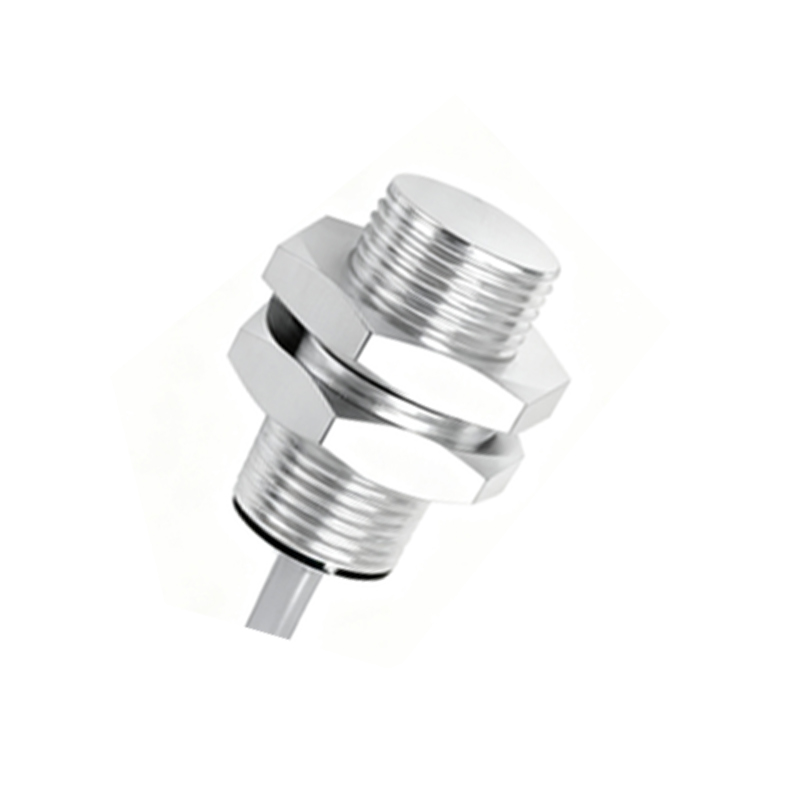
Inductive Proximity Sensors are the workhorses for detecting metallic objects. Their operation hinges on electromagnetic induction. The sensor's active face contains a coil that is part of an oscillator circuit, generating a high-frequency alternating electromagnetic field. When a conductive metal target enters this field, eddy currents are induced on the target's surface. These eddy currents draw energy from the oscillator, causing a change in its amplitude or frequency. An evaluation circuit within the sensor detects this change and triggers a solid-state output switch. The sensing distance depends on the actuator material's properties; ferrous metals like iron and steel are detected at the nominal range, while non-ferrous metals like aluminum or copper typically have a reduced sensing distance. For quality applications, this specificity is key. For instance, in an assembly line, an inductive sensor can verify the presence of a metal fastener or distinguish between different metal grades, ensuring only correct components proceed.
Capacitive Proximity Sensors can detect both metallic and non-metallic materials, including liquids, plastics, glass, and wood. They function by measuring changes in capacitance. The sensor face acts as one plate of a capacitor, with the target object acting as the other plate, and the air gap as the dielectric. An internal oscillator circuit is tuned to a specific threshold. As a target approaches, the capacitance of the system increases, altering the oscillator's amplitude. Once the amplitude reaches a preset threshold, the output state changes. Their ability to sense through non-metallic containers makes them ideal for quality checks involving fill levels of liquids or granules, detection of plastic caps, or monitoring the presence of paper or cardboard packaging. Sensitivity adjustment is often available to fine-tune the sensor for specific materials and to ignore background interference, which is crucial for stable operation in complex environments.
Photoelectric Sensors operate on the principle of light beam modulation. They consist of an emitter (light source, typically LED-based infrared, red, or laser) and a receiver. When the emitted light beam is interrupted or reflected by a target object, the receiver detects the change in light intensity, triggering an output. They are categorized into through-beam, retro-reflective, and diffuse-reflective modes. Through-beam models offer the longest range and highest reliability, as the receiver directly faces the emitter. Diffuse sensors detect the light reflected directly from the target, making them suitable for detecting objects at shorter ranges regardless of color or surface finish, which is vital for quality inspection of labels, print marks, or object positioning on a conveyor.
For high-precision quality applications, specialized variants like Analog Output Sensors are employed. Instead of a simple on/off signal, they provide a continuous voltage or current output proportional to the distance to the target. This allows for precise measurement of position, thickness, or runout, enabling real-time monitoring and closed-loop control to maintain tight tolerances.
Key performance parameters influencing quality detection include:
Repeatability: The sensor's ability to consistently detect an object at the same point. High repeatability is paramount for reliable quality gates.
Hysteresis: The difference between the switch-on and switch-off points. It prevents output chatter when a target is at the sensing limit.
Response Time/Frequency: How quickly the sensor can react to a passing object, determining the maximum permissible line speed.
Environmental Robustness: Resistance to factors like temperature extremes, humidity, washdowns (IP ratings), and electromagnetic interference (EMI). Industrial-grade sensors are housed in robust metallic or polymer casings (e.g., nickel-plated brass, stainless steel, PBT) to withstand harsh conditions.
In conclusion, the selection and application of proximity sensors for quality assurance are grounded in a clear understanding of their underlying physical principles. Inductive sensors excel with metals, capacitive sensors offer material versatility, and photoelectric sensors provide flexible, long-range detection. By matching the sensor technology to the target material, required precision, and environmental challenges, engineers can build robust inspection systems that enhance productivity, ensure safety, and uphold the highest standards of product quality in modern manufacturing.