In the landscape of industrial automation and precision engineering, the demand for accurate, reliable, and non-contact measurement solutions has never been higher. At the forefront of this technological evolution are industrial laser rangefinder sensors. These sophisticated devices utilize laser technology to determine the distance to a target with exceptional accuracy, playing a pivotal role in enhancing efficiency, safety, and quality control across diverse sectors.
The fundamental principle behind a laser rangefinder sensor is based on the time-of-flight (ToF) or phase-shift measurement of a laser beam. In the ToF method, the sensor emits a short pulse of laser light towards an object. A high-speed detector then captures the reflected light. By precisely calculating the time difference between the emission and reception of the pulse, and knowing the constant speed of light, the sensor computes the exact distance. Phase-shift models, often used for even higher precision at shorter ranges, measure the phase difference between the emitted and reflected continuous-wave laser signal. This core technology allows for measurements that are immune to many environmental variables that plague other sensing methods.
The applications of these sensors are vast and transformative. In manufacturing and robotics, they are indispensable for tasks such as precise positioning of robotic arms, dimensional gauging of components on assembly lines, and controlling level and fill in storage silos or tanks. Their ability to provide real-time feedback enables closed-loop control systems, ensuring processes operate within tight tolerances. The logistics and warehousing industry leverages them for automated guided vehicle (AGV) navigation, palletizing, and inventory management, where they help map environments and avoid collisions.
Furthermore, in construction and civil engineering, laser rangefinders facilitate land surveying, monitoring structural deformations, and guiding heavy machinery like excavators and graders with centimeter-level accuracy. The agricultural sector employs them for terrain mapping and automated guidance of harvesters, optimizing field operations. Their robustness is a key feature; industrial-grade sensors are typically housed in rugged enclosures with high Ingress Protection (IP) ratings, making them resistant to dust, moisture, vibrations, and extreme temperatures commonly found in harsh industrial settings.
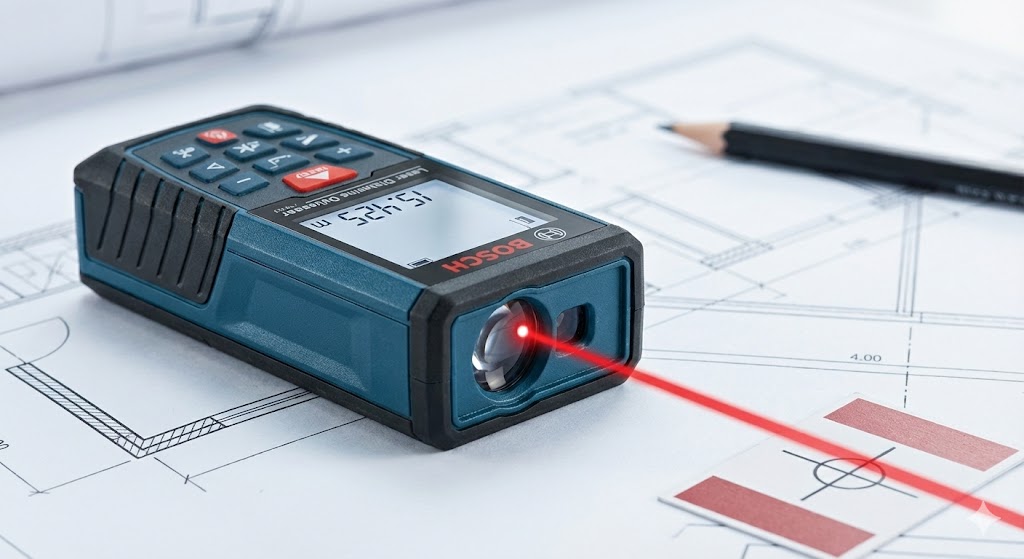
When selecting an industrial laser rangefinder, several critical specifications must be considered. The measuring range, which can vary from a few centimeters to several hundred meters, must suit the application. Accuracy and resolution are paramount, with high-end sensors offering sub-millimeter precision. The measurement rate, or how many distance readings per second the sensor can provide, is crucial for dynamic applications. Other factors include the laser class (with Class 1 or Class 2 being common for eye-safe operation), the type of output interface (analog, digital, or industrial bus protocols like IO-Link or PROFINET), and the design of the housing.
The integration of these sensors with broader Industrial Internet of Things (IIoT) frameworks is a significant trend. Modern laser rangefinders often come equipped with smart features and Ethernet connectivity, allowing them to stream data directly to cloud platforms for predictive maintenance, data analytics, and centralized monitoring. This connectivity transforms them from simple measurement tools into intelligent nodes within a smart factory ecosystem.
Despite their advantages, challenges such as measuring highly reflective or absorbent surfaces, or operating in environments with heavy airborne particulates, require careful sensor selection and sometimes complementary technologies. However, ongoing advancements in laser diode efficiency, signal processing algorithms, and multi-echo detection capabilities continue to expand their viable use cases.
In conclusion, industrial laser rangefinder sensors are more than just measuring tools; they are enablers of precision automation. By providing fast, accurate, and reliable distance data, they form the sensory backbone of modern industrial systems, driving productivity, enhancing safety, and ensuring consistent quality in an increasingly automated world. Their continued evolution promises even greater integration and intelligence for the factories and infrastructures of tomorrow.