In an era defined by automation, robotics, and smart technology, the demand for precise, reliable, and non-contact distance measurement has never been higher. At the heart of this capability lies the laser rangefinder sensor, a sophisticated device that calculates distance by emitting a laser beam and measuring the time it takes for the reflection to return. While the underlying principle of time-of-flight (ToF) or phase-shift measurement is consistent, the companies that design and manufacture these sensors are the true engines of innovation, pushing the boundaries of accuracy, range, size, and integration for diverse global industries.
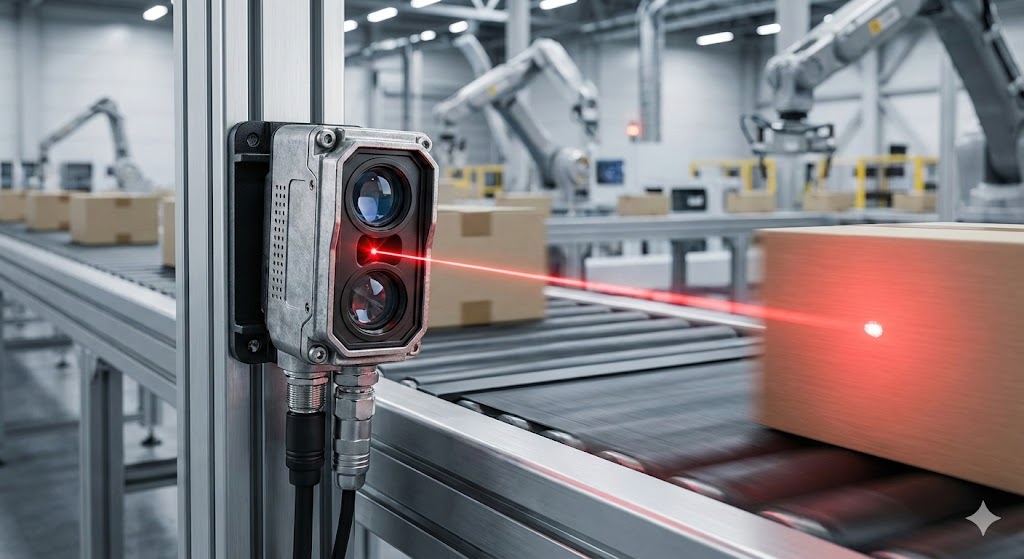
Several key players have established themselves as leaders in this specialized field, each contributing unique strengths. Companies like SICK AG, a German sensor giant, are renowned for their industrial-grade laser distance sensors. SICK's portfolio includes robust sensors capable of functioning in harsh environments—from dusty construction sites to high-vibration factory floors. Their sensors are integral to logistics automation, guiding automated guided vehicles (AGVs), ensuring precise positioning in warehouse storage systems, and monitoring material levels in silos. The emphasis is on reliability, long-range capability (often exceeding hundreds of meters), and seamless integration into complex industrial control systems.
Another prominent name is KEYENCE Corporation, a Japanese leader in factory automation sensors. KEYENCE has mastered the art of miniaturization and high-speed measurement. Their laser displacement sensors offer sub-micron accuracy at incredibly fast sampling rates, making them indispensable in high-precision manufacturing. Applications include real-time inspection of electronic components, profile measurement of machined parts, and thickness monitoring of films and sheets on production lines. KEYENCE’s strength lies in providing complete solutions, combining the sensor hardware with intuitive software for easy setup and data analysis, lowering the barrier to entry for complex metrology.
For applications requiring extreme long-range measurement, companies like Leica Geosystems (part of Hexagon) and Trimble Inc. are pioneers. Originally serving the surveying and construction sectors, their advanced laser rangefinders and total stations are now crucial for infrastructure development, mining, and archaeology. These devices combine laser ranging with angle encoders and sophisticated software to create detailed 3D point clouds of landscapes, buildings, and structures. Their evolution into scanning systems demonstrates how rangefinder technology is the cornerstone of larger digital reality capture ecosystems.
The rise of autonomous vehicles and advanced driver-assistance systems (ADAS) has created a massive new market. Here, companies like Velodyne Lidar (now part of Ouster), Innoviz Technologies, and Aeva have become critical. While often discussed under the broader term "LiDAR," these systems fundamentally rely on arrays of laser rangefinder channels to create a dynamic 3D map of the vehicle's surroundings. The focus for these automotive-focused firms is on achieving high resolution, long range, and operational reliability in all weather conditions, all while driving down costs to enable mass-market adoption.
Beyond these giants, a vibrant ecosystem of specialized companies exists. Banner Engineering and Panasonic Industry offer a wide range of cost-effective laser sensors for general industrial automation tasks like object detection and positioning. Acuity Laser specializes in very long-range measurement (up to several kilometers) for specialized applications in aerospace and energy. Startups and research-driven firms are continually innovating, developing solid-state LiDAR with no moving parts, or sensors using frequency-modulated continuous wave (FMCW) technology, which promises direct velocity measurement alongside distance.
Choosing the right laser rangefinder sensor company depends entirely on the application's specific needs. Key decision factors include required accuracy (millimeter, micron), measurement range (from millimeters to kilometers), environmental conditions (dust, temperature, ambient light), output data format, and, of course, budget. Industrial automation prioritizes robustness and repeatability; surveying demands extreme range and angular accuracy; automotive LiDAR requires high-speed, multi-point data; and consumer electronics (like in smartphones for autofocus or AR) demands ultra-miniaturization.
The future trajectory for these companies is clear: smarter, smaller, and more integrated. Sensors are becoming "smarter" with on-board processing, allowing for edge computing and pre-processed data output. Miniaturization efforts, particularly in MEMS (Micro-Electro-Mechanical Systems) and optical phased arrays, are making high-performance sensing feasible for drones, robots, and portable devices. Finally, the trend is toward sensor fusion, where laser rangefinder data is seamlessly combined with inputs from cameras, radar, and inertial measurement units (IMUs) to provide a more robust and contextual understanding of the environment.
In conclusion, the landscape of laser rangefinder sensor companies is dynamic and multifaceted. From established industrial sensor houses to cutting-edge automotive LiDAR startups, these firms are not merely component suppliers; they are enablers