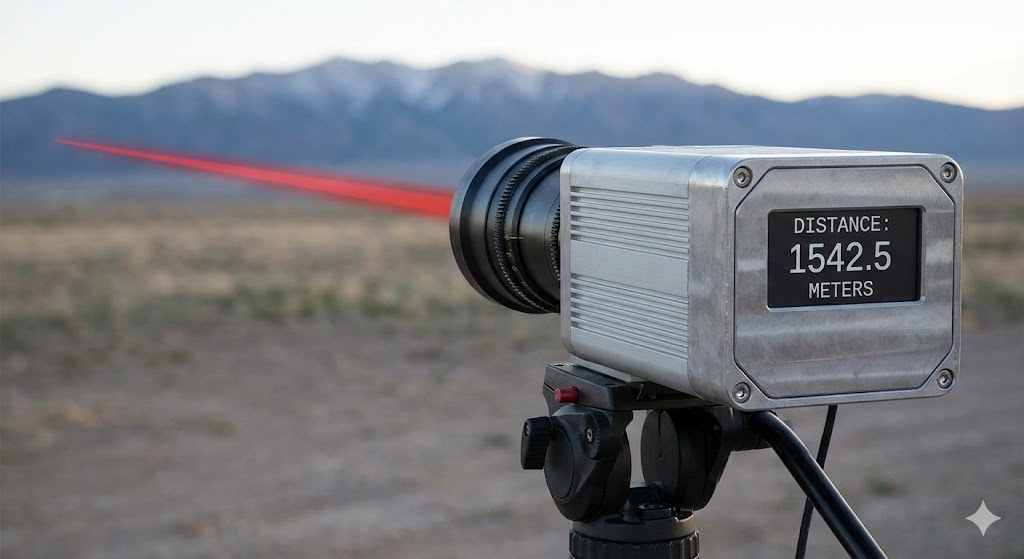
In the realm of industrial automation and precision measurement, the 2-meter laser sensor stands as a pivotal technology, enabling non-contact, high-accuracy detection over medium to long ranges. This article delves into the operational principles, diverse applications, and key considerations for selecting and implementing these advanced sensing devices.
At its core, a 2-meter laser sensor operates on the principle of optical triangulation or time-of-flight (ToF) measurement, depending on the specific model and intended use. For triangulation-based sensors, a laser diode emits a focused beam of light onto a target surface. The reflected light is then captured by a receiving lens at a specific angle and focused onto a position-sensitive detector, such as a CCD or CMOS array. By calculating the displacement of the light spot on the detector, the sensor precisely determines the distance to the target. This method is renowned for its exceptional accuracy, often within micrometer or sub-millimeter ranges, making it ideal for precise dimensional inspection, profile scanning, and alignment tasks within its 2-meter operational range.
Alternatively, Time-of-Flight (ToF) laser sensors measure the time it takes for a laser pulse to travel to the target and back. Given the constant speed of light, the sensor calculates the distance based on this elapsed time. ToF sensors are generally better suited for longer ranges and can handle varying surface properties more robustly, though they may offer slightly lower resolution compared to high-end triangulation sensors at the 2-meter mark. The choice between these technologies hinges on the specific requirements for precision, speed, target surface, and environmental conditions.
The applications for 2-meter laser sensors are vast and span numerous industries. In manufacturing and robotics, they are indispensable for precise positioning of components, robotic guidance, and conveyor belt monitoring. They ensure that parts are correctly aligned for assembly or machining processes. In the automotive sector, these sensors facilitate quality control by measuring body panel gaps, inspecting weld seams, and verifying component dimensions on the production line. The logistics and warehousing industry leverages them for palletizing, dimensioning packages, and guiding automated guided vehicles (AGVs) through dynamic environments. Furthermore, in construction and civil engineering, they assist in monitoring structural deformations, measuring distances for layout work, and ensuring levelness over extended spans.

Environmental robustness is a critical feature. High-quality 2-meter laser sensors are designed with ingress protection (IP) ratings, such as IP67, to withstand dust, moisture, and occasional splashes. They also incorporate temperature compensation circuits to maintain accuracy across a wide operating temperature range, typically from -10°C to 50°C or broader. This ensures reliable performance in harsh industrial settings, from factory floors to outdoor installations.
When selecting a 2-meter laser sensor, several technical parameters demand careful evaluation. Measurement Range and Standoff Distance: The specified 2-meter range is the maximum operational distance. The standoff distance, or the minimum required working distance, is equally important for system integration. Accuracy and Resolution: These define the sensor's precision. Accuracy refers to how close the measurement is to the true value, while resolution is the smallest detectable change. For critical inspections, sub-millimeter accuracy is often necessary. Repeatability: This indicates the sensor's consistency in providing the same measurement under unchanged conditions. Laser Class and Safety: Most industrial sensors are Class 2 or Class 1M, which are generally eye-safe under normal operating conditions, but proper safety guidelines must always be followed. Output Interface: Common interfaces include analog (4-20 mA, 0-10 V), digital (RS-232, RS-485), and industrial Ethernet (EtherNet/IP, PROFINET) or fieldbus protocols, which determine how the sensor communicates with PLCs or control systems. Response Time and Sampling Rate: For high-speed applications, such as monitoring moving objects on a production line, a fast response time and high sampling rate are essential to capture data without aliasing.
Installation and calibration are paramount for optimal performance. The sensor must be securely mounted to minimize vibration. Ensuring the laser beam is perpendicular to the target surface is crucial for accurate triangulation-based measurements. Regular calibration against known references helps maintain long-term accuracy. Additionally, the target surface properties—such as color, reflectivity, and texture—can significantly impact performance. Highly reflective or dark, absorptive surfaces may require sensors with automatic exposure control or specialized models designed for challenging surfaces.

Looking ahead, the evolution of 2-meter laser sensor technology continues. Integration with Industrial Internet of Things (IIoT) platforms enables predictive maintenance and data analytics. Enhancements in multi-echo technology allow sensors to ignore secondary reflections (e.g., from dust or glass), providing more reliable data in complex environments. The miniaturization of components also leads to more compact sensor designs without compromising performance.
In conclusion, the 2-meter laser sensor is a versatile and powerful tool that bridges the gap between short-range precision sensors and long-range scanners. By understanding its operating principles, meticulously evaluating application needs against sensor specifications, and following best practices for installation, engineers and system integrators can harness this technology to drive efficiency, enhance quality control, and enable sophisticated automation solutions across a multitude of sectors.