In the realm of industrial automation and machine safety, the reliable detection of metallic objects is paramount. Among the various sensing technologies available, Hall Effect metal proximity sensors stand out for their non-contact operation, durability, and precision. This article delves into the fundamental principles behind these ubiquitous devices, explaining their operation, key components, and typical applications.
At the heart of a Hall Effect proximity sensor lies the Hall Effect itself, discovered by Edwin Hall in 1879. The Hall Effect is the production of a voltage difference (the Hall voltage) across an electrical conductor, transverse to an electric current in the conductor and a magnetic field perpendicular to the current. In simpler terms, when a current-carrying conductor or semiconductor is placed in a magnetic field, a voltage is generated perpendicular to both the current and the field.
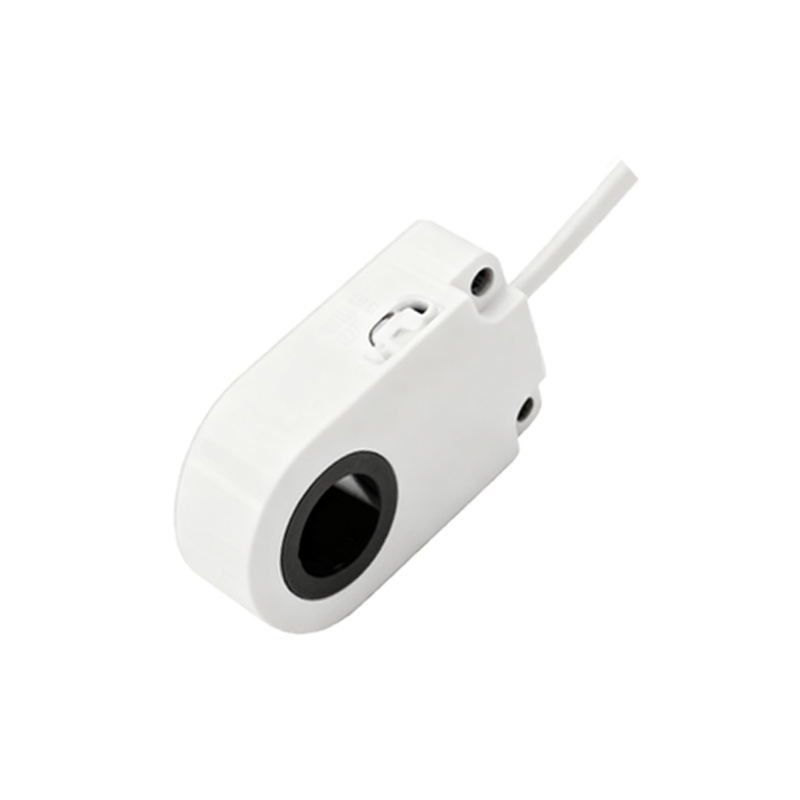
A Hall Effect metal proximity sensor leverages this phenomenon to detect the presence of ferromagnetic (e.g., iron, steel) and, in some designs, non-ferromagnetic metals (e.g., aluminum, copper). The core components of such a sensor typically include:
1. A Hall Effect IC (Integrated Circuit): This is the sensing element. It contains the Hall plate (a thin layer of semiconductor material), signal conditioning circuitry, and often an output switching stage (like an open-collector transistor).
2. A Permanent Magnet: This magnet generates a static magnetic field. In a common configuration, the magnet is positioned behind the Hall IC within the sensor housing.
3. A Ferrite Core or Flux Concentrator: Many sensors include this component to focus and guide the magnetic flux lines from the magnet, enhancing sensitivity and defining the sensing range.
In its standby state (no target present), the magnetic field from the internal permanent magnet permeates the space in front of the sensor. This field is constant, and the Hall IC, positioned within this field, generates a fixed Hall voltage. The internal circuitry is set to a specific switching threshold.
When a ferromagnetic metal target (like a steel gear tooth or a machine part) enters the sensor's effective sensing range, it disturbs the magnetic field. The metal object causes a concentration or diversion of the magnetic flux lines. This change in the magnetic field density at the location of the Hall plate results in a corresponding change in the Hall voltage generated.
The sensor's internal electronics continuously monitor this Hall voltage. Once the change exceeds a predefined threshold—indicating the target is close enough—the sensor's output state switches. For a digital output sensor, this typically means an NPN or PNP transistor switches on (sinking or sourcing current), providing a clear signal to a programmable logic controller (PLC), counter, or other control system. The sensor returns to its original state once the target moves away and the magnetic field stabilizes.
For detecting non-ferrous metals like aluminum or copper, the operating principle involves eddy currents. These metals are not magnetizable but are good electrical conductors. When such a target enters the magnetic field, eddy currents are induced on its surface. These currents generate their own opposing magnetic field, which weakens the original field from the sensor's magnet. This reduction in field strength is detected by the Hall IC as a decrease in the Hall voltage, triggering the output switch.
Key advantages of Hall Effect metal sensors include:
True Non-Contact Sensing: No physical touch means no wear and tear, leading to exceptionally long operational life.
High Switching Frequency: They can detect very fast-moving objects due to solid-state electronics with no moving parts.
Immunity to Environmental Factors: They are generally unaffected by dust, oil, moisture (if properly sealed), and non-metallic contaminants.
Consistent Performance: Provides a stable switching point regardless of actuation speed.
Typical applications are vast, including:
Speed Sensing: Detecting gear teeth, crankshaft or camshaft position in automotive and machinery.
End-of-Travel Detection: Verifying the position of cylinders or slides.
Counting Metallic Objects: On conveyor lines or in assembly processes.
Limit Switching: In robotics and automated equipment.
In conclusion, Hall Effect metal proximity sensors are sophisticated yet robust devices that translate a fundamental physical principle into reliable industrial detection. Their ability to sense metals without contact through magnetic field interaction makes them indispensable in modern automated systems, offering a blend of accuracy, speed, and durability that few other sensing technologies can match.