Proximity sensors are indispensable components in modern industrial automation, offering non-contact detection of objects within a defined range. Their ability to operate without physical contact translates to enhanced reliability, reduced maintenance, and longer service life compared to mechanical switches. This guide delves into the full spectrum of proximity sensor technologies, elucidating their operating principles, key characteristics, and optimal application scenarios.
The fundamental principle behind proximity sensing involves the emission of an electromagnetic field or beam and the analysis of changes in the field or return signal. Based on the underlying technology, the primary categories are inductive, capacitive, ultrasonic, and photoelectric sensors.
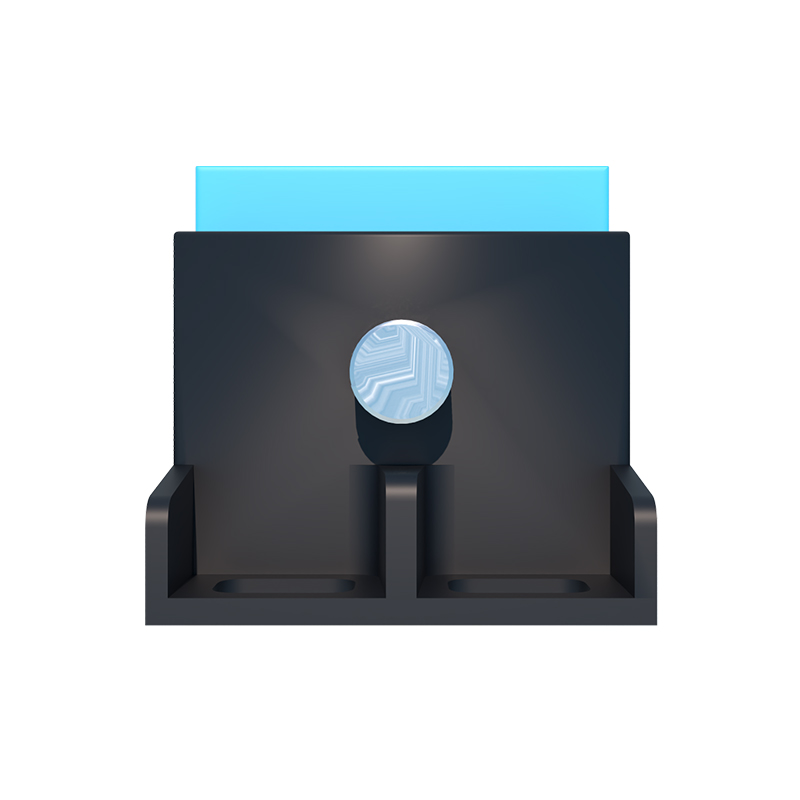
Inductive proximity sensors are the workhorses of metal detection. They generate an oscillating electromagnetic field from a coil. When a metallic object enters this field, eddy currents are induced within the target, causing a change in the oscillation amplitude. This change is detected by the sensor's circuitry, triggering an output switch. These sensors are exceptionally robust, immune to environmental factors like dust, oil, and moisture, and are ideal for detecting ferrous and non-ferrous metals in machinery, automotive assembly, and material handling. Key specifications include sensing distance, which is typically standardized (e.g., 5mm, 8mm), and the reduction factor for different metals.
Capacitive proximity sensors function by generating an electrostatic field. They can detect both metallic and non-metallic materials, including liquids, plastics, wood, and granules. The sensor forms one plate of a capacitor, with the target object acting as the other. As the object approaches, the capacitance increases, and once it surpasses a threshold, the output state changes. This makes them perfect for level detection in tanks (liquids or powders), material presence verification on non-metallic conveyor belts, and detecting filled containers. They are sensitive to environmental changes like humidity and require careful installation.
Ultrasonic sensors operate on a sonar principle. They emit high-frequency sound waves (typically beyond 20 kHz) and measure the time taken for the echo to return. This time-of-flight calculation provides highly accurate distance measurement, making them excellent for precise positioning, continuous level monitoring, and object detection over longer ranges (up to several meters). They are effective on a wide variety of surfaces and materials but can be influenced by temperature, air turbulence, and highly absorbent or angled surfaces.
Photoelectric sensors utilize light, usually from an LED source (infrared, red, or laser), to detect objects. They come in several main configurations: through-beam (separate emitter and receiver), retro-reflective (uses a reflector), and diffuse (reflective), where the emitter and receiver are in the same housing. Diffuse sensors detect the light reflected directly from the target. They offer very long sensing ranges, especially through-beam types, and can detect virtually any material. However, their performance can be affected by color, transparency, surface finish, and ambient light interference. Applications are vast, including packaging, bottling, and assembly line counting.
Selecting the right proximity sensor requires a systematic analysis of the application parameters. The primary considerations are:
1. Target Material: Metal (inductive), any material (capacitive, ultrasonic, photoelectric).
2. Sensing Distance: Required range from the sensor face to the target.
3. Environmental Conditions: Exposure to dust, water (IP rating), chemicals, temperature extremes, and electrical noise.
4. Output Type: Digital (PNP/NPN) or analog (4-20mA, 0-10V), and the required switching frequency.
5. Physical Size and Mounting: Flush or non-flush mounting for inductive sensors, housing style (cylindrical, rectangular).
Advanced features are continually enhancing sensor capabilities. Analog output sensors provide a continuous signal proportional to distance, enabling precision control. Sensors with IO-Link digital communication offer detailed parameter setting, condition monitoring, and diagnostic data integration into Industry 4.0 systems. High-temperature variants exist for foundries or oven applications.
In conclusion, a thorough understanding of the full series of proximity sensors—inductive, capacitive, ultrasonic, and photoelectric—empowers engineers to design more efficient, reliable, and intelligent automated systems. The correct selection, based on a meticulous assessment of the target, environment, and functional requirements, is critical for optimizing performance and ensuring long-term operational success in diverse industrial landscapes, from food and beverage to heavy machinery and robotics.