In the realm of industrial automation and control systems, proximity sensors play a pivotal role in enabling non-contact detection of objects. Among the various types available, the 05V proximity sensor stands out for its specific voltage output characteristic, offering a reliable solution for numerous applications. This article delves into the working principles, key features, typical applications, and selection criteria for 05V proximity sensors, providing essential insights for engineers and technicians.
A proximity sensor is a device that detects the presence or absence of an object within its sensing range without physical contact. The "05V" designation typically refers to the sensor's output signal range. Unlike digital sensors that provide a simple ON/OFF signal (often represented by 0V for OFF and a higher voltage like 12V or 24V for ON), a 05V analog output sensor provides a voltage signal that varies proportionally with the distance to the target object. Commonly, this output ranges from 0 volts (when the object is at the minimum sensing distance) to 5 volts (when the object is at the maximum sensing distance), or vice-versa depending on the configuration. This analog voltage output allows for precise distance measurement and continuous monitoring, which is crucial for applications requiring granular control.
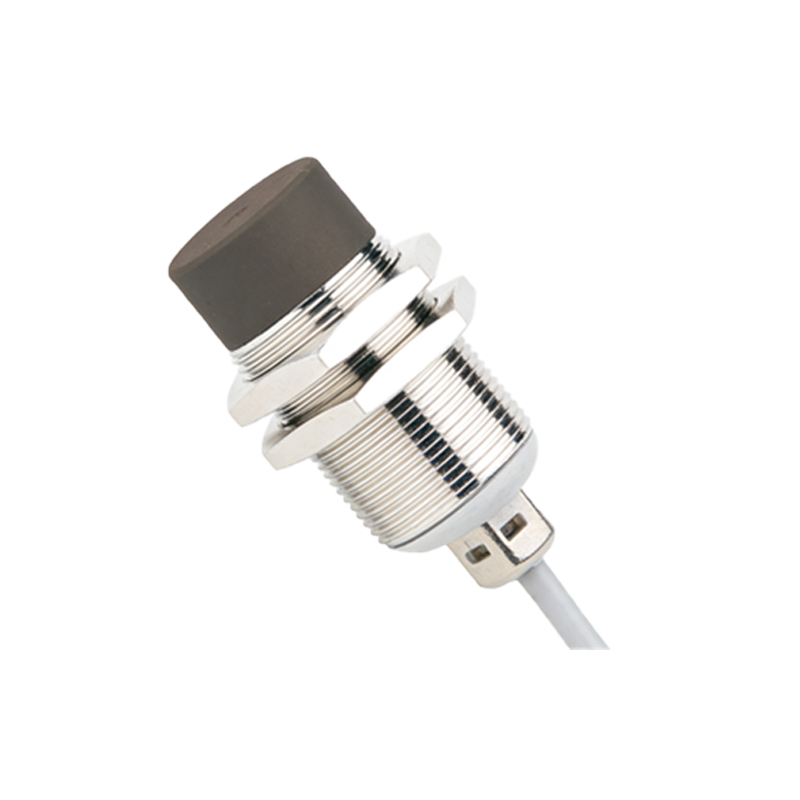
The core technology behind most 05V inductive proximity sensors is based on electromagnetic induction. The sensor contains an oscillator circuit that generates a high-frequency electromagnetic field at its active face. When a metallic target enters this field, eddy currents are induced in the target, causing a change in the oscillation amplitude. This change is detected by the sensor's circuitry, which then converts it into a linear, analog voltage output between 0 and 5 volts. The output voltage is directly proportional to the distance between the sensor face and the target, providing a precise measurement. For detecting non-metallic objects, capacitive versions operating on a similar 05V output principle are used, where changes in capacitance are measured.
Key features and advantages of 05V analog proximity sensors include high precision, continuous output, and excellent resolution. They enable systems to not just know if an object is present, but exactly how far away it is. This is invaluable for applications like position feedback in cylinders, tension control in web processing, thickness measurement, and edge guiding. Their non-contact nature ensures no wear and tear on the sensor or the target, leading to high reliability and long service life. Furthermore, they are often housed in rugged, industrial-grade casings with high ingress protection (IP) ratings, making them suitable for harsh environments involving dust, moisture, and vibration.
Typical industrial applications are widespread. In automotive manufacturing, these sensors are used for precise robotic arm positioning and part presence verification on assembly lines. In packaging machinery, they monitor material roll diameter or control the fill level in containers. In metalworking, they assist in controlling the gap between rollers or measuring the thickness of sheets. The 05V output is particularly compatible with standard analog input modules of Programmable Logic Controllers (PLCs) and data acquisition systems, simplifying integration into existing control architectures.
When selecting a 05V proximity sensor for a specific task, several critical parameters must be considered. The sensing range is paramount; it must be appropriate for the application's required detection distance. The target material (ferrous metal, non-ferrous metal, or non-metal) dictates whether an inductive or capacitive type is needed. Environmental conditions such as temperature extremes, potential chemical exposure, and required IP rating are crucial for durability. The response time must be fast enough for the process speed. Finally, the electrical characteristics, including supply voltage (commonly 10-30V DC), output type (sourcing or sinking), and cable/connector type, must match the control system's requirements.
Installation and maintenance are straightforward but require attention to detail. Sensors should be mounted securely to avoid vibration-induced errors. It is vital to ensure that only the intended target material enters the sensing field, as other nearby metals can cause interference (for inductive types). Regular cleaning of the sensor face prevents false readings from accumulated debris. Calibration might be necessary in high-precision applications to map the voltage output accurately to the physical distance.
In conclusion, the 05V analog proximity sensor is a versatile and precise component in modern industrial automation. Its ability to provide a continuous voltage signal corresponding to distance offers a significant advantage over simple binary switches, enabling more sophisticated control and monitoring. By understanding its operating principles, features, and application guidelines, engineers can effectively leverage this technology to enhance system accuracy, efficiency, and reliability across a diverse range of industries. As automation evolves towards greater precision and data integration, the role of such analog sensing devices remains fundamentally important.