In the realm of industrial automation and precision measurement, transmissive laser sensors stand as a cornerstone technology. These devices, often referred to as through-beam sensors, operate on a fundamental principle: a laser emitter and a separate receiver are positioned opposite each other. The emitter projects a focused, coherent beam of light directly towards the receiver. The primary function of the sensor is to detect interruptions or attenuations in this beam. When an object passes between the two units, it obstructs the light path, causing the receiver's signal to drop. This change in state is instantly registered by the sensor's internal circuitry, triggering a high-speed output signal.
The core advantage of this configuration is its exceptional reliability and sensing distance. Because the receiver is dedicated solely to detecting the emitter's specific light, it is highly immune to ambient light interference, dust, or surface characteristics of the target object. Whether the object is transparent, opaque, glossy, or matte, if it physically blocks the beam, it will be detected. This makes transmissive laser sensors ideal for applications requiring high-precision position detection, object counting, or breakage monitoring over long ranges, often extending several meters.
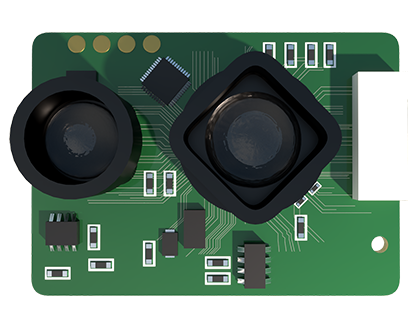
Key components of a transmissive laser sensor system include the laser emitter, the photoelectric receiver, and the control unit. Modern emitters typically use visible red lasers or Class 1 infrared lasers for safety and visibility during alignment. The receiver contains a photodiode or phototransistor tuned to the emitter's wavelength. Advanced models incorporate microprocessors for functions like adjustable sensitivity, timers, and logic operations (ON-delay, OFF-delay, window mode). Alignment is critical; many sensors feature built-in alignment indicators (LEDs that change color or sequence) to simplify setup.
The applications for transmissive laser sensors are vast and critical across numerous industries. In packaging and material handling, they are deployed for precise bottle cap detection on high-speed filling lines, verifying the presence of products in cartons, or detecting tears in continuous web materials like plastic film or paper. Within the electronics manufacturing sector, these sensors ensure the correct placement of tiny components on printed circuit boards (PCBs) or count miniature parts. Automotive assembly lines rely on them for robot guidance, verifying door or panel placement, and safety curtain applications for hazardous areas. Furthermore, they are indispensable in security systems as part of perimeter intrusion detection.

When selecting a transmissive laser sensor for a specific application, several technical parameters must be carefully evaluated. Sensing distance, or the maximum operable gap between emitter and receiver, is paramount. The response time, measured in microseconds, determines the maximum speed at which objects can be reliably detected. Beam spot size affects resolution—smaller spots allow for detecting finer objects or edges. Environmental ratings, such as IP67 or IP69K for dust and water resistance, are crucial for harsh environments like washdown areas in food processing. Output type (NPN/PNP transistor, relay) must be compatible with the host controller (PLC). Finally, regulatory compliance, including laser safety classifications (e.g., FDA Class II, IEC 60825-1), is non-negotiable for operator safety.
Compared to other sensing technologies like diffuse-reflective or retro-reflective sensors, transmissive types offer the longest range and most stable operation but require mounting two separate units and precise alignment. Diffuse sensors, which emit and receive light from a single housing, are easier to install but have shorter ranges and can be influenced by the target's color and surface. Retro-reflective sensors use a reflector but can be fooled by shiny objects. Therefore, the choice hinges on the specific demands of accuracy, range, and environmental conditions.
In conclusion, transmissive laser sensors provide an unmatched combination of long-range, precise, and reliable object detection for demanding industrial environments. Their simple yet robust operating principle ensures consistent performance where other sensors may falter. As automation evolves towards greater speed and precision, the role of these sensors will only become more pivotal. Engineers and system integrators must thoroughly understand their specifications and limitations to deploy them effectively, ensuring seamless operation, enhanced productivity, and improved safety on the factory floor. Proper selection, installation, and maintenance are the keys to leveraging their full potential in creating smarter, more responsive automated systems.