In the world of measurement and detection, laser sensors have become ubiquitous tools, prized for their speed and non-contact capabilities. From manufacturing assembly lines and autonomous vehicles to scientific research and consumer electronics, these devices play a critical role. A fundamental question often arises for engineers, technicians, and decision-makers: Are laser sensors accurate? The short answer is yes, modern laser sensors are highly accurate, but this accuracy is not a single, fixed value. It is a nuanced characteristic dependent on the sensor's design, its operating environment, and the application's specific requirements.
At its core, the accuracy of a laser sensor refers to how closely its measurement corresponds to the true value of the target parameter, typically distance, displacement, or presence. High-accuracy sensors minimize the difference between the measured value and the actual value. It is crucial to distinguish accuracy from related terms like resolution and repeatability. Resolution is the smallest change in measurement the sensor can detect. A sensor might have high resolution (detecting micron-level changes) but poor accuracy if those readings are consistently offset from the true value. Repeatability is the sensor's ability to produce the same result under unchanged conditions. Excellent repeatability is a prerequisite for high accuracy, but it does not guarantee it.
Several key factors directly influence the accuracy of a laser sensor. First is the measurement principle. Common types include time-of-flight (ToF), triangulation, and confocal chromatic sensors. Time-of-flight sensors, often used for longer ranges (meters), calculate distance based on the time a laser pulse takes to reflect back. Their accuracy can be affected by the timing electronics and the reflectivity of the target. Triangulation sensors, ideal for shorter ranges with high precision, project a laser spot onto a target, and a receiver lens images the spot onto a position-sensitive detector. The angle change determines the distance. These can achieve micron-level accuracy but are sensitive to the target's surface color and angle. Confocal chromatic sensors use white light split by a lens, offering exceptional accuracy on transparent or reflective surfaces.
The target surface properties are perhaps the most significant external factor. A matte, white surface provides an ideal diffuse reflection, yielding the most accurate and stable reading. Shiny, mirror-like surfaces can cause specular reflection, potentially directing the beam away from the receiver and causing a measurement error or dropout. Dark surfaces, especially black, absorb more light, reducing the signal strength and potentially degrading accuracy. Transparent materials like glass or clear plastic present a unique challenge, as the laser may penetrate the surface or reflect from multiple layers. Specialized sensors are needed for such applications.

Environmental conditions cannot be overlooked. Ambient light, particularly strong sunlight or other laser sources, can flood the sensor's receiver, adding noise to the signal. Temperature fluctuations can cause thermal expansion in the sensor's housing and internal optics, leading to drift in the measurement. Industrial environments may contain dust, steam, or vibrations, all of which can interfere with the laser beam or the sensor's stability. High-quality sensors incorporate compensation algorithms and robust housing to mitigate these effects.
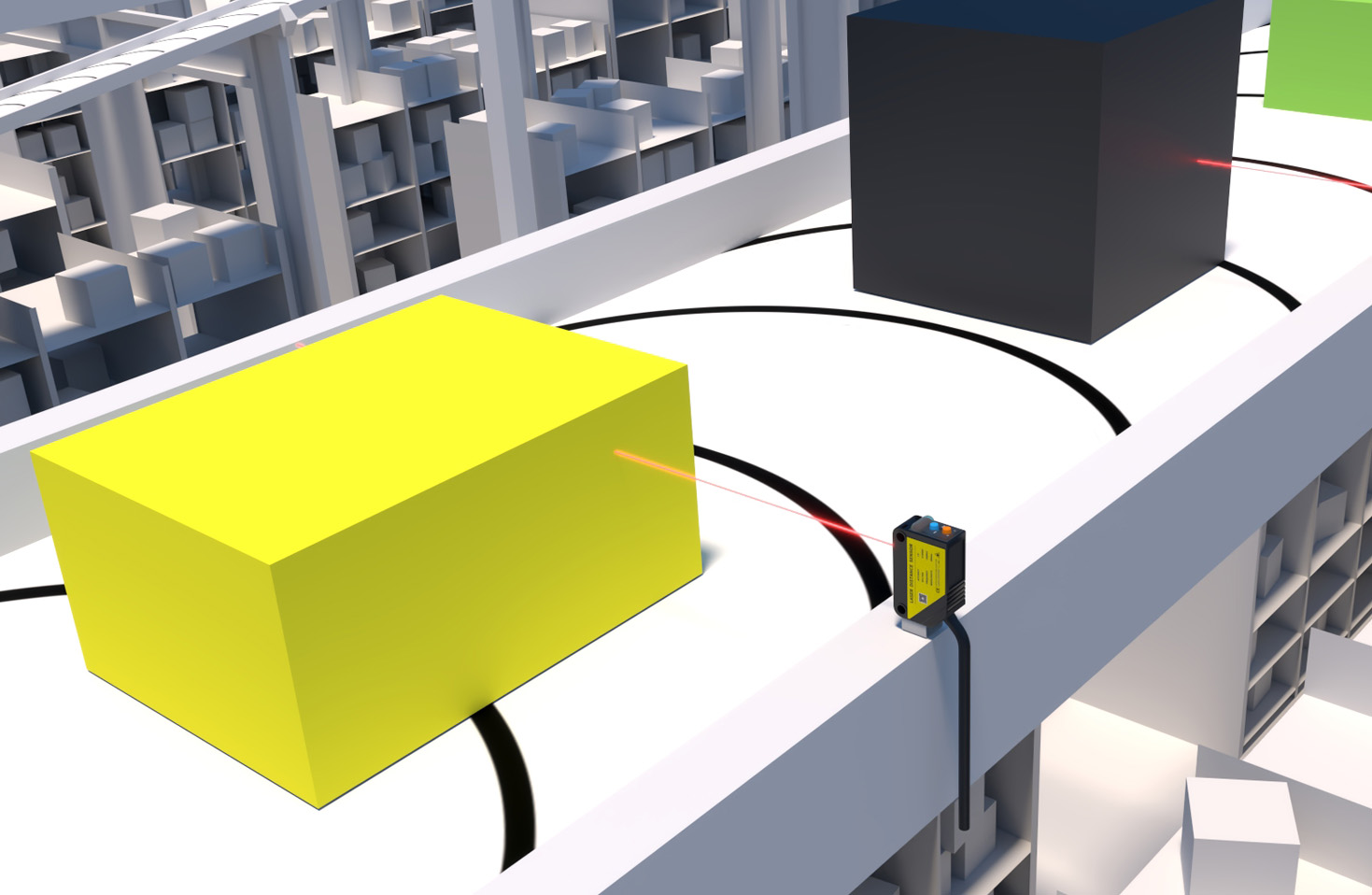
So, how accurate are they in practice? For standard laser distance sensors using triangulation, accuracies in the range of 1 to 10 micrometers (µm) over a small working distance are common. High-end metrology-grade sensors can achieve sub-micrometer or even nanometer-level accuracy for specialized tasks. For longer-range ToF sensors, accuracy might be stated as ±1 millimeter to ±1 centimeter, depending on the distance. It is essential to consult the manufacturer's datasheet, which specifies accuracy under defined conditions (often as a percentage of the reading or a fixed value, e.g., ±0.05% of distance or ±10 µm).
To ensure optimal accuracy, users must follow best practices. Correct sensor selection is paramount: choose a principle and model suited for the target material, required range, and environmental challenges. Proper installation and alignment are critical; even a slight misalignment can introduce significant error. Regular calibration against a known standard, as recommended by the manufacturer, maintains accuracy over time. Finally, understanding the difference between the sensor's performance in a controlled lab setting and in the real-world application is key. The stated accuracy is typically a best-case scenario.
In conclusion, laser sensors are indeed accurate instruments, capable of providing extremely precise measurements that drive automation and quality control. Their accuracy, however, is a specification that must be understood in context. It is the result of sophisticated engineering that battles against physical limitations and environmental interference. By carefully selecting the right sensor technology, preparing the target surface when possible, and controlling the operating environment, users can harness the full, remarkable accuracy that modern laser sensing technology offers. The question is not simply "are they accurate?" but rather "how can I achieve the necessary accuracy for my specific task?"