In the realm of industrial automation and robotics, sensors play a pivotal role in enabling machines to perceive and interact with their environment. Among the diverse array of sensing technologies, tracking sensors and infrared laser sensors stand out for their precision, reliability, and versatility. This article delves into the operational principles, applications, and comparative advantages of these two critical sensor types, providing insights for engineers and system integrators.
Tracking sensors, often referred to as line-following or path-tracking sensors, are primarily designed to detect and follow predefined paths or markers. These sensors typically employ infrared (IR) or visible light emitters paired with photodetectors. The fundamental principle involves emitting light onto a surface and measuring the reflected intensity. A contrasting line, usually dark on a light background or vice versa, causes a variation in reflection, which the sensor interprets as a track to follow. Modern tracking sensors utilize arrays of IR LEDs and phototransistors, allowing for high-resolution path detection. Advanced versions incorporate digital signal processing to filter ambient light interference and enhance accuracy. Common applications include automated guided vehicles (AGVs) in warehouses, robotic assembly lines, and educational robotics kits. Their simplicity, cost-effectiveness, and ease of integration make them a staple in many automation setups.
Infrared laser sensors, on the other hand, represent a more sophisticated category of sensing technology. These sensors utilize laser diodes emitting focused infrared beams, often modulated at specific frequencies to mitigate interference from ambient light. The key working mechanisms include time-of-flight (ToF), triangulation, and phase-shift measurement for distance and presence detection. In ToF systems, the sensor calculates distance by measuring the time taken for a laser pulse to reflect off an object and return. Triangulation-based sensors use a laser spot and a position-sensitive detector to determine distance based on the angle of reflected light. Infrared laser sensors excel in applications requiring high precision, long-range detection, and detailed environmental mapping. They are extensively used in obstacle avoidance for autonomous robots, precision measurement in manufacturing, level sensing in silos, and even in security systems for intrusion detection. Their ability to provide accurate, real-time data over considerable distances makes them indispensable in complex industrial environments.
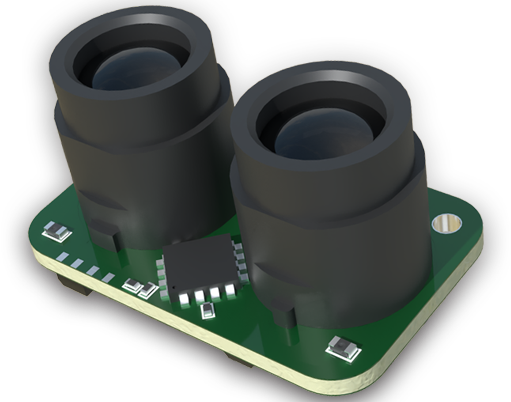
Comparing the two, tracking sensors are generally optimized for specific, guided tasks along a defined path, offering robust performance in controlled settings. They are less susceptible to environmental factors like dust or minor surface irregularities, provided the track contrast is maintained. However, their range is limited, and they may struggle with complex path networks or dynamic obstacles. Infrared laser sensors offer greater flexibility and capability, capable of mapping surroundings, detecting objects in three dimensions, and adapting to unstructured environments. This comes at a higher cost, increased computational requirements, and potential sensitivity to extreme conditions like fog or highly reflective surfaces.
The integration of these sensors into industrial systems often involves considerations beyond mere functionality. For tracking sensors, alignment, calibration relative to the track width, and response speed are critical parameters. Engineers must select sensors with appropriate resolution and output interfaces (digital or analog) to match controller requirements. For infrared laser sensors, factors such as measurement range, accuracy, scanning angle (for multi-point sensors), and communication protocols (e.g., IO-Link, Ethernet/IP) are paramount. Additionally, safety standards, particularly for laser products, must be adhered to, ensuring compliance with classifications like Class 1 or Class 2 under IEC 60825-1.
Emerging trends are blurring the lines between these technologies. Some advanced tracking systems now incorporate laser-based elements for enhanced precision, while compact, low-cost laser sensors are entering domains traditionally dominated by simpler IR trackers. The fusion with machine vision and AI algorithms further expands their capabilities, enabling predictive maintenance, adaptive path planning, and superior object recognition.
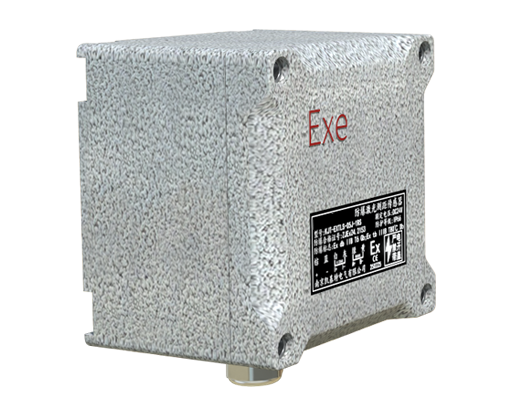
In conclusion, both tracking sensors and infrared laser sensors are integral to modern automation, each serving distinct yet sometimes overlapping roles. The choice between them hinges on application-specific needs: cost, precision, environmental conditions, and system complexity. As Industry 4.0 advances, the evolution of these sensors will continue to drive innovation, making automated systems more intelligent, efficient, and resilient. Engineers are encouraged to stay abreast of technological developments to leverage the full potential of these sensing solutions in designing next-generation industrial applications.