In the landscape of modern industrial automation and quality control, precision measurement is not merely an advantage—it is an absolute necessity. Among the array of sophisticated sensing technologies available today, laser-based sensors for distance and temperature measurement stand out for their accuracy, speed, and non-contact operation. These devices have become indispensable tools across diverse sectors, from manufacturing and logistics to energy and research, fundamentally transforming how processes are monitored and controlled.
Laser distance sensors operate primarily on the principles of time-of-flight (ToF), triangulation, or phase-shift measurement. In the time-of-flight method, the sensor emits a laser pulse towards a target and calculates the distance by precisely measuring the time taken for the reflected light to return. This technique is highly effective for long-range measurements, often spanning several hundred meters, making it ideal for applications like terrain mapping, crane positioning, and large-scale inventory management. Triangulation-based sensors, on the other hand, use a laser emitter, a receiver lens, and a position-sensitive detector. As the laser dot strikes the target, its reflection angle changes with distance, allowing the detector to calculate displacement with exceptional resolution, typically in the micrometer range. This makes triangulation sensors perfect for high-precision tasks such as wafer alignment in semiconductor fabrication, thickness gauging in rolling mills, and profile inspection of automotive components.
Simultaneously, laser temperature sensors, more accurately termed infrared (IR) thermometers or pyrometers, measure temperature by detecting the infrared radiation emitted by an object. All objects above absolute zero emit infrared energy, and the intensity and spectral distribution of this radiation are directly related to the object's temperature. Modern laser pyrometers often incorporate a visible laser pointer solely for aiming purposes, ensuring the instrument is correctly aligned with the measurement spot. The core component is an infrared detector that converts the radiant energy into an electrical signal, which is then processed to provide a precise temperature reading. This non-contact method is crucial for measuring moving objects, hazardous materials, or components in high-voltage environments where physical contact is impossible or unsafe. Common applications include monitoring furnace temperatures in metallurgy, checking electrical substation connections for hotspots, and controlling temperature in plastic extrusion and food processing lines.
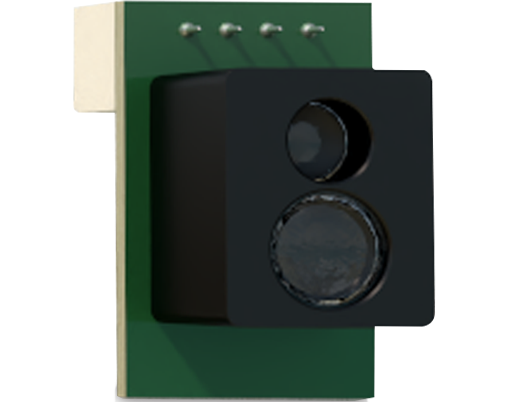
The convergence of laser distance and temperature sensing in integrated systems represents a significant leap forward. For instance, in robotic welding, a combined sensor can first measure the exact distance to the workpiece to adjust the torch height and then monitor the weld pool temperature in real-time to ensure optimal fusion and prevent defects. In additive manufacturing (3D printing), such sensors are used to precisely control the build platform height and monitor the temperature of the deposited material layer by layer, guaranteeing dimensional accuracy and material properties.
Key advantages of laser-based sensors are manifold. Their non-contact nature eliminates mechanical wear and prevents contamination or damage to both the sensor and the target object. They offer extremely fast response times, often in the microsecond range, enabling real-time process control in high-speed production lines. Furthermore, their high spatial resolution allows for measurements on very small targets or specific areas of interest. However, their performance can be influenced by environmental and target-specific factors. For distance measurement, highly reflective, transparent, or absorptive surfaces may require special sensor calibration or coating. For temperature measurement, the emissivity of the target material—a measure of how effectively it emits infrared energy—must be correctly set in the instrument for an accurate reading. Dust, steam, or intense ambient light can also interfere with the laser or infrared signal, necessitating proper installation and sometimes protective enclosures.
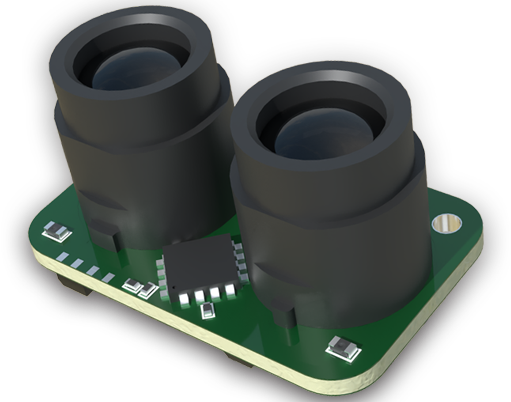
Looking ahead, the evolution of laser distance and temperature sensors is tightly coupled with advancements in digitalization and Industry 4.0. Modern sensors are increasingly equipped with industrial communication protocols like IO-Link, PROFINET, or EtherNet/IP, facilitating seamless integration into networked control systems. They provide not just raw data but diagnostic information and predictive maintenance alerts. The integration of artificial intelligence and machine learning algorithms is beginning to enable more sophisticated analysis, such as identifying trends from combined distance and temperature data to predict equipment failure before it occurs.
In conclusion, laser distance and temperature sensors are pivotal technologies driving efficiency, safety, and quality in contemporary industry. Their ability to deliver precise, reliable, and instantaneous measurements without physical contact solves numerous challenges in automation and process optimization. As these sensors become smarter, more connected, and more robust, their role will only expand, solidifying their status as foundational components in the intelligent factories and infrastructures of the future. Engineers and technicians must understand their operating principles, selection criteria, and application best practices to fully leverage their potential and maintain a competitive edge in an increasingly automated world.