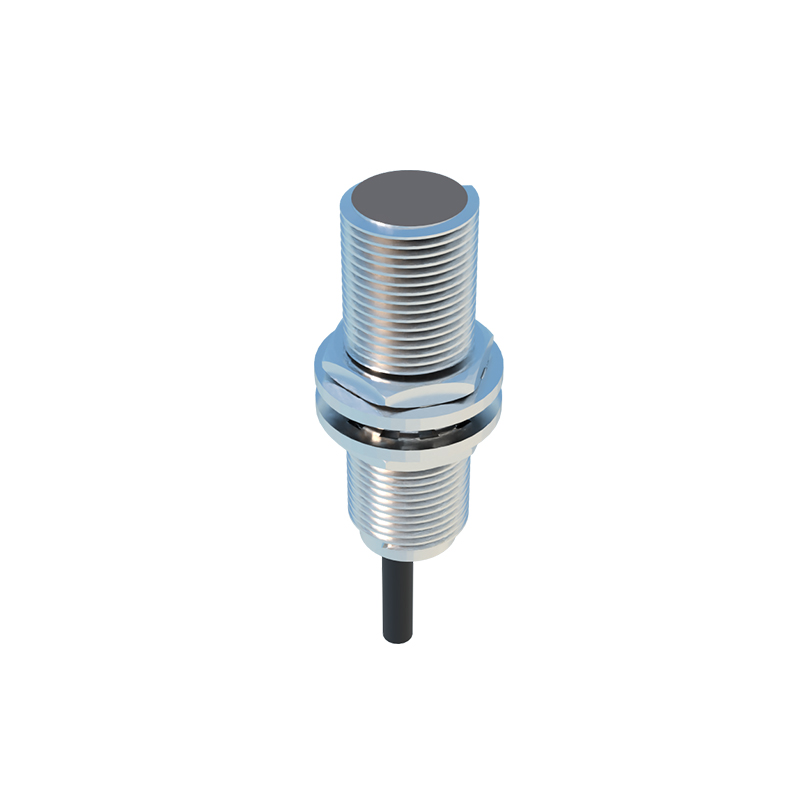
M16 proximity sensors are integral components in modern industrial automation, offering reliable non-contact detection for a wide range of applications. These cylindrical sensors, with a standard 16mm diameter, are designed to detect the presence or absence of metallic objects without physical contact, ensuring minimal wear and extended operational life. Typically constructed from durable materials such as stainless steel or nickel-plated brass, M16 sensors are built to withstand harsh industrial environments, including exposure to dust, moisture, and mechanical vibrations.
The operating principle of M16 proximity sensors is based on electromagnetic induction. Inside the sensor, an oscillator generates a high-frequency electromagnetic field at the sensing face. When a metallic object enters this field, eddy currents are induced in the target, causing a change in the oscillation amplitude. This change is detected by the sensor's circuitry, which then triggers an output signal—either a digital switch (NPN or PNP) or an analog output, depending on the model. Key specifications include sensing distance, which typically ranges from 2mm to 8mm for standard inductive models, response frequency up to 2kHz, and protection ratings like IP67 for dust and water resistance.
In industrial settings, M16 proximity sensors are widely used in machinery automation, conveyor systems, robotic arms, and packaging equipment. They play a critical role in position detection, object counting, speed monitoring, and end-of-travel limit switching. For instance, in automotive assembly lines, these sensors ensure precise positioning of components, while in food processing, they help maintain hygiene by enabling touchless operation. When selecting an M16 sensor, engineers must consider factors such as target material (ferrous vs. non-ferrous metals), environmental conditions (temperature extremes or chemical exposure), and output compatibility with PLCs or controllers. Installation requires attention to mounting clearances to avoid interference between adjacent sensors, and proper shielding in electrically noisy environments to prevent false triggering.
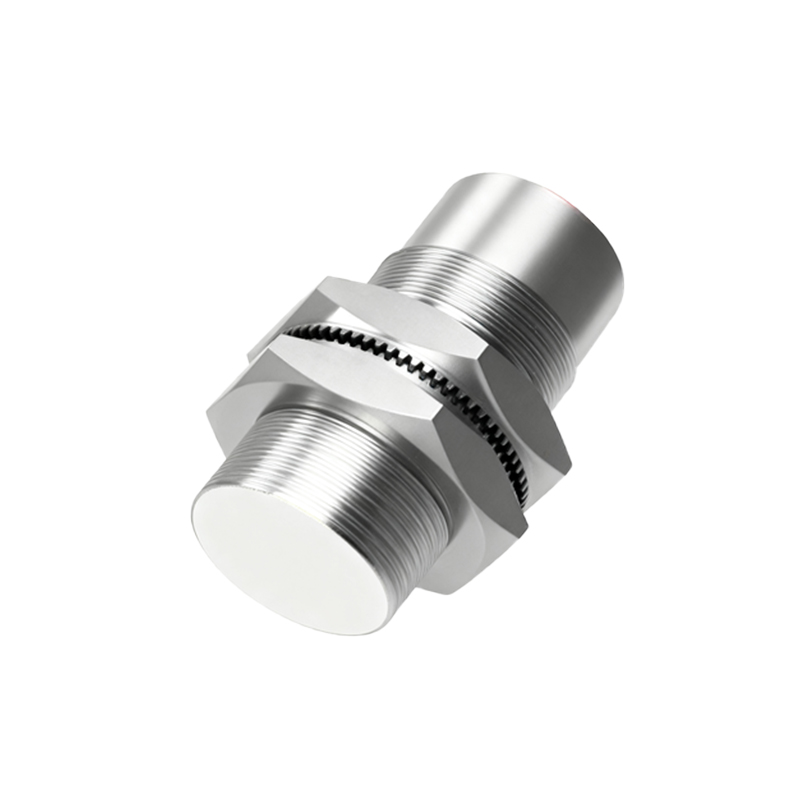
Maintenance of M16 sensors is generally minimal due to their solid-state design, but regular checks for physical damage, contamination buildup, or wiring issues are recommended. Advancements in technology have led to the development of variants like factor-1 sensors (capable of detecting all metals at the same range) and models with IO-Link communication for enhanced diagnostics and parameterization. As Industry 4.0 evolves, M16 proximity sensors continue to adapt, integrating smarter features that contribute to predictive maintenance and overall system efficiency. By understanding their capabilities and limitations, engineers can optimize these sensors for reliable, cost-effective automation solutions.